What to Plant in Florida in Summer
What to plant in Florida in summer comes down to one thing: picking crops that shrug off heat, humidity, and afternoon downpours instead of fighting them. June through August is not the same growing season as spring, and treating it that way is the fastest way to lose seedlings to wilt, blossom drop, or fungal rot.
For more help, see our What to Plant in Florida: A Month-by-Month Guide guide.
Below is a region-aware plan for North, Central, and South Florida, with the vegetables, herbs, and fruiting plants that actually hold up, plus what to skip until fall.
Florida summer planting basics
Why summer is Florida's hardest growing season, not its easiest
Spring is Florida's forgiving season. Summer is the test. Daytime highs in the 90s combine with humidity and near-daily thunderstorms to stress the same tomatoes and lettuce that grew fine in March. UF/IFAS Extension notes that Florida's summer sun "takes a toll on traditional crops familiar in more northern gardens," and that tomatoes in particular will not set fruit once nighttime temperatures stay above 70°F. That single fact explains why so many summer tomato plants flower for weeks without ever fruiting.
- Water early in the morning so leaves dry by mid-morning instead of staying wet all day.
- Check soil moisture before watering: push a finger 4 inches down; if it's still damp, wait.
- Lay 2 to 3 inches of mulch to slow evaporation and stop storm splash from carrying soil-borne fungus onto leaves.
- Space plants wider than the seed packet suggests. Airflow matters more in July than in March.
If leaves yellow while the soil is still soggy, that's a drainage problem, not a nutrient problem. Fix the water first.
Plant by region: North, Central, and South Florida aren't the same garden
Florida spans USDA zones roughly 8a in the panhandle to 11 in the Keys, and that range changes what "summer planting" means depending on where you live.
- North Florida (zone 8b-9a): Summers are just as brutal as the rest of the state, but the growing season is shorter on both ends because of real winter cold. Lean on heat-tolerant vegetables and get fruiting crops in as transplants rather than seed.
- Central Florida (zone 9a-9b): The longest practical summer vegetable window. Stagger plantings of peppers, southern peas, and basil every few weeks instead of planting everything at once.
- South Florida (zone 10a-11): Mild winters mean warm-season crops can run longer, but summer humidity and standing water after storms are the biggest threats. Raised beds earn their keep here.
When you're not sure your zone's timing lines up with a general guide, start with transplants. They establish faster and give you a buffer against a rough first week.
June, July, and August aren't interchangeable
All three months count as "summer," but the stress curve shifts as the season goes on.
- June: Still workable for setting out transplants. Get root systems established before the hottest weeks of July hit.
- July: Usually the peak-heat month. Favor quick producers, ease off heavy feeding, and shade new transplants for the first week or two.
- August: Keep succession planting fast crops, but start cleaning up spent plants and prepping beds, because fall planting season in Florida starts sooner than gardeners in cooler climates expect.
The simplest rule: plant tough, long-season crops early in summer, and plant fast crops throughout so you're harvesting before the worst heat lands on them.
Best vegetables to plant in summer
Peppers: the most reliable summer vegetable in Florida
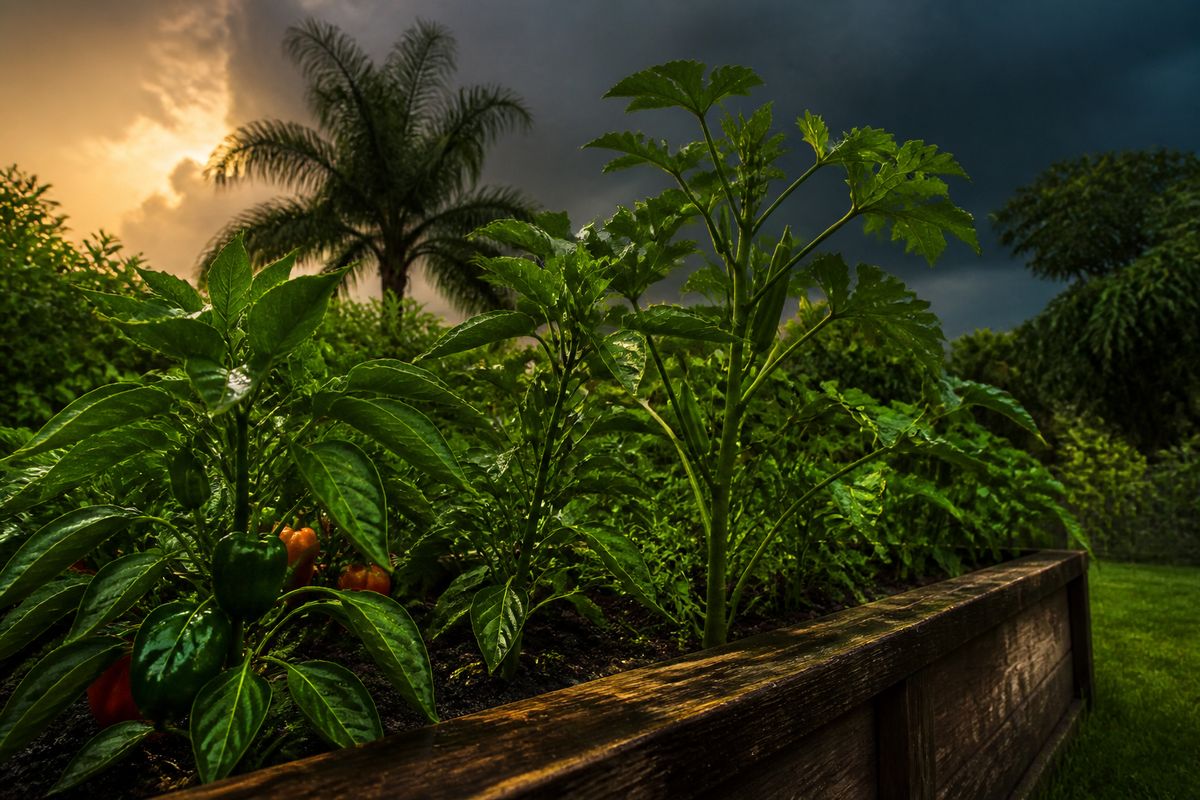
Peppers are consistently one of the better bets for a Florida summer garden, and UF/IFAS Extension lists peppers among the recommended summer-suitable vegetables for Florida gardens. Start from transplants, not seed. Direct-seeded peppers germinate slowly in heat and lose ground fast.
- Use transplants that are already 6 to 10 inches tall with sturdy, non-leggy stems.
- Plant in full sun. Morning sun plus some afternoon sun is fine for most varieties.
- Set the plant at the same depth it sat in the pot, then water in deeply right away.
- Mulch immediately, 2 to 3 inches deep, kept a couple inches back from the stem.
- Feed lightly with a balanced fertilizer at transplant, then switch to a low-nitrogen formula once flowering starts. Too much nitrogen buys you leaves, not peppers.
Blossom drop during the hottest stretch of July is normal, not a sign of disease. Keep watering consistent and don't panic-fertilize.
Skip the traditional summer garden and plant Florida-adapted crops instead
Standard squash, cucumbers, and northern greens genuinely struggle here in summer. UF/IFAS Gardening Solutions recommends swapping in crops bred for exactly these conditions: Seminole pumpkin, calabaza, chayote, and luffa instead of typical summer squash; okra and southern peas as warm-season workhorses; sweet potatoes as a root crop that thrives in the heat; and Okinawa spinach or amaranth in place of lettuce and spinach, which bolt and die in July.
- Direct seed southern peas, okra, and bush beans. They dislike being transplanted once established.
- Succession plant every 2 to 3 weeks so you're never harvesting one big batch and then waiting.
- Try one Florida-adapted green (Okinawa spinach or amaranth) if regular lettuce has burned you before. Both hold up to heat that kills conventional greens outright.
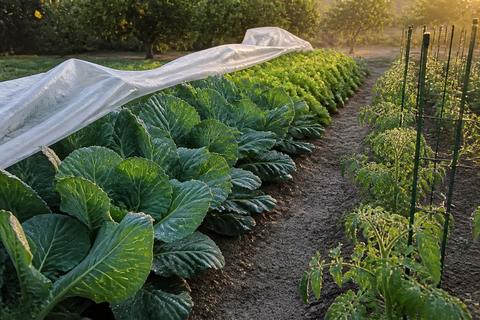
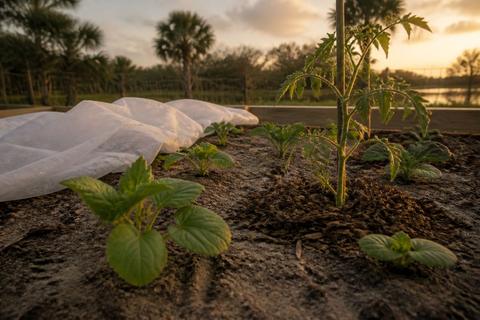
- Use lightweight row cover only briefly for pest pressure; pull it during sunny afternoons so plants don't cook underneath it.
Deep, infrequent watering beats a daily shallow sprinkle every time in Florida's fast-draining sandy soil.
Shade cloth and mulch for new transplants
New transplants have thin root systems and can scorch in a single afternoon of full summer sun. Commercial growers manage this with shade cloth, and many vegetable crops tolerate roughly 30% to 50% shade through the hottest months without a serious yield penalty, since Florida's summer light is well above what plants need for photosynthesis anyway.
- Use shade cloth in the 30% to 50% range, not solid plastic, propped above the plants so air still moves underneath.
- Water right after planting, then let the top inch of soil dry before watering again.
- Mulch once plants are settled in, 2 to 3 inches deep, kept off the stems.
- Remove the shade cloth gradually after 7 to 10 days so plants harden off to full sun.
For anything direct-seeded, keep the top half-inch of soil consistently moist until germination, then transition to deeper, less frequent watering.
Herbs that handle Florida heat
Basil and oregano are the summer workhorses
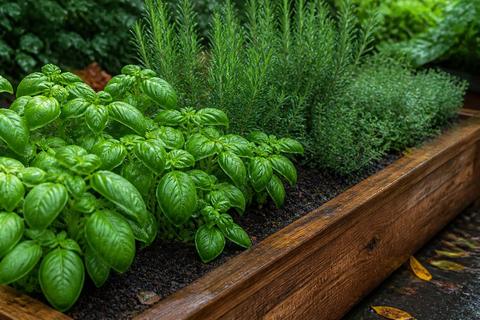
Basil handles Florida summer better than almost any other common herb, and oregano tolerates the heat too, though it wants drier soil than basil does. The trick is matching the herb to the season and not overwatering.
- Plant basil in full to part sun, 4 to 6 hours of direct light daily.
- Grow oregano in full sun on the drier side; it rots faster than basil in constantly wet soil.
- Use raised beds or containers if your yard holds standing water after storms.
- Pinch basil tips every week or two to force bushier growth and delay flowering.
Yellowing leaves usually mean a drainage or watering-frequency problem first. Check that before adding fertilizer.
Containers make summer herb care easier
Containers give you more control than in-ground beds when Florida alternates between downpour and dry spell within the same week, and they cut down on the soil splash that spreads fungal spores onto lower leaves.
- Use pots with real drainage holes and a quality potting mix, not garden soil, which compacts in containers.
- Water until you see runoff from the bottom, then wait until the top inch is dry before watering again.
- Place containers for morning sun with some afternoon relief during the hottest weeks.
- Fertilize lightly every 3 to 4 weeks. Herbs respond fast to nitrogen and can get leggy if you overdo it.
Grouping herbs with similar water needs in one spot makes the watering routine much easier to keep up with.
Herbs to avoid until fall
Some herbs simply want cool, dry air, and Florida summer humidity pushes them into decline no matter how well you care for them.
- Skip cilantro and other cool-season herbs during peak summer; they bolt fast in the heat.
- Contain mint aggressively or skip it in wet spots, where it can turn into a maintenance problem.
- Watch susceptible herbs for powdery mildew; improve airflow and stop overhead watering at the first sign.
- Use raised beds or containers to keep foliage drier and cut down on soil splash.
Plant what fits the season and you'll spend a lot less time nursing herbs that were never going to make it through July.
Flowers and landscape plants for summer color
Flowering plants that tolerate heat, humidity, and heavy rain
Pentas, lantana, and vinca are the reliable choices for Florida summer color because they keep blooming through heat and wet stretches that knock out less durable annuals.
- Plant in full sun unless the label specifically says partial shade.
- Space for airflow so rain doesn't sit on the foliage after a storm.
- Mulch around the base to reduce splash and stabilize soil moisture.
- Check the undersides of leaves after heavy rain for pests, and remove damaged foliage early.
These three plants are about as close to "plant and forget" as Florida summer gets.
Native and Florida-friendly plants for pollinators
Native plants generally handle Florida's weather swings better than imported ornamentals, and they keep pollinators fed through the parts of summer when less adapted flowers stall out.
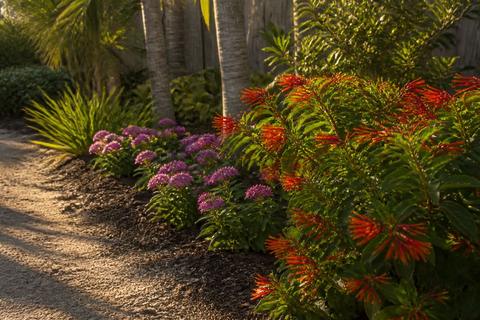
- Add locally adapted natives like firebush where it suits your area and light conditions.
- Cluster plants in drifts rather than scattering single specimens; pollinators find grouped plantings faster.
- Mix flower heights, ground covers plus mid-height bloomers, for a layered look.
- Avoid broad-spectrum insecticides during bloom; spot-treat only when a specific pest shows up.
Steady pollinator visits are a good sign your plant choices actually fit the season.
Foliage plants for when flowers slow down
Even reliable bloomers can pause during the hottest stretch of summer. Foliage plants keep the landscape looking intentional instead of like it's on a break.
- Choose foliage labeled for heat and humidity tolerance.
- Lean on color and texture, deep purples and chartreuse read well in Florida's bright light.
- Pair foliage with a couple of continuous bloomers so the bed has more than one layer of interest.
- Water consistently while plants establish, then taper once new growth shows up.
Foliage plants turn a rainy, blown-out week from a problem into a backdrop.
Edibles and fruiting plants to add now
Setting out tropical and warm-season fruiting plants
Summer is a reasonable time to plant warm-season and tropical fruiting plants if you start with healthy nursery stock and stay ahead of the watering.
- Plant on the south or southeast side of the house where a wall adds a bit of extra warmth in winter.
- Dig a hole 2 to 3 times the width of the root ball and loosen the surrounding soil so roots aren't fighting compacted ground.
- Water deeply 2 to 3 times a week for the first month, then taper as new growth appears.
- Mulch to hold moisture, keeping it a few inches clear of the trunk.
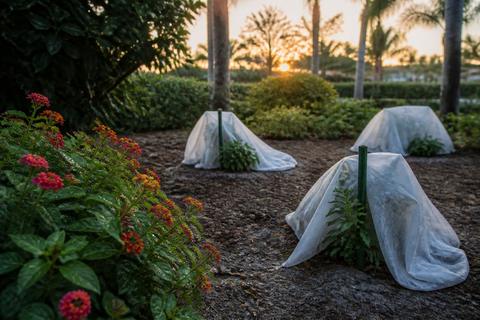
For young trees, cold protection matters more than gardeners expect even in Florida. UF/IFAS Extension recommends draping frost cloth (not plastic) over the entire tree so it reaches the ground, which traps ground heat around the plant. Pull the cover back off once the cold snap passes so the plant doesn't overheat sitting under fabric in full sun.
Succession planting for harvests through late summer
Succession planting is what keeps a Florida summer garden productive instead of giving you one big harvest and then nothing.
- Pick a short list of heat-reliable crops: bush beans, southern peas, okra, and heat-tolerant cucumber varieties.
- Replant every 2 to 3 weeks, even in small batches.
- Harvest frequently. Picking regularly keeps plants producing instead of signaling them to shut down.
- Pull spent plants promptly so they don't become a disease source in the next rainy stretch.
If growth looks weak, check watering consistency before anything else. Florida's sandy soil drains fast, and uneven moisture causes more problems than most pest or disease issues combined.
Transplants vs. seed: know which crops need which
Summer heat is harder on seedlings than on established plants, which is why transplants save so much time on fruiting crops.
- Use transplants for peppers, eggplant, and tomatoes (if you're trying tomatoes at all in summer, stick to cherry types, since standard varieties won't set fruit once nights stay above 70°F).
- Direct seed beans and peas. They don't transplant well once they've started growing.
- If you do start from seed, keep the soil consistently moist through germination, then shift to a deeper, less frequent watering schedule.
Choosing seed vs. transplant by crop, not by habit, is one of the simplest ways to raise your success rate in summer.
What not to plant in Florida summer
Cool-season crops that fail in the heat
Cool-season vegetables depend on mild temperatures, and Florida summer doesn't offer them. Even when they technically survive, they grow slowly, bolt early, or produce next to nothing.
- Skip most lettuce and cabbage-family crops from June through August; standard varieties bolt fast in the heat.
- Avoid English peas and other cold-loving crops entirely during peak summer.
- Don't try to "wait out" a heat wave with a cool-season crop already in the ground. Heat stress doesn't reverse once it sets in.
If you want greens now, choose a heat-tolerant option like Okinawa spinach or amaranth instead of forcing lettuce through July.
Varieties prone to fungal problems in Florida's rainy months
Florida's summer rain cycle is close to ideal for fungal disease and fast pest buildup. Varieties that already struggle with humidity elsewhere will struggle worse here.
- Avoid crowding rows tightly enough to trap moisture around the foliage.
- Skip varieties with a known mildew problem if you've had repeat issues in your yard before.
- Water at the base, not overhead, and keep mulch fresh to cut down on splash.
- Remove badly affected foliage immediately instead of letting it sit and spread spores.
If the same leaf spot problem shows up every summer, that's a sign to change varieties next season, not to keep replanting the same ones.
Use summer to prep for fall instead of forcing a losing crop
Fighting cool-season crops through Florida summer usually turns into a cycle of stunted plants, pest pressure, and replanting. Prepping for fall now is a better use of the season.
- Pull failed or struggling plants promptly to cut down on pest habitat.
- Lightly amend and rebuild soil structure so fall crops start strong.
- Set up a seed-starting space so you can begin indoors as temperatures start easing in late summer.
- Treat summer as a soil-building season for beds that clearly aren't suited to what you tried to grow.
Fall in Florida arrives with better odds. Use the summer months to set the stage instead of fighting the season.
Planting and care tips that improve success
Water deeply and consistently, not on a fixed schedule
Watering is the single biggest factor in success or failure for a Florida summer garden. Too little causes wilt; too much on the state's fast-draining sandy soil invites root stress and fungal disease.
- Water at the base of the plant, aiming for the root zone, not the leaves.
- Water deeply and less often rather than lightly and daily.
- Check moisture before the next watering by digging down about 4 inches.
- Skip a scheduled watering after rain if the soil is still moist at root depth.
If plants look worse the day after watering, stop for a day and check drainage before doing anything else.
Refresh mulch, feed lightly, and scout for pests regularly
Mulch protects roots and buffers soil moisture through hot, breezy afternoons. Overfeeding nitrogen in summer tends to produce soft new growth that pests target first, so restraint pays off more than it does in spring.
- Keep mulch at 2 to 3 inches deep and replenish it after storms wash it thin.
- Fertilize lightly, at label rates, not more, especially with nitrogen.
- Check leaves and stems every few days for aphids, whiteflies, and spider mites.
- Remove heavily damaged leaves right away and bag the debris instead of composting it nearby.
In wet weeks, trim affected leaf tissue as soon as you spot leaf spot to keep it from spreading through the bed.
Morning planting and temporary shade for new transplants
Heat shock tends to hit in the early afternoon, so when you plant matters almost as much as what you plant.
- Plant in the morning so roots have time to settle before the afternoon heat spikes.
- Shade new transplants for 7 to 10 days, then remove the shade gradually.
- Water immediately after planting and keep moisture steady through establishment.
- Hold off on fertilizing the same day you transplant; wait until you see new growth.
Keep spacing generous after planting. Crowding for a fuller look now just traps humidity around the foliage later.
Frequently Asked Questions
What can I plant in Florida right now in summer?
Peppers, okra, southern peas, sweet potatoes, and heat-tolerant herbs like basil and oregano are solid choices across most of the state. Central and South Florida can push more warm-season crops than North Florida can. Favor crops that keep producing in heat, plan succession plantings so harvests don't all land at once, and start long-season fruiting plants from transplants rather than seed.
Can I plant peppers in Florida during summer?
Yes. Peppers are one of the more dependable summer vegetables in Florida if you start from healthy transplants and keep them watered, mulched, and lightly shaded while they establish. Production can slow during the hottest stretches, but plants generally survive and keep fruiting. Even moisture matters more than the heat itself, so avoid letting the soil swing between soaked and bone dry.
What herbs grow well in Florida summer?
Basil is the standout, and oregano does well too in a drier spot. Herbs bred for cool, dry climates tend to struggle once summer humidity sets in. Group herbs with similar watering needs, give them morning sun, and use containers if your yard tends to hold water after storms.
Is June, July, or August a good time to start a garden in Florida?
Yes, if you choose crops for the season. Heat-tolerant vegetables, herbs, and Florida-adapted landscape plants all do well. Cool-season vegetables do not, no matter how carefully you baby them. If you're starting from scratch, use transplants for anything that needs time to establish, and succession-plant fast crops for quicker harvests.
Should I plant seeds or transplants in Florida summer?
Transplants are usually the safer bet for summer vegetables and many ornamentals because they establish faster and handle heat better than crops started from seed in the ground. Seeds still work fine for fast growers like beans and southern peas if you keep the soil consistently moist. When transplanting, water in thoroughly and shade new plants for about a week; for direct seeding, keep the top layer of soil moist until germination, then shift to deeper, less frequent watering.