Florida Gardening Zones Explained: 9a, 9b, and 10
If you keep losing plants despite following a statewide planting chart, the real culprit is usually your hardiness zone, not your gardening skill. Florida gardening zones explained simply: the state runs from zone 8b in the panhandle down through 9a, 9b, and 10a/10b in the peninsula, and even neighboring yards a few miles apart can sit in different zones because of coastline, elevation, and urban heat. Get the zone right first, then everything else about timing and plant choice gets a lot easier.
For more help, see our What to Plant in Florida: A Month-by-Month Guide guide.
How Florida's USDA zones actually work
Why one state has four or five planting zones
USDA hardiness zones are based on one thing only: the average annual extreme minimum winter temperature for that area, averaged over roughly the last 30 years. They say nothing about summer heat, rainfall, or humidity. Florida spans zones 8b through 11 because winter cold depends on latitude, distance from the coast, and how much open water is nearby to buffer temperature swings. The panhandle and inland north Florida cool off the most; the coasts and the southern tip barely see frost at all.
The USDA updated the national hardiness zone map in 2023, and a lot of Florida shifted up half a zone or more compared with the older 2012 map, reflecting roughly 2 to 3°F of warming in recorded winter extremes since the 1970s. That means older plant tags, gardening books, and even some nursery signage may still show your area a zone cooler than it's currently mapped. Check your exact address at the USDA's interactive Plant Hardiness Zone Map rather than relying on a zip-code chart from a decade ago.
What 9a, 9b, and 10 actually mean in degrees
Each zone is a 10°F band, split into "a" (colder half) and "b" (warmer half):
- Zone 9a: average extreme winter low of 20 to 25°F
- Zone 9b: average extreme winter low of 25 to 30°F
- Zone 10a: average extreme winter low of 30 to 35°F
- Zone 10b: average extreme winter low of 35 to 40°F
That single number changes two decisions: what you can leave in the ground as permanent landscaping, and how much frost protection your tender crops need in a cold snap. A plant tagged for zone 9b growing in a 9a yard can survive most winters and still get killed back in the occasional hard freeze, because "average" means some years run colder than the average low.
Why the map doesn't match what you see in your own yard
Zone maps are drawn from weather station data smoothed across a wide area, so they miss the microclimates every yard actually has. Low spots collect cold air and frost first; a south-facing wall or a spot under tree canopy can run several degrees warmer overnight. Urban concrete and pavement hold heat, which is a real part of why Duval County (Jacksonville) was split into two zones in the 2023 update: the area inside the I-295 loop and areas east toward the coast were bumped to 9b (25-30°F), while the rest of the county stayed 9a (20-25°F), driven by urban heat and proximity to the Atlantic and St. Johns River.
To find where your own yard actually sits, track two things over a winter: the lowest temperature you actually measure where you garden, and how your plants look the next morning. If tender growth burns back every time the air hits the mid-20s, treat your yard as the colder edge of its mapped zone, whatever the map says.
Central Florida and zone 9a
Frost risk and timing
Zone 9a covers a lot of inland central and north-central Florida. Plan for winter lows in the low-to-mid 20s Fahrenheit most years, arriving in short cold snaps behind fronts rather than a long, steady winter. The practical habit is not memorizing a calendar date but watching the forecast: once nighttime lows are forecast to drop into the 30s with a front approaching, that's your cue to check frost cloth and move containers.
Young seedlings and new transplants take the most damage in a freeze; mature, established plants with hardened growth usually come through the same night with less injury. Sandy soil that has dried out going into a cold night also makes plants more vulnerable, since moist soil holds and re-radiates heat better than dry soil.
What actually holds up in zone 9a
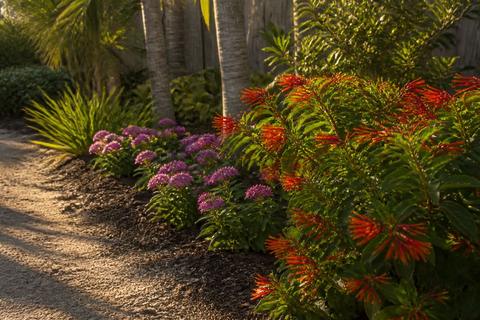
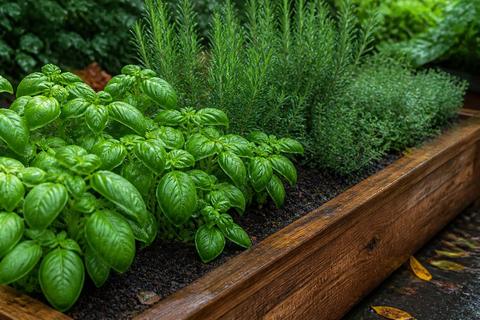
Good bets for permanent landscaping include rosemary and thyme (choose freeze-tolerant cultivars), and shrubs like firebush and lantana, which die back in a hard freeze but resprout from the roots. For fruit trees, stick to varieties bred or selected for Florida's marginal-cold climate rather than varieties meant for California or the Pacific Northwest, and be ready to cover young trees for their first few winters until the trunk hardens off.
Site plants for both cold and drought: sandy soil drains fast, so pair the right zone rating with a real watering plan, not just "plant it and hope." Full sun helps flowering shrubs perform, and 2 to 3 inches of mulch (kept a few inches back from the trunk) buffers root-zone temperature swings in both directions.
Timing tomatoes and other warm-season crops
Tomatoes are the crop gardeners most often plant on the wrong end of the calendar in zone 9a, because they stall in cold soil and also set fruit poorly once summer nights stay consistently warm.
- Start seed indoors in mid-to-late winter, then transplant outside once nighttime lows are reliably staying above the mid-30s.
- Plant a second round in late summer to early fall, once daytime highs start easing off their peak, for a fall harvest before the next freeze risk.
- Watch the 7-day forecast before transplanting; hold off if a front threatens lows in the 30s, especially for anything just out of a pot.
- Harden off seedlings outdoors for 5 to 7 days before planting, water in thoroughly at transplant, and keep soil evenly moist for the first week while roots establish.
North Florida and the zone 8b/9a/9b transition
Jacksonville's split zone
Jacksonville is no longer one zone. The 2023 USDA update put the area inside the I-295 loop and areas east toward the coast in zone 9b (25-30°F average extreme low), while the rest of Duval County remains zone 9a (20-25°F). If you don't know which side of that line your yard falls on, check your exact address on the USDA map rather than assuming from the city name.
Either way, treat Jacksonville as borderline country: a plant tagged hardy only to 9b can still take damage in the area's occasional hard freezes. For anything planted in the open, choose plants rated for 9a or 8b, and reserve true 9b/10a plants for sheltered spots.
Picking shrubs, vines, and flowers for cooler snaps
In this transition zone, the plants that perform are ones that can take a light freeze and resprout, not ones that need to stay warm all winter. For color, lean on heat-tolerant perennials that shrug off an occasional freeze rather than betting the whole bed on tender annuals through winter.
For shrubs and vines, favor plants with strong root systems that regrow from the base after a freeze knocks back the top growth. Planting on the south or southwest side of a structure captures reflected warmth; low spots in the yard where cold air pools are the worst place for anything borderline. Check the plant tag for a cold-hardiness rating at or below your expected low, and plan on frost cloth for the first winter or two while the plant is still young.
Managing wind and sandy, coastal soil
Coastal and near-coastal north Florida sites combine wind stress with fast-draining sandy soil, and a cold front often brings both gusts and a hard freeze at the same time.
- Work compost into planting beds and use a slow-release fertilizer formulated for Florida's sandy soils and long growing season.
- Choose compact, wind-tolerant shapes over top-heavy or floppy growth, and stake young plants through their first season.
- Water deeply and less often rather than a little every day, letting the top inch of soil dry between waterings so roots grow deep instead of staying near the surface.
- Mulch 2 to 3 inches deep to buffer soil temperature, keeping it pulled back a few inches from stems and trunks to avoid rot.
South Florida and zone 10 growing conditions
How zone 10 is different
In zone 10a (30-35°F average extreme low) and 10b (35-40°F), sustained hard freezes are rare, and a lot more of the landscape can stay green and growing year-round instead of dying back every winter. That doesn't mean cold never happens. Occasional cold snaps still hit south Florida, and new growth or tropical plants pushed too far south of their comfort zone can still take damage on the coldest nights of the year.
The bigger everyday challenge in zone 10 is often not cold but heat and humidity: fungal and bacterial disease pressure builds faster in warm, wet conditions, so spacing plants for airflow matters more here than it does further north.
What thrives in the heat and long season
Tropical and subtropical ornamentals, many palms, and warm-season vegetables that tolerate humidity all do well here, along with tropical fruit trees that would never survive a north Florida winter. Site them for good drainage even though the climate is warm, since "warm" and "wet at the roots" together invite root rot fast.
Water at the base of the plant rather than overhead to cut down on fungal disease, and give plants enough spacing that foliage dries out between rains. In containers, use a well-draining potting mix, since humidity plus a soggy pot is a fast way to lose roots.
A practical planting sequence for zone 10a
Zone 10a is forgiving compared with the rest of the state, but new plants still need time to root in before facing either a stray cold snap or peak summer heat.
- Plant during a stable warm stretch rather than right before a forecast cold front, and keep soil evenly moist for the first 2 to 3 weeks after transplanting.
- Site fruit trees and shrubs in full sun on a wind-sheltered side of the yard to reduce cold-snap exposure on the rare night it matters.
- Mulch right after planting to stabilize root-zone temperature and moisture, keeping mulch off the trunk and crown.
- Water deeply 2 to 3 times a week for the first month on newly planted trees, then taper off as roots spread and new growth appears.
Choosing plants that actually perform in Florida
Native plants for zone 9a and nearby
Native plants are adapted to Florida's heat, rainfall pattern, and local pests, which usually means less babying once they're established. In zone 9a especially, native shrubs and perennials cut down on the "why did everything die back this winter" problem, particularly in sandy soil that dries out fast. They also support local pollinators, which keeps a garden active even when vegetable beds slow down for winter.
Match the plant to the site: drought-tolerant natives for dry, sandy beds; moisture-tolerant natives for low spots that stay damp. In windy or coastal yards, prioritize natives known for sturdy root systems over ones that tend to blow over or snap.
Hedges, foundation plants, and vines
Florida landscaping needs plants that handle intense sun, humidity swings, and (near the coast) salt exposure, all at once. For hedges and foundation beds, dense, strong-stemmed shrubs hold up better through a light freeze than leggy, open growth. For vines, pick species that can take heat and resprout after a setback rather than tender tropical vines that die back to bare wood every winter.
Spacing and siting do most of the work here: give hedges room for airflow to cut down on fungal problems, train vines onto structures that can bear their weight, and water new foundation plantings consistently through their first season while roots are still shallow and vulnerable.
Sun, shade, and drainage before you buy
A zone rating only tells you about cold tolerance. Plenty of Florida plant failures happen because a zone-correct plant went into a spot with the wrong sun exposure or drainage, not because the zone was wrong.
- Track direct sun hours in the planting spot for a week, noting morning sun versus afternoon sun, since afternoon Florida sun is much more intense.
- Test drainage by digging a hole, filling it with water, and timing how long it takes to drain; a hole that's still full after several hours needs raised beds or heavy soil amendment, not a drought-tolerant plant.
- Match roots to the site: skip drought-adapted plants in spots where water visibly stands after rain.
- In sandy soil, water more deeply and less frequently to encourage roots to grow down instead of staying shallow.
Seasonal planting calendar for Florida gardeners
Cool-season windows
Cool-season crops are about timing around short cold snaps, not avoiding cold entirely. In zone 9a, leafy greens, peas, and root crops like carrots and beets grow well through the cooler months and bolt or struggle once real heat returns. Start seed indoors or in a protected spot while nights are still mild, then move outdoors once the forecast supports steady growth without a hard freeze imminent.
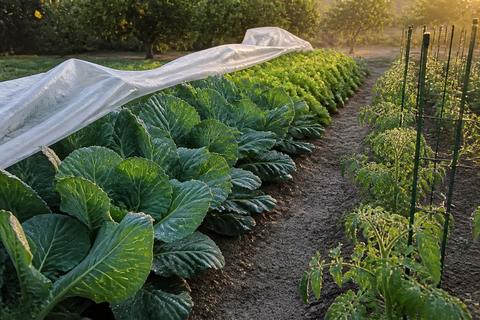
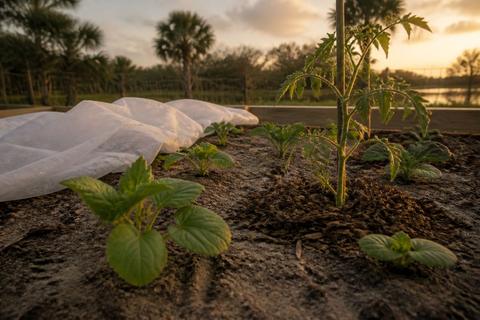
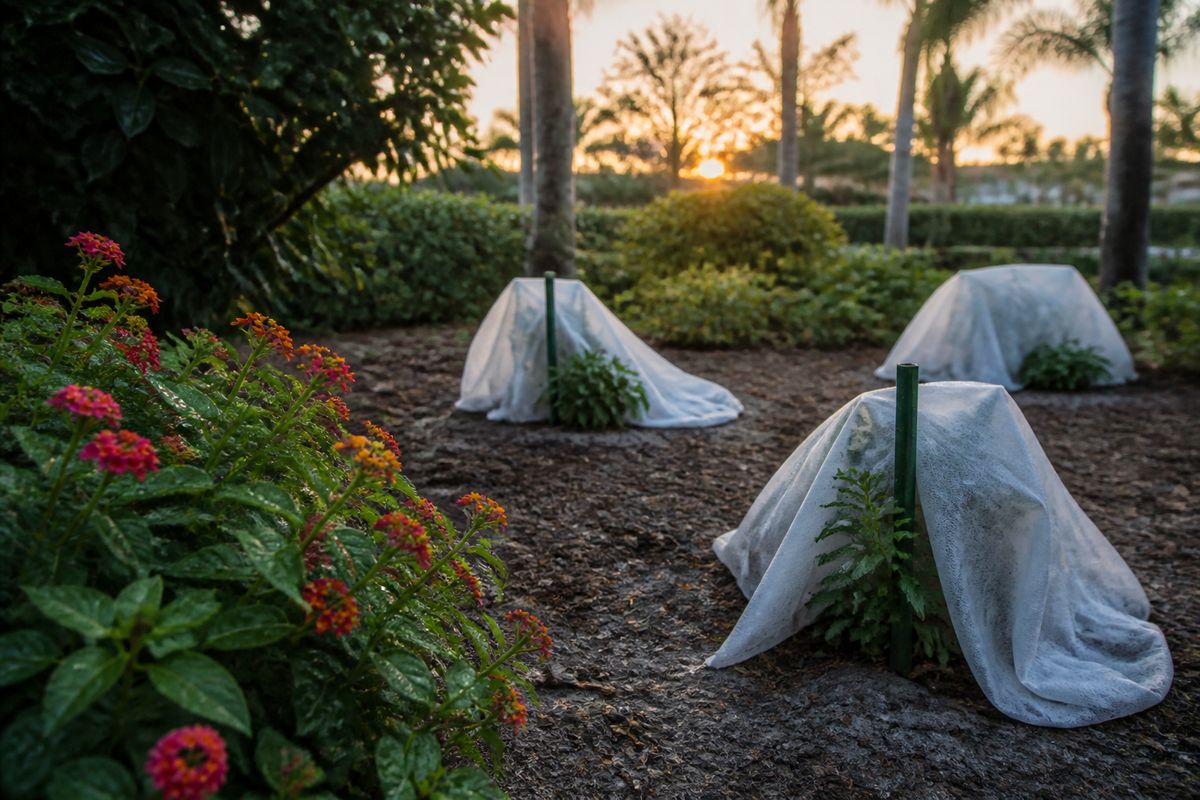
Watch the daily forecast, not the calendar date. When a front is forecast, cover tender seedlings with frost cloth draped to the ground (not just over the leaves) in the evening, and pull it off again once temperatures climb the next morning so plants don't overheat or stay damp under the cover all day.
Warm-season windows
Warm-season crops need nights that are reliably staying warm before they'll put on real growth. In zone 9a, that generally means waiting until the last real cold-snap risk has passed before expecting good production from tomatoes, peppers, cucumbers, and basil.
- Start hardening off transplants about a week before your planned outdoor planting date.
- Plant once overnight lows are consistently well clear of freezing risk.
- Water in at planting, then keep to a consistent watering schedule for the first 2 to 3 weeks while roots settle.
- Add trellis or stake support early for vining crops; it's much harder to add once the plant is sprawling.
Adjusting after a cold front or heat wave
Florida weather swings fast enough that a rigid planting schedule doesn't work well. After a cold front, hold off on new transplanting if nighttime lows drop sharply, and cover anything already in the ground with frost cloth in the evening, removing it the next day once the sun is up.
After a heat wave, slow down on new plantings if seedlings are wilting in full sun during the hottest part of the day. Water early in the morning rather than midday, use shade cloth over fragile transplants for a few days, and hold off on fertilizer until the plant recovers, since stressed roots take up nutrients poorly and can scorch.
Common Florida gardening questions and local resources
What zone labels don't tell you
USDA hardiness zones are a useful starting point, but they don't account for wind exposure, humidity, soil type, or how sheltered your specific yard is. A plant rated hardy to zone 9a can still die in an exposed, windy yard that runs colder at night than the official zone suggests, while the same plant might sail through winter in a sheltered courtyard a few blocks away.
Use the zone number to narrow your options, then confirm with local evidence: how nearby established gardens fared after the last hard freeze, your own yard's history through past cold snaps, and advice from nursery staff who sell specifically into your area.
Getting advice by region, not just by state
"Florida" isn't one gardening climate, and treating it as one is how a lot of new gardeners end up frustrated. The most reliable advice comes from sources tied to your specific region: county extension offices, local garden clubs, and nurseries that stock plants they know survive nearby. When a source doesn't specify north, central, or south Florida, or doesn't mention how it handles frost risk, treat it skeptically.
Using extension offices and nurseries well
Local experts save you from buying plants that look good in a photo but fail in your yard. Bring your address, your sun exposure notes, and a sense of your drainage when you ask for recommendations. Useful questions include what they've personally seen suffer winter damage nearby, and which cultivars hold up best on the coldest nights they remember.
UF/IFAS county extension offices provide region-specific guidance grounded in university research and are free to consult; check your county's IFAS Extension office for a local planting calendar rather than relying only on a generic statewide chart.
Frequently Asked Questions
What growing zone is Florida overall?
Florida isn't one zone. It runs from 8b in parts of the panhandle and north Florida through 9a and 9b across the peninsula's interior, up to 10a and 10b along the coasts and in the southern part of the state.
What is central Florida zone 9a?
Zone 9a is a USDA hardiness zone with an average extreme winter low of 20 to 25°F. It covers a lot of inland central and north-central Florida and determines which plants can be left outdoors year-round versus which need winter protection.
What gardening zone is Tampa, FL?
Tampa is generally in zone 9b, with some coastal and bayfront pockets running slightly warmer toward zone 10a depending on how close they sit to the water. Because the metro area covers so much ground, check your specific address on the USDA map rather than assuming one zone for the whole city.
What zone is North Florida for plants?
North Florida generally runs 8b to 9a, with 9b appearing near the coast and in urban areas like parts of Jacksonville, depending on inland versus coastal location and local elevation.
When should I plant tomatoes in Florida zone 9?
In zone 9, tomatoes go in twice: late winter to early spring for a spring crop timed after the last serious freeze risk, and again in late summer to early fall for a fall crop harvested before winter cold arrives.
Are Florida native plants a better choice for zone 9a?
Usually yes. Natives are adapted to Florida's heat, rainfall pattern, pests, and soil, which typically means less supplemental watering and fewer disease problems than non-native ornamentals asked to do the same job.