Florida Vegetable Gardening for Home Growers
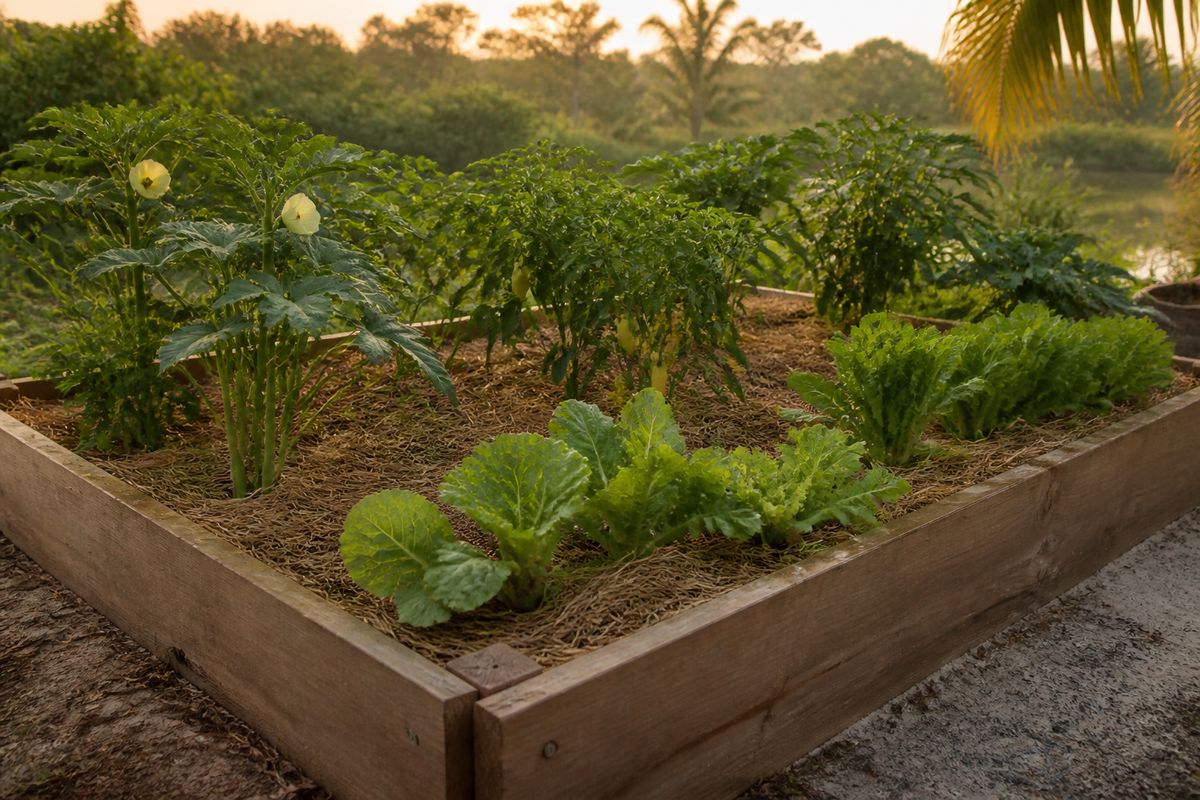
Florida vegetable gardening for home growers comes down to one problem northern gardening advice doesn't solve: timing. The sun isn't the issue here. A tomato transplant that does fine in Ohio in May will cook or catch blight if you put it in a Florida bed at the same time. The state also isn't one climate: a planting date that works in Pensacola can be six weeks off for Fort Myers. Get the region and the calendar right and Florida vegetable gardening is genuinely easier than most places, because something is plantable almost every month of the year.
Florida Isn't One Garden Zone
UF/IFAS splits the state into three gardening regions for planting purposes: North Florida (everything north of State Road 40, roughly Ocala and above), Central Florida (between State Roads 40 and 70, roughly Ocala to Sebring), and South Florida (below State Road 70, from Sarasota/Fort Pierce down through Miami). UF/IFAS publishes separate planting-date tables for each region because frost risk, heat duration, and rainy-season timing are genuinely different across them. If you garden in Tampa and follow a Jacksonville planting calendar, or vice versa, you'll be off by weeks. Always check your specific region's dates rather than a single statewide list, including the ones linked below.
What Actually Grows Well Here
Skip the plants that expect a long, mild spring. Florida usually doesn't give you one. Vegetables that reliably perform:
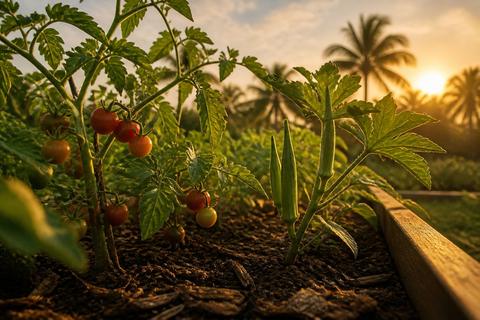
- Warm season (spring through summer): okra, southern peas (cowpeas), sweet potatoes, peppers, eggplant, yardlong beans, and heat-set tomato varieties bred for the Southeast.
- Cool season (fall through winter, strongest in North/Central Florida): collards, mustard and turnip greens, lettuce, carrots, broccoli, cabbage, and beets.
- Year-round or nearly so in Central/South Florida: herbs like basil (warm months) and cilantro (cool months), plus perpetual producers like Seminole pumpkin and chaya once established.
Standard slicing tomatoes and sweet corn are doable but need the tightest timing of anything on this list. Plant too late into spring and heat stress, blossom drop, and fungal disease take over fast.
Full Guide: Best Vegetables to Grow in Florida
Central Florida Planting Windows
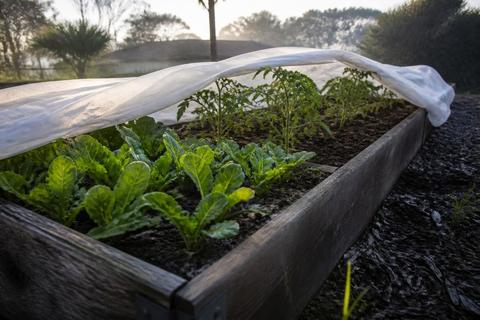
Central Florida (roughly Ocala to Sebring) gets real winter cold snaps but not the hard, sustained freezes North Florida sees, so the planting calendar is its own animal. Cool-season crops (broccoli, cabbage, carrots, lettuce) go in from around October through February. Warm-season crops like tomatoes and peppers get two windows: a spring planting (roughly February–March) and, for the gardeners willing to fight the heat, a fall planting (August through September) timed to mature before the first frost risk in December. Planting tomatoes in May or June in Central Florida is fighting the climate: by then daytime highs and humidity push blossom drop and disease pressure up sharply.
Full Guide: Central Florida Vegetable Planting Calendar
Laying Out the Garden for Florida Conditions
The two things that ruin more Florida vegetable gardens than pests do are standing water and poor airflow. Practical fixes:
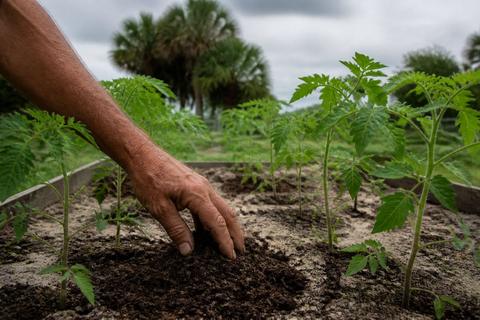
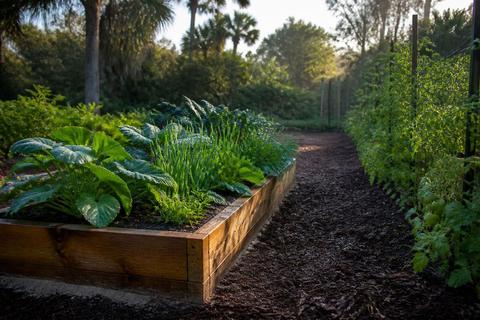
- Raised beds, 8–12 inches high: Florida's native soil is mostly sand with little organic matter, and raised beds drain the heavy summer rain instead of holding it around roots.
- Wider row spacing than northern guides suggest: leaves that stay wet from humidity and afternoon storms are what fungal disease needs, and extra air movement between plants cuts drying time.
- Tall crops (corn, pole beans, trellised cucumbers) on the north side of the bed so they don't shade shorter crops during the lower winter sun angle.
- Drip irrigation over overhead watering: it keeps foliage dry and cuts water use, which matters in a state with sandy soil that doesn't hold moisture.
- Mulch, 2–3 inches, to hold what moisture the sandy soil does get and moderate root-zone temperature swings.
Full Guide: Vegetable Garden Layout and Design Ideas
Using UF/IFAS as Your Reference, Not a Generic Calendar
Most vegetable-growing advice online is written for a generic US climate that doesn't apply below the Florida-Georgia line. UF/IFAS's Florida Vegetable Gardening Guide is the reference actually built for the state's frost pattern, soil, and pest load, with a planting-date table broken out by the three regions above. For a quick, location-specific list, UF's Florida Fresh tool takes a zip code and returns what to plant that month. When advice conflicts, say a seed packet lists one date and an extension table lists another, go with the extension table. It's calibrated to Florida frost and heat data rather than a national average.
Full Guide: How to Use the UF/IFAS Florida Gardening Guides
Frequently Asked Questions
What makes vegetable gardening in Florida different from other states?
Mainly heat duration, humidity-driven fungal disease, sandy low-organic-matter soil, and planting windows that don't match the rest of the country. A crop calendar written for a temperate climate will consistently have you planting too early or too late here.
Do I really need a region-specific planting calendar?
Yes. Florida's UF/IFAS planting guide splits the state into North, Central, and South zones because frost dates and heat onset genuinely differ that much between, say, Tallahassee and Homestead. A single statewide date is only ever a rough approximation.
Can I grow vegetables in Florida year-round?
In Central and South Florida, something edible can go in almost every month if you rotate cool-season and warm-season crops correctly. North Florida has a harder winter stop for warm-season crops due to real frost risk.
What's the single biggest mistake new Florida vegetable gardeners make?
Planting warm-season crops like tomatoes on a northern schedule, too late in spring, so they hit peak heat and humidity right as they're trying to set fruit, which causes blossom drop and disease.