Best Plants for Florida Gardens by Region
Best plants for Florida gardens by region come down to one split: are you in North, Central, or South Florida? The state runs from USDA zone 8a in the Panhandle to zone 11 in the Keys, and a shrub that thrives in Miami will rot or freeze out in Tallahassee. Sort out your zone and region first, then pick from the lists below instead of buying whatever looks good at the big-box garden center.
For more help, see our What to Plant in Florida: A Month-by-Month Guide guide.
Florida's growing zones and why region matters
How North, Central, and South Florida actually differ
Florida is not one climate, and treating it like one is the single biggest reason gardens underperform here. The USDA Plant Hardiness Zone Map puts the Panhandle and inland North Florida (Tallahassee, Gainesville, Jacksonville) in roughly zones 8b to 9a, where winter lows of 15-25°F happen most years and hard freezes below 20°F show up every few winters. Central Florida (Ocala down through Tampa and Orlando to Sebring) sits in roughly zones 9a to 9b, with occasional freezes but a much longer frost-free stretch. South Florida (Fort Myers, West Palm Beach, Miami, the Keys) runs roughly zones 10a to 11, where a true freeze is rare and some years never happens at all. Check your exact zone by zip code on the USDA's interactive map, since microclimates shift these boundaries year to year.
Two things matter more than the zone number itself: chill hours and freeze frequency. North Florida gets roughly 400-650 chill hours (hours below 45°F) in a normal winter, enough for peaches, apples, and some stone fruit that would never fruit in Miami. South Florida rarely breaks 100 chill hours, so it's a different plant list entirely, built around mango, avocado, and tropicals that would die outright in a Tallahassee January.
Match plants to heat, chill hours, and rainfall
Heat and humidity are the South Florida problem; cold snaps are the North Florida problem. In South Florida, plants bred for cooler, drier climates get fungal leaf spot and root rot fast, especially in summer's daily afternoon downpours. In North Florida, a plant that needs 600+ chill hours to fruit well (most apple varieties, for instance) simply won't get enough cold most winters, so it grows fine but never produces.
For fruiting plants specifically, match the variety's published chill requirement to your actual region, not to what's for sale at the nursery. The 'Flordaprince' peach, bred by the University of Florida, needs only about 150 chill hours and fruits reliably as far south as Central Florida; standard grocery-store peach varieties bred for Georgia or the Carolinas need 700-900 hours and will flower erratically or not at all in most of the state. For ornamentals, look for "heat-tolerant" or "full sun" on the label if you're planting in Central or South Florida, and check drainage before assuming a plant will take standing water after a downpour.
Sun, shade, and soil drainage come before pretty flowers
Most Florida plant deaths trace back to light mismatch or bad drainage, not bad luck. Full sun means 6-8 hours of direct light with no afternoon shade; part shade in Florida usually means morning sun with protection from 1-4 p.m. sun, which is brutal even for "full sun" plants once July hits. Sandy soil across most of the state drains in minutes, which is good for salt- and drought-tolerant natives but murder on anything that wants consistent moisture unless you're irrigating.
Before planting anything, dig a test hole about 12 inches deep and wide, fill it with water, and time the drain. Under 4 hours is fast-draining sand (common statewide); if it's still full after 8-12 hours, you have a wet spot or clay lens and need raised beds or a different plant list entirely. Track full-sun versus shaded hours in your actual planting spot for one day before buying anything labeled for a specific light level.
Best plants for North Florida gardens (zones 8b-9a)
Shrubs and perennials that shrug off freezes
North Florida is the one part of the state where you plan around real winter cold, not just cool nights. Camellias, azaleas (especially Southern Indica and Encore types), and loropetalum are dependable evergreen shrubs here and handle hard freezes into the low 20s once established. For perennial color, Shasta daisy, coneflower (Echinacea), and Stokes' aster come back reliably after freezing back to the ground in a hard winter.
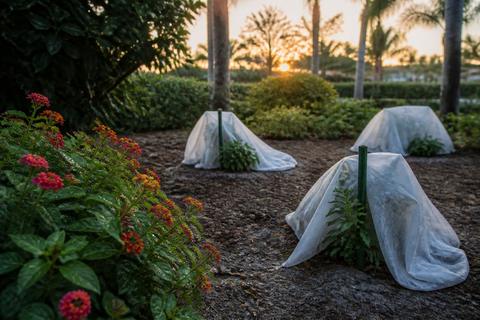
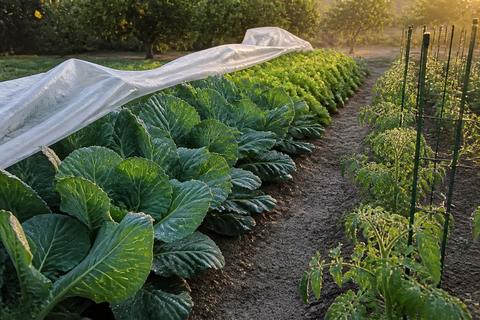
Give new plantings a layer of mulch 2-3 inches deep, kept a few inches back from the stem so the crown doesn't stay wet. On nights forecast below 32°F, cover tender young plants with cloth or a bedsheet draped all the way to the ground rather than just over the top; per UF/IFAS Extension, covers that reach the ground trap radiant heat rising from the soil, while a cover that only drapes over the foliage does little. Plastic works in a pinch but must come off the next morning once the sun is up, since trapped heat under plastic on a sunny day can damage the plant it was protecting.
Native low-growing plants for borders and groundcover
Coontie (Zamia integrifolia), a true Florida native cycad, stays under 3 feet, tolerates both sun and part shade, and needs almost no supplemental water once established, making it one of the most reliable border plants in North Florida. Dwarf yaupon holly and creeping juniper both work as tidy, drought-tolerant groundcover in drier beds; for damp or low spots, blue flag iris and swamp sunflower handle standing water that would rot most other groundcovers.
Space new groundcover plantings so they'll fill in without smothering walkways within a season or two, and water deeply once or twice a week for the first month rather than a daily light sprinkle, which only wets the top inch of sandy soil and encourages shallow roots.
Cool-season color for fall and winter beds
North Florida is the one region where classic cool-season annuals actually perform: pansies, snapdragons, and ornamental cabbage go in from October through November and bloom straight through winter into early spring, since they're bred for cold and stall out once summer heat arrives. Plant them 4-6 weeks before your average first frost so roots are established before a hard freeze hits.
Work compost into the bed at planting, since North Florida's sandy soil holds little organic matter on its own. After a freeze knocks back foliage, resist cutting everything to the ground immediately, wait a week or two to see what resprouts, since a freeze-damaged crown often survives even when the top growth looks dead.
Best plants for Central Florida gardens (zones 9a-9b)
Reliable bloomers for a long warm season
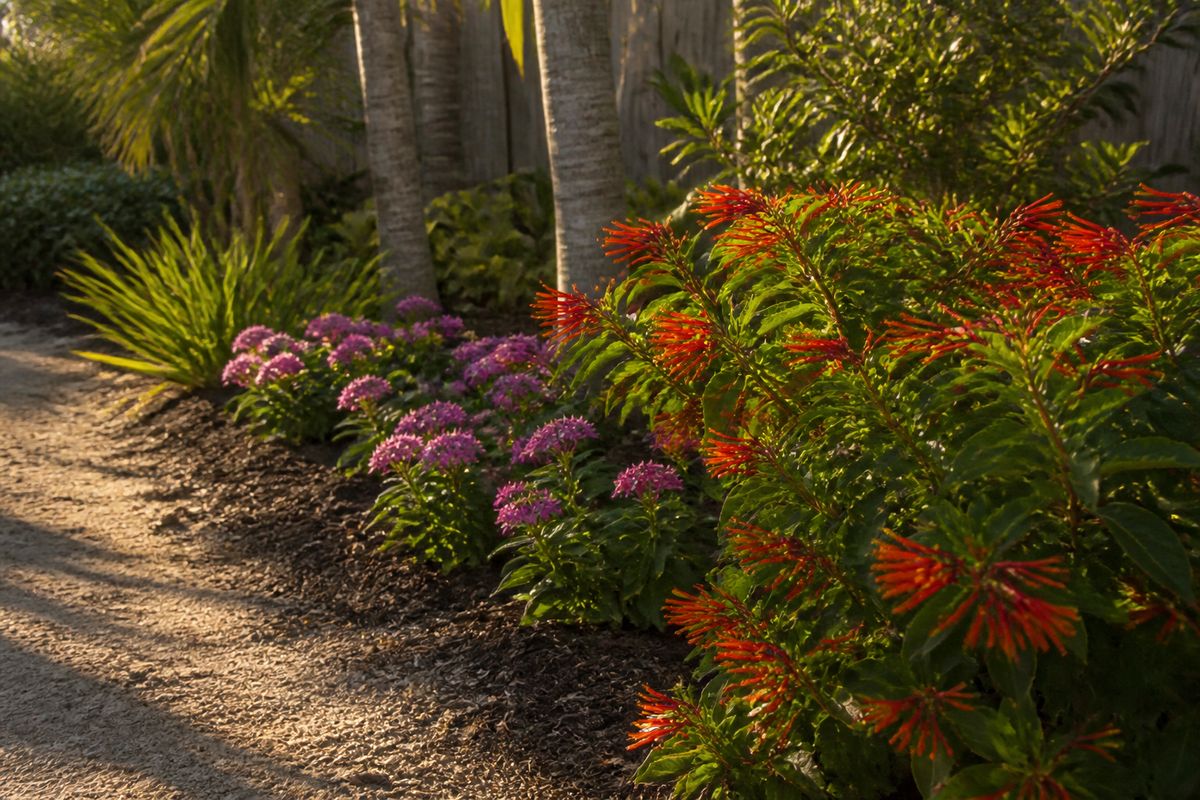
Central Florida's long growing season favors plants that can bloom for months and bounce back after a hard rain. Firebush (Hamelia patens), pentas, and lantana all flower from spring through the first frost and are magnets for butterflies and hummingbirds. Plumbago and firespike handle both the wet summer and the drier, cooler winter without missing a beat.
Deadhead spent blooms right after the first flush rather than waiting for the plant to look ragged, this pushes a second and third round of flowers rather than seed production. Skip heavy nitrogen fertilizer on flowering shrubs; it produces lush leaves at the expense of blooms. Space plants so air can move between them after rain, Central Florida's summer humidity turns tight, poorly ventilated beds into powdery mildew farms fast.
Landscape plants for brutal afternoon sun
Reflected heat off driveways, block walls, and pool decks pushes the effective temperature well above the air temperature, and plants that are only marginally sun-tolerant will scorch here even if the tag says "full sun." Muhly grass, dwarf yaupon, and crown of thorns (Euphorbia milii) all take this kind of exposure without complaint. Bougainvillea does too, but it wants excellent drainage and will sulk in a spot that stays soggy.
Mulch 2-3 inches deep to keep root zones cooler and slow evaporation, and water deeply but infrequently rather than a quick daily spray, deep watering trains roots to go down where the soil stays cooler and moister.
Compact plants for foundation beds
Dwarf varieties save a lot of pruning labor in foundation beds: dwarf ixora, dwarf schefflera, and 'Compacta' or 'Densa' hollies all stay under 3-4 feet without constant shearing. Group plants by water need rather than by looks alone, a foundation bed under an eave gets far less rain than an open bed, and mixing a thirsty plant in with drought-tolerant ones means one or the other stays unhappy.
Prune most Central Florida flowering shrubs right after their main bloom flush (typically late spring to early summer) rather than in fall, since fall pruning removes the wood that would have flowered the following spring.
Best plants for South Florida gardens (zones 10a-11)
Shrubs and vines built for heat and humidity
South Florida grows things fast, but the same heat and humidity that push growth also push fungal disease. Hibiscus, ixora, and croton handle the heat and humidity well if they get good airflow and aren't planted too close together. Mandevilla and allamanda vines want a trellis from day one, since a fast-growing vine left to sprawl on the ground turns into a wet, disease-prone tangle within a season.
Water at the soil, not overhead, and water in the early morning so foliage dries by midday, wet leaves overnight in South Florida's humidity are an open invitation to powdery mildew and leaf spot. If you see white powdery patches or dark spots, improve spacing and airflow before reaching for a fungicide, the underlying problem is usually the layout, not a chemical gap.
Front-yard plants that hold up through a long summer
A lot of South Florida landscaping looks sharp in the mild winter months and turns ragged by August. Cocoplum and silver buttonwood both hold dense, attractive foliage through the full heat of summer without the seasonal thinning that hits less heat-tolerant shrubs. For color that doesn't quit, repeat-blooming hibiscus and pentas keep flowering through the wet season with only occasional deadheading.
Salt-tolerant options for coastal yards
Add salt spray and constant wind to the heat-and-humidity mix and the plant list narrows further. Sea grape, seaside gumbo limbo, and coontie all tolerate direct salt exposure and sandy, fast-draining coastal soil. Give new coastal plantings steady water for the first growing season while roots establish, then taper off, established salt-tolerant natives need surprisingly little supplemental irrigation once they're settled in.
Florida native fruits and edible plants worth growing
Fruit that's actually native to Florida
True Florida natives with edible fruit include saw palmetto (berries used more medicinally than for eating fresh), Simpson stopper, and native pawpaw (Asimina species), plus muscadine and Florida hybrid bunch grapes for a more traditional home-orchard fruit. None of these are heavy producers compared to cultivated fruit trees, they're better thought of as wildlife-supporting landscape plants that happen to be edible than as a primary food crop.
For an actual harvest, most Florida home growers do better with regionally-bred cultivated fruit: low-chill peaches and blueberries in North and Central Florida, citrus statewide where freezes allow, and mango, avocado, and lychee in South Florida where frost essentially never happens.
What actually goes wrong with fruiting plants in Florida
The most common fruit-tree failure in North Florida is buying a variety bred for chill hours the region doesn't reliably get, a 'Flordaprince' peach needing about 150 chill hours (per UF/IFAS EDIS) will fruit far more reliably in North and Central Florida than a standard 800-hour peach variety sold at a national chain nursery. In Central and South Florida, the more common problem is planting in a low spot that holds water after summer downpours, root rot from wet feet kills more young fruit trees there than cold ever does.
On a hard freeze night, drape frost cloth (not plastic, if you can help it) all the way to the ground rather than just over the canopy, this traps the ground's radiant heat rather than just blocking wind. Remove it as soon as temperatures rise the next morning; leaving plastic on into a sunny day can trap enough heat to damage the plant it's protecting.
Planting timing and care by region
When to plant for the best establishment odds
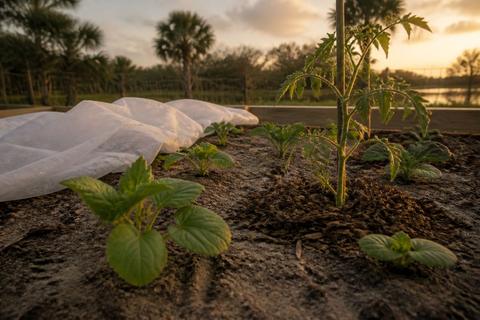
In North Florida, plant cool-season annuals and hardy perennials in fall (roughly October-November) so roots establish before winter cold, and hold off on tender plants until after the last frost date, typically mid-March. In Central Florida, spring and early fall are the two safest planting windows, giving roots time to settle before either summer heat or (rarely) winter cold stresses new plants. In South Florida, you can plant in most months, but the rainy season (June-September) is easiest on new plantings since you're not fighting to keep them alive through the dry season on hand-watering alone.
Watering and mulch, region by region
Statewide, Florida's sandy soil drains fast and holds little water, which means most new plantings need more frequent watering early on than the same plant would in clay soil up north. In North and Central Florida, water new plantings deeply two to three times a week for the first month, then taper as roots spread. In South Florida, keep irrigation steady through the dry winter months (roughly November-April) since that's when rainfall drops off sharply even though temperatures stay warm. Everywhere in the state, keep mulch 2-3 inches deep but pulled back from the stem or trunk, mulch piled against the crown holds moisture against the bark and invites rot.
Diagnosing a struggling plant
If a full-sun plant is thin and leggy, it's probably in too much shade, if a shade plant has crispy, bleached patches, it's getting scorched by direct sun it wasn't built for. Yellowing leaves paired with stalled growth usually points to drainage, not nutrients, run the 12-inch test-hole drainage check before reaching for fertilizer. If new transplants die within a few weeks, the most common causes are planting too deep (the root flare should sit at or slightly above grade) or letting mulch touch the trunk.
Frequently Asked Questions
What are the best plants for Florida gardens by region?
It depends heavily on where you are. North Florida (roughly zones 8b-9a) needs cold-hardy shrubs like camellia and azalea that can take hard freezes. Central Florida (9a-9b) does well with heat-tolerant, long-blooming plants like firebush and pentas. South Florida (10a-11) needs plants built for constant heat, humidity, and often salt, like hibiscus, sea grape, and cocoplum.
What flowers grow well in Central Florida?
Firebush, pentas, lantana, plumbago, and firespike all bloom for months in Central Florida's long warm season and recover quickly after a hard rain or a light pruning.
What plants do well in Florida afternoon sun?
Muhly grass, dwarf yaupon holly, crown of thorns, and bougainvillea (in well-drained soil) all take intense reflected heat from driveways and walls without scorching, especially with a couple inches of mulch and deep, infrequent watering.
Are there native plants that stay low to the ground in Florida?
Yes. Coontie is the standout, a true Florida native cycad under 3 feet that handles sun or part shade with almost no irrigation once established. Dwarf yaupon holly and creeping juniper work in drier spots; blue flag iris and swamp sunflower handle wetter, low-lying beds.
What fruit is native to Florida?
Genuinely native edible fruit is limited, native pawpaw, Simpson stopper, and saw palmetto berries are the main ones, and none produce heavily. Most Florida home fruit growing leans on regionally-bred cultivars instead, like low-chill 'Flordaprince' peaches in North and Central Florida or mango and avocado in South Florida, rather than true natives.
When should I plant flowers in Florida?
In North Florida, plant cool-season annuals in fall and wait until after the last frost (mid-March or so) for tender plants. In Central Florida, spring and early fall are the safest windows. In South Florida, the rainy season (June-September) gives new plantings the easiest start, though you can plant in most months given enough irrigation.