How to Use the UF/IFAS Florida Gardening Guides
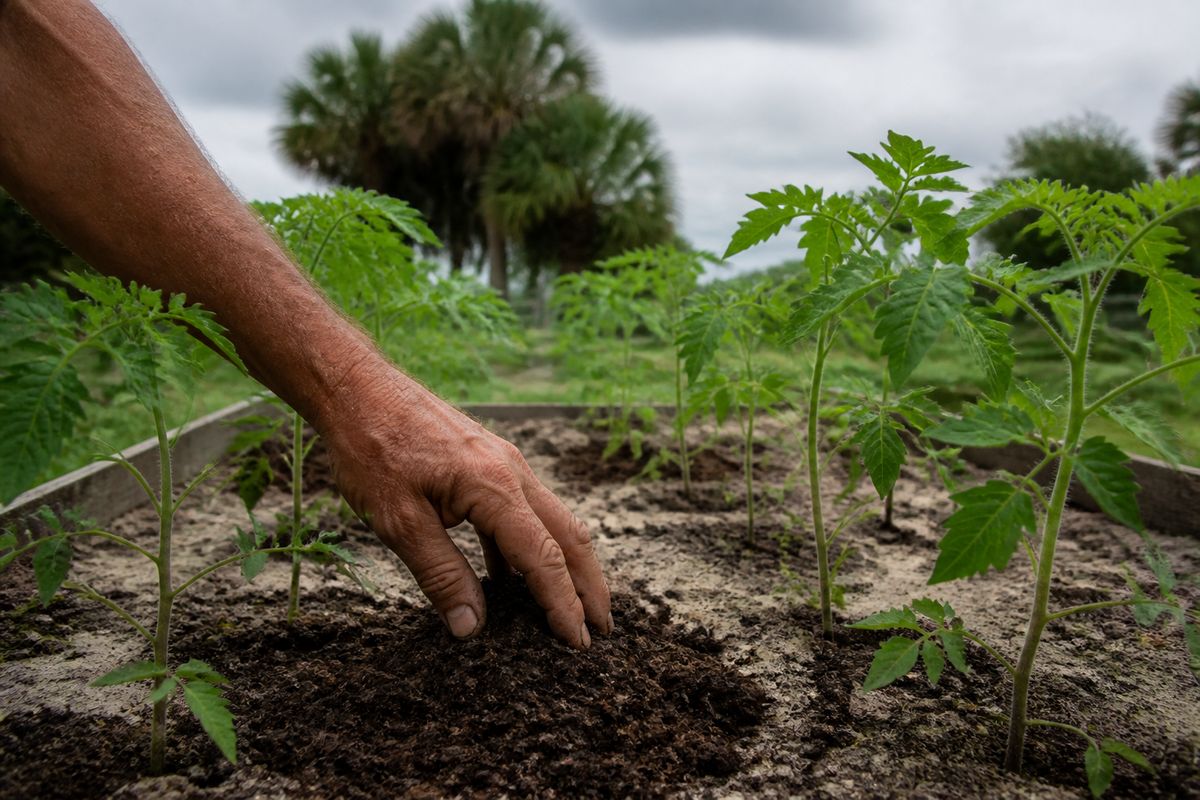
The edis florida vegetable gardening guide exists because Florida breaks most generic gardening advice. A planting date that works in Georgia can rot your seedlings in Central Florida, and a "spring garden" in Miami actually starts in the fall. UF/IFAS (University of Florida's Institute of Food and Agricultural Sciences) publishes region-specific guidance through EDIS and its companion sites, and knowing which document to pull up, and when, saves you a season of guessing.
For more help, see our Florida Vegetable Gardening Guide guide.
What UF/IFAS actually publishes
EDIS vs. Gardening Solutions vs. the planting calendar
These are three different tools, not three versions of the same thing.
- EDIS (the Ask IFAS vegetable production hub) hosts the full research publications, including the Vegetable Production Handbook of Florida. This is where you go for planting-date tables by crop, variety trial results, and fertilizer/spacing recommendations with the reasoning behind them.
- Gardening Solutions is the consumer-facing arm: shorter plant profiles and quick care steps, aimed at home gardeners rather than commercial growers. Use it when you want a fast answer, not a citation-backed deep dive.
- The Florida Gardening Calendar is published in three separate editions, one each for North, Central, and South Florida, because the same crop can have a three-month planting window difference between regions.
A workable order: use the calendar to pick your planting window, EDIS to pick your variety and fertility plan, and Gardening Solutions when a plant starts showing symptoms and you need a fast, plain-language answer.
Match the guide to your actual region
Florida's UF/IFAS materials split the state into North, Central, and South editions because winter lows, day length, and heat duration are genuinely different across the peninsula. North Florida (roughly the Panhandle through Gainesville/Jacksonville) gets real winter frost and a shorter warm season. Central Florida (Ocala down through Tampa/Orlando) sits in between, with a wider swing between winter cold snaps and summer heat. South Florida (Naples/Fort Lauderdale/Miami and the Keys) rarely sees frost at all, which flips the calendar: many "spring" crops there are planted in fall and winter and harvested before summer heat and rain arrive. If you plant a North Florida calendar's tomato dates in Miami, you'll transplant straight into summer heat and lose fruit set. Always confirm which regional edition you're reading before you copy a date.
Turn the guide into an actual planting plan
Read the planting window, then work backward
Start with the crop's planting window for your region, then count backward: seed-start date, transplant date, expected harvest window. For warm-season crops (tomatoes, peppers, cucumbers, beans), that window is bounded on the early side by your last frost and on the late side by summer heat killing fruit set, roughly once nighttime lows stay above the mid-70s°F. For cool-season crops (broccoli, lettuce, carrots, brassicas), the window is bounded by heat on one side and, in North/Central Florida, hard freezes on the other. Write down all three dates before you buy a single seed packet so you're not improvising mid-season.
Build beds for Florida's sandy soil, not generic advice
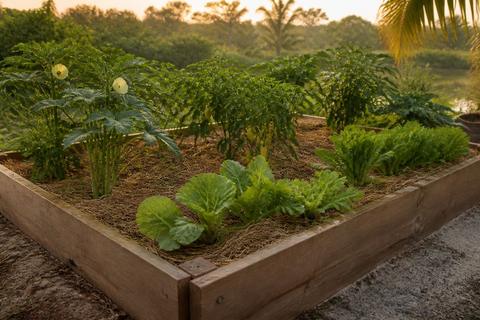
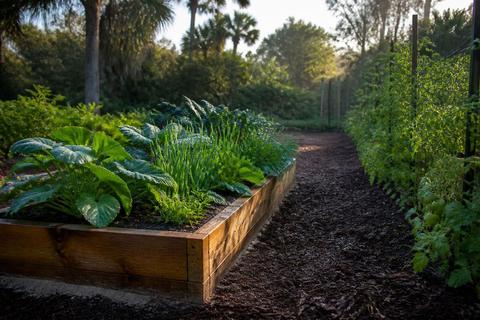
Most of Florida's native soil is fast-draining sand with very little organic matter or water-holding capacity. That changes how you water and feed compared to gardening in loam or clay:
- Water deeper, less often. A light daily sprinkle wets the top inch and evaporates by afternoon; it does not reach root depth. Water deeply enough to soak the root zone, then let the top inch dry before watering again.
- Amend before you plant, not after. Work in compost or aged manure at bed prep, since sandy soil won't hold nutrients from a single feeding.
- Feed in smaller, more frequent doses. Sandy soil leaches nutrients fast, especially nitrogen, after heavy rain. Split fertilizer applications rather than dumping a season's worth at planting.
- Space for airflow. Florida's humidity keeps foliage wet longer after rain or dew, and crowded plants trap that moisture, which is exactly the condition fungal diseases need. Follow the guide's spacing chart rather than tightening rows to fit more plants.
Containers and small beds need their own rules
In containers, sandy-soil logic still applies in reverse: pots dry out faster than ground beds, especially in summer heat, so check moisture daily rather than assuming a fixed schedule. Use a pot sized to the mature root system, not the seedling, and set trellised or vining crops where leaves can dry in open air rather than against a wall or fence line.
Reading the plant-health sections
Separate pest damage, disease, and nutrient problems
Most UF/IFAS crop publications include a symptom section, and the fastest way to use it is to check the plant on a regular schedule rather than only when something looks wrong. Look at leaf undersides and new growth weekly. Rough patterns worth knowing:
- Nutrient deficiency usually shows as a consistent yellowing pattern: older leaves first for nitrogen, newer growth first for iron or manganese.
- Fungal disease tends to show as defined leaf spots, often with a yellow halo, and spreads faster in wet, crowded plantings.
- Pest damage shows as visible feeding: holes, stippling, webbing, or clusters of insects on stems and leaf undersides.
Match the fix to the cause. Overwatering and crowding are common culprits behind what looks like disease, so check your own watering and spacing before assuming you need a treatment.
Check toxicity before you plant, especially with pets around
If your household has dogs, cats, or curious toddlers, check a plant's toxicity status before adding it, particularly for ornamentals mixed into a vegetable bed (tomato and pepper foliage itself is mildly toxic if chewed in quantity, for instance). If you use a pest control product, follow the label's re-entry interval before letting people or pets back into that bed.
Where the guidance goes beyond vegetables
Trees, shrubs, and Florida-Friendly Landscaping
Nearby trees and shrubs affect a vegetable garden more than most people expect: they compete for water in sandy soil, and a poorly placed tree can shade a bed that needs full sun. UF/IFAS's Florida-Friendly Landscaping guidance is useful here for choosing species suited to your soil drainage and, in coastal areas, salt exposure, and for placing them so they don't shade or out-compete your vegetable rows.
Native and pollinator-friendly plants
Vegetable fruit set (tomatoes, squash, cucumbers) depends on pollinator activity, and a bed surrounded only by mowed lawn gives pollinators no reason to visit. Native flowering plants that bloom across different seasons help keep bees and other pollinators active near the garden. Keep them spaced back from vegetable rows so they don't shade crops or crowd airflow.
Build a weekly routine around the guide
A simple checklist beats a memorized one
Turn the recommendations into a repeatable weekly pass: check soil moisture at root depth (not just the surface), scout leaves and stems for early symptoms, remove damaged or diseased foliage promptly, feed on schedule rather than by guesswork, and pull weeds before they compete for water in sandy beds. Log what you see and when, including rain events, since Florida's afternoon thunderstorms can undo a week of careful watering in twenty minutes.
Know when to call your county extension office
Call your county extension office when a symptom doesn't clearly match a common cause, or when you're about to apply a pesticide or fungicide and want confirmation first. Bring clear photos of the whole plant plus close-ups of affected leaves, a rough timeline of when the problem started, and notes on your watering and fertilizing routine. County agents can access UF/IFAS diagnostic resources you won't easily find on your own and can tell you when a plant is too far gone to save versus worth treating.
Frequently Asked Questions
What is the UF/IFAS Florida gardening guide used for?
It's the umbrella term for the University of Florida's research-based publications and tools for Florida gardeners: EDIS documents, the Gardening Solutions site, and the regional planting calendars. Together they cover planting timing, variety selection suited to Florida heat and humidity, and symptom-based troubleshooting for pests, disease, and nutrient problems.
Is EDIS the same as Gardening Solutions?
No. EDIS hosts the full research publications and production handbooks with the data and reasoning behind each recommendation. Gardening Solutions is the shorter, consumer-facing version built for quick answers. Use EDIS when you want the underlying detail; use Gardening Solutions when you just need the next step.
How do I know which regional recommendation applies to me?
Check whether the guidance is labeled North, Central, or South Florida, since planting windows shift by weeks to months between them. If you're near a regional boundary, read the closest edition and adjust your dates conservatively, a week or two later in spring, a week or two earlier in fall, until you know how your specific site behaves.
Can UF/IFAS guides help with pests and plant problems?
Yes. Most crop publications include symptom sections covering pests, disease, and nutrient disorders, and UF/IFAS also maintains dedicated diagnostic resources for cases that don't match a common pattern. Start from what you actually observe on the plant rather than guessing at a cause and changing several things at once.
Where do I find a Florida planting calendar?
UF/IFAS publishes the Florida Gardening Calendar in North, Central, and South editions. Pick the one matching your region, since a single statewide date range doesn't hold up across Florida's climate range.