Best Flowering Plants for Florida Gardens
The best flowering plants for Florida gardens are not the ones that look good on a nursery tag in April. They are the ones still blooming in August after three weeks of afternoon thunderstorms, and still alive after a January cold snap. Florida runs from USDA zone 8a in the panhandle down to zone 11 in the Keys, so a plant that sails through Miami winters can die outright in Tallahassee, and a plant bred for cooler climates can just sit there and sulk in Central Florida humidity. UF/IFAS puts the state's range at zones 8 through 11, which is really three or four different gardens depending on where you live.
Match the plant to your part of Florida first
North Florida (roughly zones 8a-9a): Tallahassee, Jacksonville, Gainesville
This is the only part of the state that gets real winter. Hard freezes happen most years, sometimes down into the low 20s. Plants here need actual cold tolerance, not just "Florida-friendly" on the label. Camellias, azaleas, and loropetalum do well because they want a cooler winter. Tropical bloomers like hibiscus and plumeria will freeze to the ground or die outright most winters unless they're in a container you can move.
Central Florida (roughly zones 9b-10a): Orlando, Tampa, Ocala
This is the trickiest band. You get occasional frost, maybe once or twice a winter, but summers are as hot and humid as South Florida. Firebush and plumbago both work well here: firebush dies back to the roots after a freeze and comes back as a root-hardy perennial, so treat a freeze as a hard pruning, not a plant death.
South Florida (roughly zones 10b-11): Miami, Naples, the Keys
Frost is rare to nonexistent. This is where hibiscus blooms nearly year-round and firebush grows as a true evergreen shrub that can reach a good 10 to 15 feet if you let it. The tradeoff is intense heat, salt air near the coast, and a longer wet season that can rot plants that want drier feet.
Reliable flowering shrubs that actually perform
Firebush (Hamelia patens)
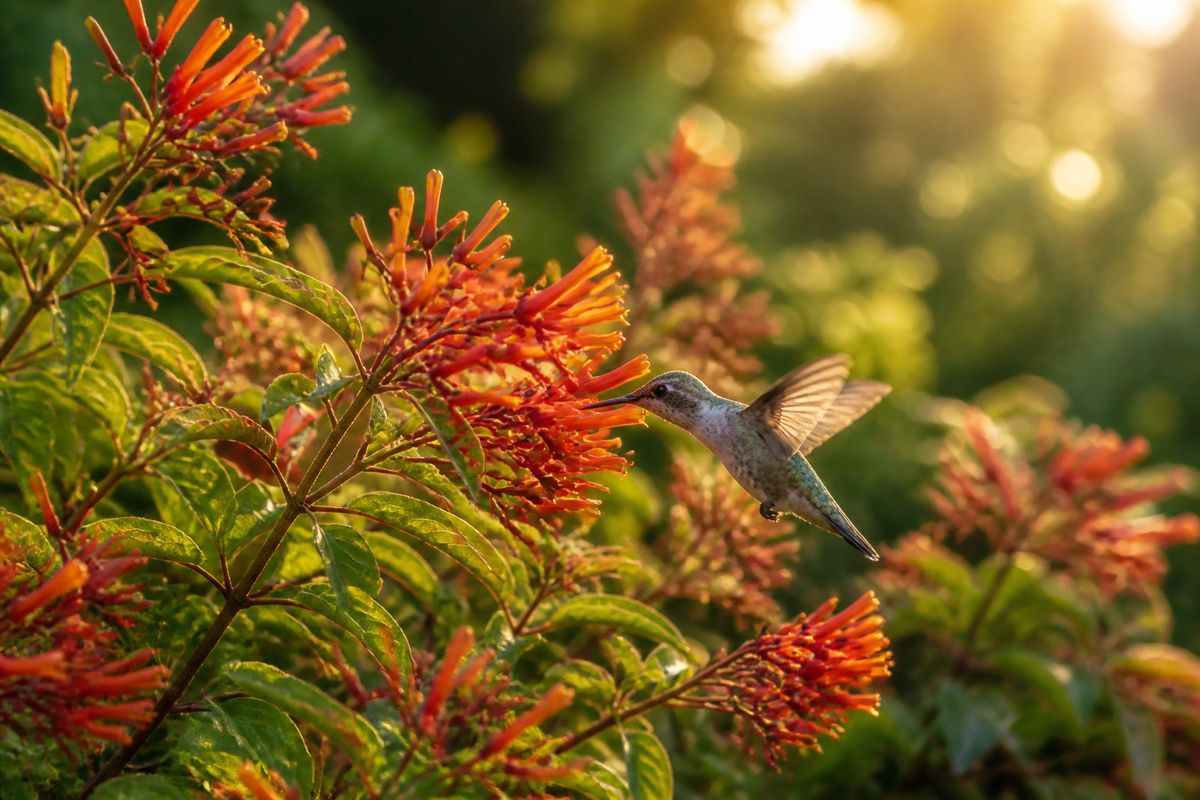
Firebush blooms from late spring until the first frost with clusters of small red-orange tubular flowers that hummingbirds and butterflies work constantly. It's moderately salt tolerant and heat and drought tolerant once established, and it grows across zones 8-11, though how it behaves depends on where you are: north of Orlando it comes back from the roots after freezes, in South Florida it stays green and grows into a small tree-like shrub if not cut back. Give it full sun and don't overwater; it's one of the few flowering shrubs that gets better in a Florida summer instead of struggling through it.
Plumbago (Plumbago auriculata)
Sky-blue or white clusters bloom nearly nonstop from spring through fall. It wants full sun and well-drained soil, tolerates drought once established, and takes a light freeze in stride in Central and South Florida (it dies back in a hard freeze up north but usually returns). It gets rangy if you never prune it, so cut it back by about a third in late winter to keep it full instead of leggy.
Hibiscus (Hibiscus rosa-sinensis)
The classic tropical bloom, and genuinely one of the longest-blooming shrubs you can plant in zones 9b-11, flowering nearly year-round in South Florida. Individual flowers last a day or two, but a healthy plant pushes new ones constantly through the warm months. It is not reliably cold-hardy; expect freeze damage or dieback in zone 8-9a winters unless you're growing it in a pot you can bring in when frost threatens.
Crape myrtle (Lagerstroemia indica)
Works statewide, which is unusual. It wants a real winter chill to set buds well, so it actually performs better in North and Central Florida than in the deep tropics of the Keys. Choose a mildew-resistant modern variety; older crape myrtle cultivars get powdery mildew badly in Florida's humidity.
Perennials and natives for repeat color
Coreopsis (Florida's state wildflower)
Coreopsis reseeds itself and blooms through the hottest months with almost no fuss once it's established, which is exactly why it's Florida's official state wildflower. It's short-lived as an individual plant, often one to two years, but a bed left with some spent flower heads will refill itself from seed.
Blanket flower (Gaillardia pulchella)
A tough, drought-tolerant native for sandy, full-sun spots, with red-and-yellow daisy-like blooms most of the warm season. It handles beach-adjacent sand and salt air better than most perennials, which makes it a good pick for coastal yards where a lot of "pretty" perennials just burn.
Pentas (Pentas lanceolata)
Grown as a perennial in zones 9b-11 and as a heat-loving annual further north. Clusters of star-shaped flowers in red, pink, purple, or white bloom nonstop in full sun and pull in butterflies, especially swallowtails. It wilts fast if it dries out completely, so it wants more consistent moisture than firebush or plumbago.
What to plant near the coast or in pure sand
Sandy Florida soil drains in minutes, not hours, so anything you plant needs either a deep root system or a forgiving watering schedule while it establishes. For salt-exposed yards, firebush, plumbago, and blanket flower all hold up; delicate bloomers like impatiens or most roses burn and struggle within a season of direct salt spray. Work 2 to 3 inches of compost into the top 6 to 8 inches of soil before planting anything new; it will not fix drainage, but it gives new roots something to hold moisture in while they establish.
Water new plantings deeply two to three times a week for the first month, aiming the hose at the root zone rather than the leaves, then cut back to once or twice a week once you see new growth. Overhead watering in humid weather is one of the fastest ways to get fungal leaf spot on hibiscus and roses.
Plants to skip, even though garden centers still sell them
A handful of popular ornamentals are established, spreading problems in Florida's natural areas, not just "vigorous" in the yard. UF/IFAS Gardening Solutions flags asparagus fern as a Category I invasive considered invasive in every part of the state, notes that snake plant spreads and crowds out other plants when grown outdoors in a Florida landscape, and lists wandering dude (Tradescantia zebrina) as invasive in South Florida. If you already have one established, the practical move is to stop letting it spread rather than necessarily ripping out a mature specimen overnight, but don't plant new ones. Reasonable substitutes: sunshine mimosa instead of asparagus fern, and coontie instead of snake plant, both Florida natives that don't escape cultivation.
Before buying anything unfamiliar, a quick check against your local extension office's plant list or the UF/IFAS Assessment of Non-Native Plants takes two minutes and can save you years of pulling volunteer seedlings out of a flower bed.
Frequently asked questions
What blooms nearly year-round in South Florida?
Hibiscus and firebush both come close to continuous bloom in zones 10b-11, where hard freezes are rare. Further north, expect a strong bloom season from spring through fall with a dormant or dieback period in winter instead.
What flowering plants tolerate Florida's sandy, fast-draining soil?
Firebush, plumbago, blanket flower, and coreopsis all handle sandy soil well once established, because they're either genuinely drought-tolerant or Florida natives adapted to it already. The establishment period, the first month or two, is where most of these plants actually die from underwatering, not the sand itself.
Which flowering plants handle coastal salt spray?
Firebush (moderately salt tolerant) and blanket flower both perform in exposed coastal spots. For anything more delicate, plant it on the sheltered side of a building or fence rather than facing open water or wind.
Do I need different plants for North versus South Florida?
Yes. A plant rated for zones 9b-11, like hibiscus in full bloom, may freeze to the ground in a North Florida winter. Always check a plant's stated hardiness range against your actual zone rather than assuming "Florida" means one climate.
How do I avoid planting an invasive species by accident?
Skip asparagus fern, snake plant grown outdoors, and Tradescantia zebrina; all three are documented spreaders in Florida landscapes. When in doubt, check the plant against your county extension office's recommended list before it goes in the ground.