Growing Herbs in Florida
Growing herbs in Florida means fighting two things at once: soil that drains too fast between downpours and air so humid that fungal problems show up within days of a rainy week. Most failures aren't from bad luck, they're from planting shade-loving or drought-sensitive herbs in the wrong spot, or letting a container sit in standing water after a storm. Get the sun, drainage, and airflow right for your zone, and the same herbs that rot in a neighbor's yard will hold up fine in yours.
For more help, see our What to Plant in Florida: A Month-by-Month Guide guide.
Which Herbs Actually Hold Up in Florida
Florida isn't one growing climate. North Florida (roughly USDA zone 8b-9a) gets real frosts most winters; Central Florida (9b-10a) gets occasional freezes; South Florida (10b-11) rarely freezes at all. That range determines which herbs are annuals you replant, which are perennials that survive winter outright, and which need a cold night's warning and a sheet thrown over them.
Full sun, heat-tolerant herbs
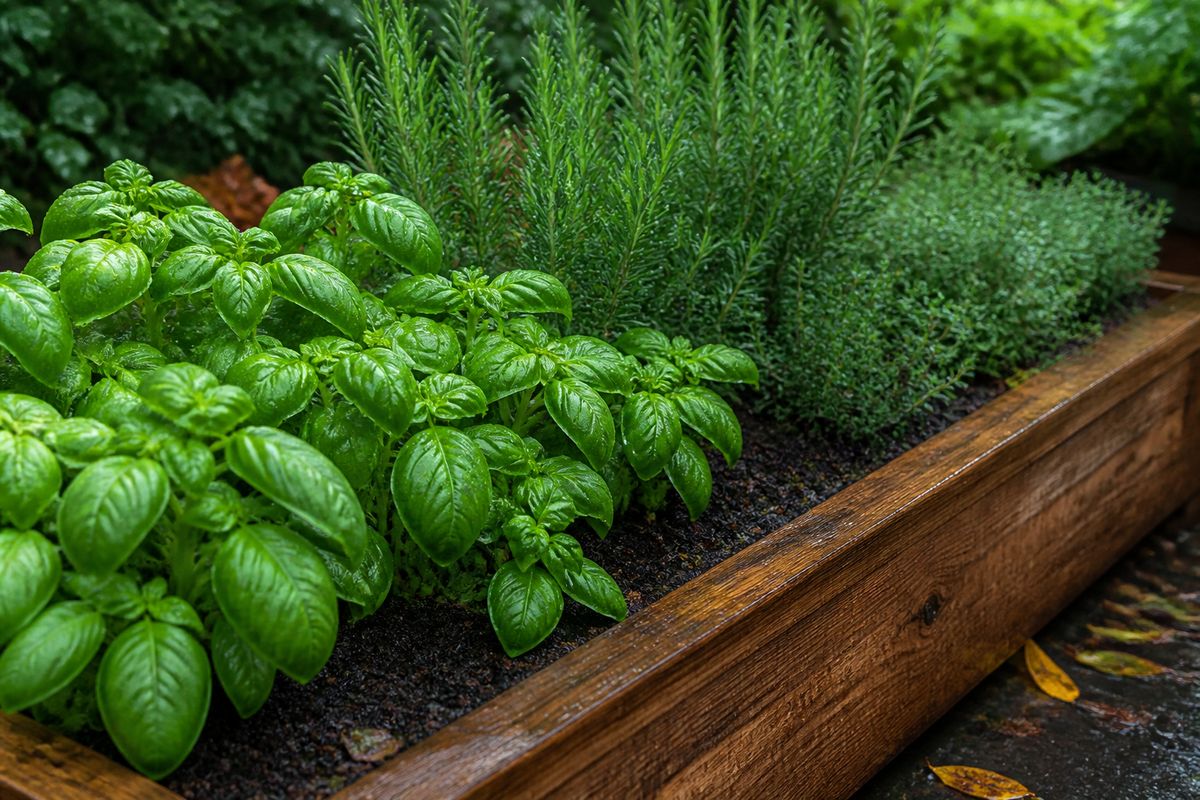
These are the herbs UF/IFAS Extension consistently lists as the easiest to grow in a Florida garden: rosemary, basil, oregano, mint, and thyme.
- Basil wants full sun with some afternoon shade in the hottest months, and it is genuinely frost-tender: leaves turn black and drop once temperatures fall below 40°F, so treat it as an annual that dies back at the first real cold snap.
- Rosemary is one of the most forgiving herbs for Florida because it's drought-tolerant and shrugs off heat, but it hates wet feet. Plant it in the fastest-draining spot or a container, not a low corner of the yard.
- Oregano and thyme handle heat well once established and come back reliably as perennials in Central and South Florida.
- Cuban oregano and lemongrass are tropical and thrive in the humidity that kills off Mediterranean herbs; both are effectively evergreen in South Florida and root-hardy (die back, then resprout) further north.
Herbs that want afternoon shade
Some herbs bolt, wilt, or scorch once summer highs sit in the mid-90s for weeks. Give these morning sun and afternoon shade instead of a full-sun bed.
- Cilantro bolts to seed fast once it's hot. Treat it as a cool-season herb (October through March in Central and South Florida) rather than fighting it through summer.
- Parsley tolerates more heat than cilantro but still does better with afternoon relief and consistent moisture.
- Mint wants shade from the worst afternoon sun and, more importantly, needs a container. It spreads by runners and will take over a bed within a season if it's planted directly in the ground.
What actually survives a Florida winter
"Survives winter" means different things in Pensacola versus Key West. In North Florida, expect a handful of nights near or below freezing most years; Central Florida gets an occasional hard freeze; South Florida almost never does.
- Rosemary, thyme, and oregano are the safest bets as true perennials statewide, rosemary especially if it's in well-drained soil where cold-plus-wet-roots (the actual killer, not cold alone) isn't a risk.
- Basil, Cuban oregano, and lemongrass will die back or die outright at freezing temperatures in North and Central Florida. Treat them as warm-season plantings and replant in spring, or grow them in containers you can move indoors on the coldest nights.
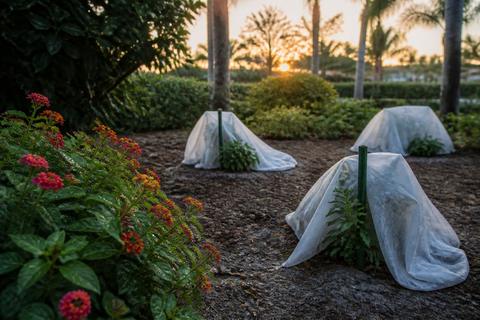
- In North Florida, keep frost cloth (not plastic, which conducts cold to the leaves it touches) on hand from November through February for anything borderline.
Match the Herb to Your Part of the State
South Florida, Central Florida, and North Florida are different growing regions, not just different average temperatures.
- South Florida stays warm enough that basil, lemongrass, and Cuban oregano can run nearly year-round with minimal winter slowdown. Heat and humidity, not cold, are the main stress here.
- Central Florida gets hot summers and mild winters with occasional freeze nights. Keep tender herbs producing with steady water, and have frost cloth ready for the coldest few nights a year.
- North Florida sees the most real winter of the three. Lead with cold-hardy perennials (rosemary, thyme, oregano) and plan on tender herbs like basil going dormant or dying back until spring.
Coastal gardens add a second variable: salt spray during storms and onshore wind. After a salt-laden windstorm, rinse leaves with fresh water once the weather clears, and lean on tougher herbs (rosemary, thyme, oregano) in the most exposed spots. Inland gardens skip the salt problem but often run hotter with less breeze, so afternoon shade matters more.
Raised beds, containers, or in-ground
Whichever method you use, the goal is the same: water should never sit around the roots for more than an hour or two after rain.
- Raised beds drain faster than flat, in-ground soil and are the easiest fix if your yard holds water.
- Containers are the right call for mint (to stop it spreading) and for any herb in heavy clay soil. They let you control the mix completely and move plants under cover before a freeze or a tropical storm.
- In-ground planting works fine if you amend the bed with enough coarse material to break up compaction. A thin layer of compost on top of unamended sand or clay won't fix a drainage problem.
Soil and Containers That Don't Stay Soggy
Most Florida herb failures trace back to roots sitting in wet soil, not to heat or pests.
Test your drainage before you plant
- Dig a hole about a foot wide and a foot deep, fill it with water, and time how long it takes to drain.
- If water is still standing after a few hours, that spot needs amending, a raised bed, or a container instead of in-ground planting.
- For raised beds, build them tall enough (at least 8-10 inches) that the root zone stays above the water table after heavy rain.
- For containers, always use pots with real drainage holes, and set them on feet or a stand so water can escape from underneath instead of pooling in a saucer.
Potting mix matters more in Florida's humidity
- Use a bagged potting mix built for containers, with perlite or pine bark for air pockets, not garden soil, which compacts in a pot and stays wet far longer than it should.
- For rosemary and thyme specifically, cut the mix with extra perlite so it drains even faster than a standard potting blend.
- After heavy rain, lift the pot. If it's still noticeably heavy hours later, the mix needs more drainage material.
Soil pH and feeding without overdoing it
Most home garden soil in Florida doesn't need pH correction at all: UF/IFAS guidance states no adjustment is needed if soil pH falls between 5.5 and 7.0, which covers the range most culinary herbs tolerate. Test before you assume you have a problem, a cheap pH test kit or your county extension office can tell you where you stand.
- Work compost into the bed or mix at planting time rather than relying only on liquid or granular fertilizer later.
- Feed lightly with a balanced, slow-release organic fertilizer only when a plant is actively growing. Herbs on a heavy feeding schedule grow soft, flavorless leaves.
- Skip fresh manure right before planting, it can burn young roots and invites disease.
Planting, Watering, and Feeding on a Florida Schedule
When to plant, by season
- Plant warm-season herbs, basil, lemongrass, Cuban oregano, once nighttime lows are reliably staying above 55°F and frost risk has passed for your region.
- Plant cool-season herbs, cilantro, parsley, and get thyme, oregano, rosemary, and chives established, in fall through late winter when Florida's heat backs off.
- Start basil from transplants rather than seed in summer. Seedlings started in July heat struggle to establish before bolting or scorching.
Watering by soil condition, not a fixed schedule
- New transplants need water 2-3 times a week for the first few weeks while roots establish, then you can taper to about once a week if rain isn't doing the job for you.
- Check the top inch of soil before watering. If it's dry, water deeply until it runs out the bottom of the container or soaks the raised bed evenly; if it's still damp, skip that watering.
- During a rainy stretch, stop supplemental watering entirely. Overwatering on top of daily rain is the single most common way Florida gardeners kill herbs with root rot.
- A soaker hose or drip line keeps water at the roots and leaves dry, which cuts down on the leaf spot and mildew that overhead sprinklers encourage in humid weather.
Fertilizer mistakes worth avoiding
- Heavy nitrogen makes basil grow tall and soft instead of bushy, and that soft growth is the first to collapse in a heat wave or a hard rain.
- Feed lightly, 2-3 times during the active growing season with a labeled low-rate balanced fertilizer, is enough for most culinary herbs.
- If a plant is already dark green and growing fast, skip that round of fertilizer and let pruning and consistent watering do the work instead.
Pruning, Harvesting, and Seasonal Protection
Harvest to keep plants bushy, not leggy
- Pinch basil just above a leaf node rather than snipping the very tip, this pushes two new stems where there was one.
- For thyme and oregano, snip the soft green growth and avoid cutting into old woody stems, which regrow slowly if at all.
- Harvest in the morning, when leaf oils (and flavor) are most concentrated, and hold off on heavy harvesting right after a cold snap until the plant shows new growth.
Pinch flowers to keep leaf production going
- Pinch basil flower buds as soon as they appear. Once a plant flowers heavily it slows leaf production and the leaves turn more bitter.
- Let a cilantro plant or two bolt and flower if you want coriander seed, but keep pinching flower stalks on the plants you're harvesting for leaf.
- Check weekly during the hottest stretch of summer, heat stress is what triggers most herbs to bolt and flower early.
Mulch, shade cloth, and frost cloth
- Mulch after the soil has warmed in spring, and keep it a couple of inches back from the stems so it doesn't trap moisture against them.
- If leaves are scorching in peak summer sun, add shade cloth over the worst-affected bed and remove it once the heat breaks. Don't leave it up year-round.
- On a frost night, drape frost cloth all the way to the ground so it traps ground heat, plastic sheeting is worse than nothing where it touches leaves directly. Remove it as soon as temperatures rise the next morning.
Common Florida Herb Problems
Powdery mildew, root rot, and leaf spot
Nearly all of these trace back to water sitting where it shouldn't, on leaves or around roots.
- For powdery mildew, space plants further apart for airflow, water at the soil line instead of overhead, and remove the worst-affected leaves.
- For root rot, stop watering immediately, check that the container or bed actually drains, and repot into a faster-draining mix if it's in a pot.
- For leaf spot, remove infected leaves, switch to drip or hand-watering at the base, and keep mulch off the stems.
- If a plant collapses despite these changes, pull it. It's not coming back, and it can spread disease to nearby herbs.
Aphids, whiteflies, and caterpillars
- Knock aphids off with a strong spray of water in the morning, repeat every few days until numbers drop.
- Use yellow sticky traps to monitor whiteflies, and treat with insecticidal soap if the infestation is heavy.
- Check the undersides of leaves weekly for caterpillars and hand-pick them off while numbers are still low.
Recovering herbs after a storm or heat stress
- Remove broken stems and torn leaves once foliage has dried, pruning wet foliage spreads fungal spores.
- Check for standing water around roots and improve drainage before you resume a normal watering schedule.
- Wait for new growth to appear before feeding again, fertilizing a stressed plant pushes weak regrowth that's more disease-prone.
Frequently Asked Questions
What herbs grow best in Florida year-round?
Rosemary, oregano, and thyme are the closest things to true year-round perennials across most of the state. Basil, mint (in a container), lemongrass, and Cuban oregano grow vigorously in warm weather but either die back or need protection during North and Central Florida's cold nights.
Can herbs survive Florida summer heat?
Most culinary herbs can, but they do better with morning sun and afternoon shade, consistent (not excessive) watering, and regular harvesting to keep new growth coming instead of letting plants bolt or go woody.
Should I grow herbs in pots or in the ground in Florida?
Containers are the easier default, especially for mint, which needs to be confined, and for rosemary and thyme, which need drainage you can fully control. In-ground planting works if you amend the bed heavily enough to fix Florida's naturally poor drainage. A light top-dressing of compost isn't enough on its own.
How do I stop herbs from getting root rot in Florida?
Use a fast-draining mix or bed, water based on how dry the top inch of soil actually is instead of a fixed schedule, and stop supplemental watering during rainy stretches. Root rot is the most common way herbs die in Florida gardens, and it's almost always from too much water, not too little.
Do herbs need fertilizer in Florida?
Lightly, and only during active growth. Most home garden soil doesn't need pH correction, and heavy feeding produces soft, weak growth with less flavor than a lightly fed plant. A balanced organic fertilizer at label rate, applied a few times a season, is plenty for most culinary herbs.