Best Trees for Florida
If you're planting in Florida, heat is only half the problem. Humidity, hurricanes, sandy soil, and wet spells can stress a tree fast, especially when the species is wrong for the site. Choosing the best trees for Florida starts with matching the tree to your region and exact site, then giving it a good first year so it can hold up to Florida weather for decades, not just one storm season.
For more help, see our Best Plants to Grow in Florida guide.
How to choose the right Florida tree
Match the tree to your region and microclimate
Florida isn't one climate, not even within the same city. Start by narrowing to your region, North, Central, or South Florida, then look closer at the microclimate on your actual lot.
- Identify your region and rough zone. North Florida (roughly zone 8b-9a) gets real winter cold snaps that Central and South Florida (zones 9b-11) rarely see.
- Note sun exposure. A full-sun species will thin out and get leggy in dense shade, even if it's a Florida staple.
- Check wind exposure. Corner lots and waterfront areas dry out faster and take more salt spray and gust stress.
- Watch flooding patterns after storms. A low spot that stays wet for days needs a wet-soil tolerant tree, not a drought-tolerant one.
If you're unsure, your county extension office or a certified arborist can match species to your yard's real conditions faster than guessing from a plant tag.
Start with sun, soil, salt, and flood tolerance
Even a well-reviewed Florida tree fails when its basic requirements get ignored. Before picking a species, write down four things: sun hours, soil moisture, salt exposure, and flood behavior.
- Confirm sun. Track direct sun for 2 to 3 clear days, then call it "full sun" or "partial shade" based on the average.
- Test soil moisture. If water sits after rain or you see standing puddles, you need wet-soil tolerance, not a drought-tolerant pick.
- Plan for salt. Coastal properties or lots downwind of salt-treated roads need salt-tolerant species and wind-tough placement.
- Match to flood frequency. A tree in a swale has to handle periodically saturated roots, not just occasional rain.
When those four factors line up with the species you pick, growth is faster and maintenance drops.
Pick the right mature size for the site
A tree can look perfect in a nursery pot and still become a problem within 10 years if you ignore mature size. Florida's canopy trees get big, and root growth can heave sidewalks, driveways, and irrigation lines.
- Measure what you have to work around: power lines, the house, patios, septic lines, and underground utilities.
- Compare mature height and spread, not the size in the nursery pot. Focus on canopy width at 20 to 30 years.
- Leave room for roots. Large shade trees need a wide rooting area; don't plant them tight against hardscape.
- Choose a smaller or columnar form if the space is genuinely limited.
A workable rule: plant far enough away that the mature canopy won't force constant pruning just to keep its distance from the house.
Best shade trees for Florida yards
Large shade trees for spacious properties
On big lots, large shade trees cool the yard, shelter outdoor living space, and add long-term value. The job is to give them room and protect them from early stress so they build sturdy structure instead of weak, storm-prone growth.
- Choose a canopy type that fits the space: open shade for lawns, denser shade for hot corners.
- Allow for the full mature spread, especially if you want an unbroken view across the yard.
- Plant where the tree can drain freely, unless you're deliberately using a wet-tolerant species for a low spot.
- Plan for maintenance access so you can mulch and water without compacting soil around the trunk.
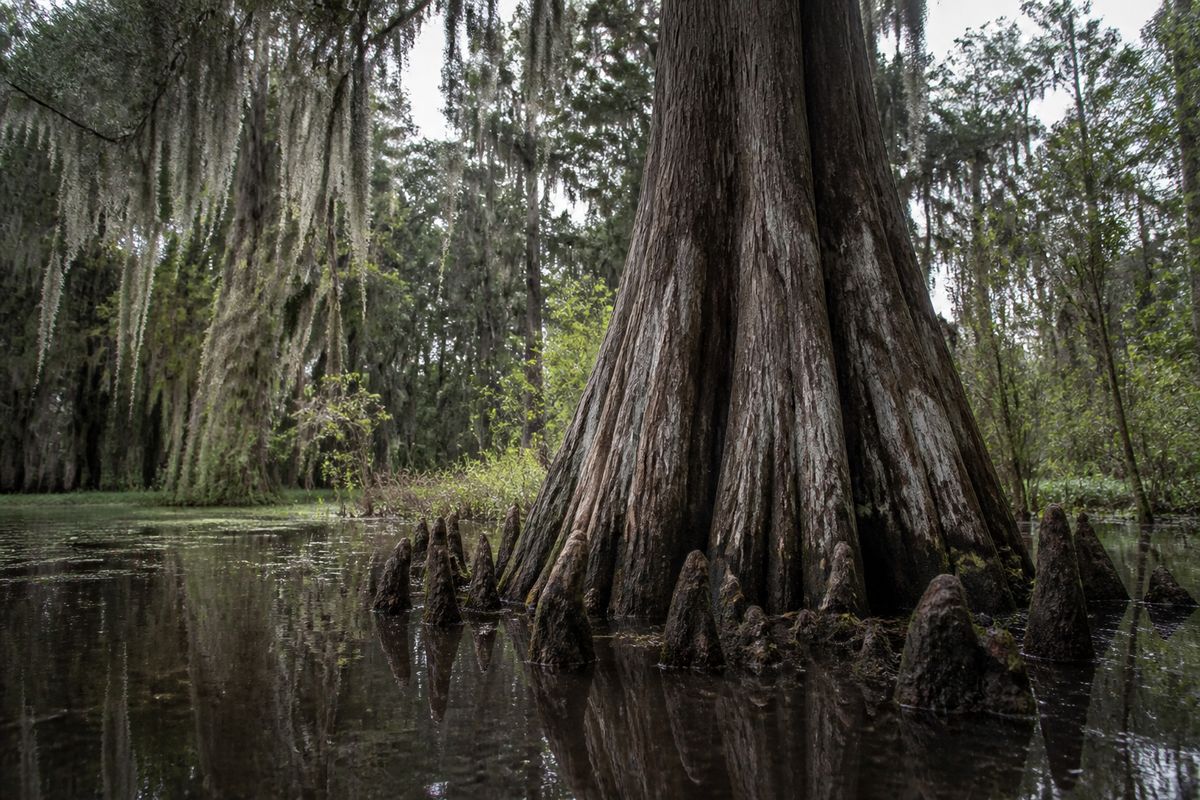
Live oak and bald cypress are the classic choices once a site can support their mature size and root spread.
Medium trees for suburban lots
Medium trees give shade without swallowing the yard, and they fit typical suburban setbacks better than a 60-foot oak.
- Measure the distance to the house and overhead utilities before choosing a species.
- Prioritize strong branch structure over raw growth speed. Well-structured trees survive wind and storm stress better.
- Pick a species that tolerates your actual soil moisture. Suburban yards are often droughty near sidewalks and wet near downspouts, sometimes both.
- Plant at the right depth and keep mulch off the trunk so the base stays dry and healthy.
Southern magnolia works in many yards as long as you give it enough space and manage its size over time instead of fighting it with pruning.
Flowering shade trees that also add curb appeal
Flowering trees add curb appeal and a seasonal highlight while still providing shade. The trick is matching flowering species to your light and moisture, then sticking to the right care early on.
- Choose based on sun pattern. Hot morning sun with afternoon shade needs a different species than all-day sun.
- Match moisture tolerance. Flowering trees that want evenly moist soil struggle in sandy stretches unless you commit to watering through establishment.
- Plan placement to avoid pruning conflicts. Cutting scaffold limbs every year weakens the tree's structure long-term.
- Keep fertilization modest. Overfeeding pushes weak, storm-prone growth.
Crepe myrtle in the right variety is a dependable flowering pick, especially where you can maintain good airflow around the trunk to limit powdery mildew.
Trees that handle Florida water and wet soil
Trees for ponds, swales, and flood-prone areas
Some Florida landscapes are naturally wet, especially near stormwater features or low grading. Species choice matters here, but so does drainage planning around the tree.
- Identify how long water stays. A few days of saturation calls for a different pick than areas that flood repeatedly for weeks.
- Place the tree with root space in mind. Avoid spots where roots will get cut off by compacted or frequently rutted soil.
- Use wet-soil adapted trees instead of forcing a "dry-site" species to survive somewhere it can't.
- Build the planting bed correctly. Don't bury the root flare, even in a wet bed.
Bald cypress and pond cypress are the dependable choices for tolerating waterlogged conditions. According to UF/IFAS Gardening Solutions, cypress trees can handle landscapes that flood with water up to several feet deep, and pond cypress, which tops out around 80 feet versus bald cypress's 150, is often the better fit for a home yard because of its smaller mature size.
Species that tolerate periodic standing water
Standing water changes how much oxygen is available to roots. Trees that tolerate it have real adaptations for wet cycles, so pick based on how your yard actually behaves after storms, not how you wish it behaved.
- Match to periodic flooding. If water stands after heavy rain, choose trees known for wet tolerance instead of ornamental drought types.
- Track site variability. Low areas stay wet longer than raised beds, even a few feet away on the same property.
- Don't try to fix a wet area by planting the wrong species and hoping irrigation habits will save it. Wet soil needs the right genetics, not extra water management.
- Protect the base during planting. Mound soil correctly around the root zone without covering the trunk.
Red maple can work well on suitable sites, and several swamp-adapted natives handle wet conditions when given enough space to spread roots.
When drainage matters more than drought tolerance
In Florida, people chase drought tolerance because sandy soil drains fast, but plenty of yards have both extremes: sand that drains in minutes near the curb, and a wet pocket in the low corner.
- Map the yard's extremes. Walk it after a downpour and note exactly where water lingers.
- Choose a species that matches the wet pocket, not the driest patch on the property.
- Improve drainage where practical, correcting grading or redirecting downspouts, then plant for whatever wetness remains.
- Plan for mature root spread so water has somewhere to move through the root zone instead of pooling against the trunk.
If drainage can't be fixed, prioritize a tree that lives with saturated roots instead of forcing a drought-tough species into the wrong spot.
North Florida trees that perform well in cooler winters
Cold-hardy evergreens for year-round structure
North Florida winters can damage warm-climate ornamentals that do fine further south, so you need evergreen structure that survives cold snaps and the occasional hard freeze.
- Choose cold-hardy evergreens suited to your zone range, then confirm mature size actually fits the space.
- Plant in full sun to help the tree keep its vigor, especially for evergreen foliage.
- Use wind protection for the first few years, like a well-sheltered side of the house, not a soggy low spot that trades one stress for another.
- Water for establishment before winter. Roots that are already hydrated handle cold stress better than roots going into winter dry.
American holly is a strong candidate for North Florida landscapes when you want year-round shape.
Deciduous trees with strong seasonal shade
Deciduous trees drop leaves in winter, but they give excellent shade in summer and a more open view in colder months. North Florida homeowners often like the seasonal rhythm because it keeps the yard usable in both directions.
- Prioritize cold tolerance over fast growth. A tree that survives cold every year beats one that struggles or dies back annually.
- Choose a species known for a strong summer canopy, since that's where the comfort gain actually comes from.
- Place for shade where you want it, not tight against foundations or narrow walkways.
- Plan pruning early to build strong scaffold branches, and avoid heavy cuts later that just create new stress points.
Live oak and winged elm can both be excellent performers, depending on sun, soil, and spacing.
Best native choices for North Florida landscapes
Native trees are adapted to local soils and weather, and they often need less babying after establishment. In North Florida, native options also tend to support local wildlife and hold long-term landscape value.
- Start with a sun and soil match. Even natives fail when planted in the wrong moisture conditions.
- Choose species that match your winter cold risk. North Florida needs cold-hardy selections that stay vigorous through freezing events, not just marginally hardy ones.
- Use a placement plan. Water-tolerant natives go in low spots; sun-loving natives go on higher, better-draining ground.
- Stick to proper planting depth and spacing so roots establish without rot.
A practical starting list for many North Florida yards: live oak, bald cypress, red maple, winged elm, and American holly.
Protected and native Florida trees to know before planting
Common native trees people often confuse with protected species
Florida has native species that are regulated at the county or municipal level, not by one statewide list. People often assume "native" means "free to remove," or they confuse look-alike trees and end up on the wrong side of local rules.
- Learn the common protected look-alikes in your area before any chainsaw work starts.
- Photograph the tree and record its location, size, and distinctive traits (leaf shape, bark texture, overall form).
- If the tree is large or unusual, treat it as potentially regulated until you get confirmation.
- Use a certified arborist for identification when you're not sure.
Live oaks in particular are protected under many county and city tree ordinances, and removing a protected tree without a permit can bring real fines, but rules vary by location, so don't assume a live oak is protected (or unprotected) without checking your specific jurisdiction.
How to check local rules before removing or planting
Before removing a mature tree, check local ordinances and permit rules. Florida doesn't run tree removal off one state list, it's handled county by county and city by city, which is why the same species can be unregulated in one town and require a permit two miles away.
- Find your city or county tree protection page through official government sources.
- Look for language on "protected trees," "heritage trees," or size-based removal thresholds, often set by trunk diameter at breast height (DBH).
- Call your local permitting office with the species and estimated DBH in hand.
- If removal looks likely, schedule a certified arborist inspection first so the report matches what officials ask for.
One exception worth knowing: under Florida Statute 163.045, a local government cannot require a permit, notice, or fee to remove a residential tree if a Florida-licensed arborist certified by the International Society of Arboriculture, or a licensed landscape architect, documents that the tree poses an unacceptable risk to people or property. That exception is narrow and requires real documentation, it isn't a blanket right to skip permitting.
Why native trees can be a safer long-term choice
Native trees generally fit local growing conditions better than imported ornamentals. That match usually means fewer inputs over time, stronger survival, and less chasing problems with fertilizer and spray.
- Pick natives that match your yard's sun and moisture profile. "Native" still requires the right site, it isn't a free pass.
- Expect easier establishment when you plant at the right depth and keep irrigation consistent early on.
- Choose a mature size that fits your layout so you avoid aggressive pruning cycles for the next 20 years.
- Keep the tree healthy from the start. Healthy native trees handle Florida's humidity and storm stress better than stressed ones.
Native trees also tend to support pollinators and other local wildlife better than non-native ornamentals.
Common Florida trees and smart alternatives for homeowners
Trees you will see often across the state
Some Florida tree choices show up everywhere because they perform well in local conditions and establish easily. Even a popular tree still has to fit your specific site and space.
- Identify what's already thriving nearby, then compare conditions. If a neighbor's tree does well in a similar sun and moisture spot, that's a real signal.
- Compare mature size to your yard now, and again 20 years out.
- Note any common issues nearby, insect problems, dieback, or roots lifting pavement.
- Choose a species that matches your maintenance tolerance. Some popular trees need ongoing pruning to stay healthy and safe.
A reasonable starting point for many homeowners is a widely successful shade tree that matches their region and water profile, rather than whatever looked good at the nursery that week.
Fast-growing options versus long-lived options
Fast growth is tempting in Florida, especially if you want shade quickly. Long-lived trees are often the better investment if you have room to plant correctly and care for the first few years.
- Decide your priority. If you need shade fast, pick a species known for early canopy, but still sized correctly for your space.
- For long-term value, prioritize structure and root strength and accept that growth may be slower.
- Avoid species that get leggy and need frequent heavy pruning. Storms break weak structure first.
- Plan to water through establishment. Even the best species struggles if it dries out right after planting.
Balancing speed against longevity now saves a replanting job later.
Low-maintenance replacements for problem trees
Many homeowners inherit a tree that grows too fast, sheds mess, causes root problems, or struggles in a wet or salty spot. A smart replacement matches the site and keeps maintenance predictable instead of repeating the same mistake.
- Identify the real problem: wetness, salt exposure, or space constraints, not just how the tree looks.
- Match the replacement to the same sun and moisture conditions you have today, or adjust grading if you're changing them.
- Choose a tree with a manageable mature size and strong form.
- Plan planting so the root flare stays visible and the trunk stays unburied.
If a tree is heaving pavement or forcing constant pruning, switch to a species with a better long-term fit instead of fighting the same one for another decade.
Planting and care tips for better survival
Best planting time and establishment watering
Timing and watering matter most in Florida's hot months. The goal is roots established before the tree faces the toughest heat and wind cycles of summer.
- Plant during a stretch of consistent temperatures that allow root growth. In most of Florida, late fall through early spring works best for establishment.
- Water deeply after planting, then follow an establishment schedule: for most young trees, water 2 to 3 times a week for the first month, soaking the root zone rather than misting the surface.
- Reduce frequency gradually as new growth appears, shifting to less frequent but deeper watering.
- Check moisture at the root level, not just the surface. Sandy soil drains fast, so the top inch can look dry while roots are still fine, but don't let that fool you into skipping deep watering during the first weeks.
If the tree sits in a windy or exposed spot, prioritize the first 4 to 8 weeks of consistent watering above everything else.
Mulch, spacing, and root flare basics
Proper planting details are what keep a tree from slowly declining over its first few years. Florida soils drain quickly, and a buried root flare leads to rot that doesn't show up until it's already a problem.
- Set the tree so the root flare sits at or slightly above final soil grade. Don't bury it.
- Backfill with native soil where possible. Avoid heavy amendments that create a water barrier at the edge of the planting hole.
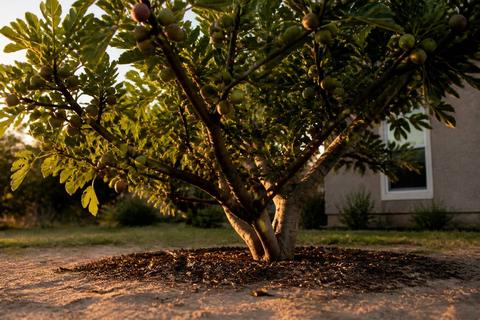
- Spread mulch in a wide ring, 2 to 4 inches deep, pulled back from the trunk.
- Space multiple trees so airflow stays good and branches aren't rubbing against each other.
Correct spacing cuts disease pressure and lets the canopy grow into its natural mature shape.
Pruning mistakes that shorten a tree's life
Pruning helps build structure, but bad pruning is one of the fastest ways to shorten a tree's life in Florida. Storms already create stress on their own, so don't add preventable wounds on top of it.
- Don't "top" trees. Cutting the main canopy back hard creates weak regrowth and storm-prone structure that's worse than what you started with.
- Avoid removing too many live branches at once. If more pruning is needed, break it into stages and bring in an arborist for major work.
- Keep cuts clean and at the correct location. Long stubs invite decay.
- Prune for clearance with a light touch, removing dead or crossing branches rather than reshaping the whole tree in one visit.
For young trees, the best early work is setting good scaffold structure and removing only what's actually dead or damaged.
Frequently Asked Questions
What are the best trees for Florida yards?
The best Florida trees are the ones matched to your site conditions. For most yards, that means shade trees that handle heat, humidity, and local soil, live oak, bald cypress, southern magnolia, and certain native crepe myrtles or flowering species.
What trees grow well in wet areas in Florida?
Bald cypress and pond cypress tolerate wet soil and periodic flooding better than almost any other Florida tree, along with red maple in suitable sites and several swamp-adapted natives. In consistently wet areas, drainage and mature root space matter as much as species choice.
Which trees are best for North Florida?
North Florida gardeners have more cold-hardy options than South Florida does. Live oak, bald cypress, red maple, winged elm, and American holly are strong candidates depending on sun, soil, and space.
Are there protected tree species in Florida?
Yes, but the rules are set locally, not by one statewide list, and they vary by county and city. Live oaks are commonly protected, but not everywhere, so always check local ordinances and consult a certified arborist before removing a mature or unusual tree.
What should I plant if I want a low-maintenance Florida tree?
Choose a tree that fits the site naturally: enough sun, the right soil moisture, and room to grow into its mature size. Native trees typically need less input once established and are usually easier to maintain than thirsty, high-pruning landscape imports.