Best Fruit Tree for North Florida
The best fruit tree for North Florida is one matched to three things at once: enough winter chill to actually flower, enough cold tolerance to survive a hard freeze, and roots that won't sit in wet clay after a summer downpour. Get any one of those wrong and you end up with a tree that looks fine but never fruits, or fruits fine until a January freeze burns it back to the trunk. North Florida (roughly USDA zone 8b to 9a, from the Panhandle to about Gainesville and Jacksonville) is colder and gets more winter chill than Central or South Florida, which changes which varieties actually work here.
For more help, see our Best Plants to Grow in Florida guide.
What actually grows well in North Florida
Match the tree to your chill hours, not to what sells well in Central Florida
Chill hours (roughly, the number of hours below 45°F a tree gets each winter) drive whether a deciduous fruit tree flowers well. According to UF/IFAS, low-chill peaches, plums, and nectarines bred for Florida generally need about 100 to 525 chilling hours per year, and North and north-central Florida generally accumulate enough winter cold for cultivars toward the higher end of that range, while Central and South Florida growers usually have to hunt for the lowest-chill varieties they can find. This matters because a lot of "low-chill" peach marketing is written with Central Florida in mind, and a variety picked for further south may not be the best fit here. Ask your county extension office which specific low-chill cultivars they recommend for your area, since chill accumulation varies noticeably even within North Florida.
- Ask your county extension office (or check regional chill-hour maps) for your area's typical accumulation.
- For peaches, plums, and nectarines, pick a cultivar toward the higher end of Florida's 100-to-525-hour low-chill range, ideally one your extension office recommends for north Florida, not a Central Florida low-chill selection.
- Site cold-tender trees (citrus, figs) in full sun with a windbreak for freeze protection.
The best fruit trees for North Florida homes
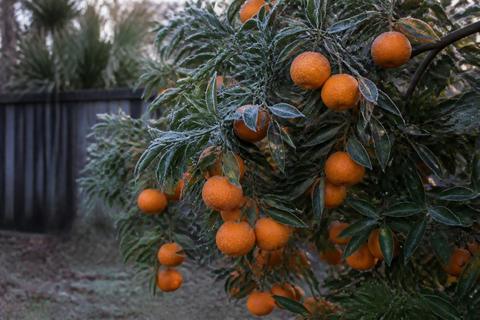
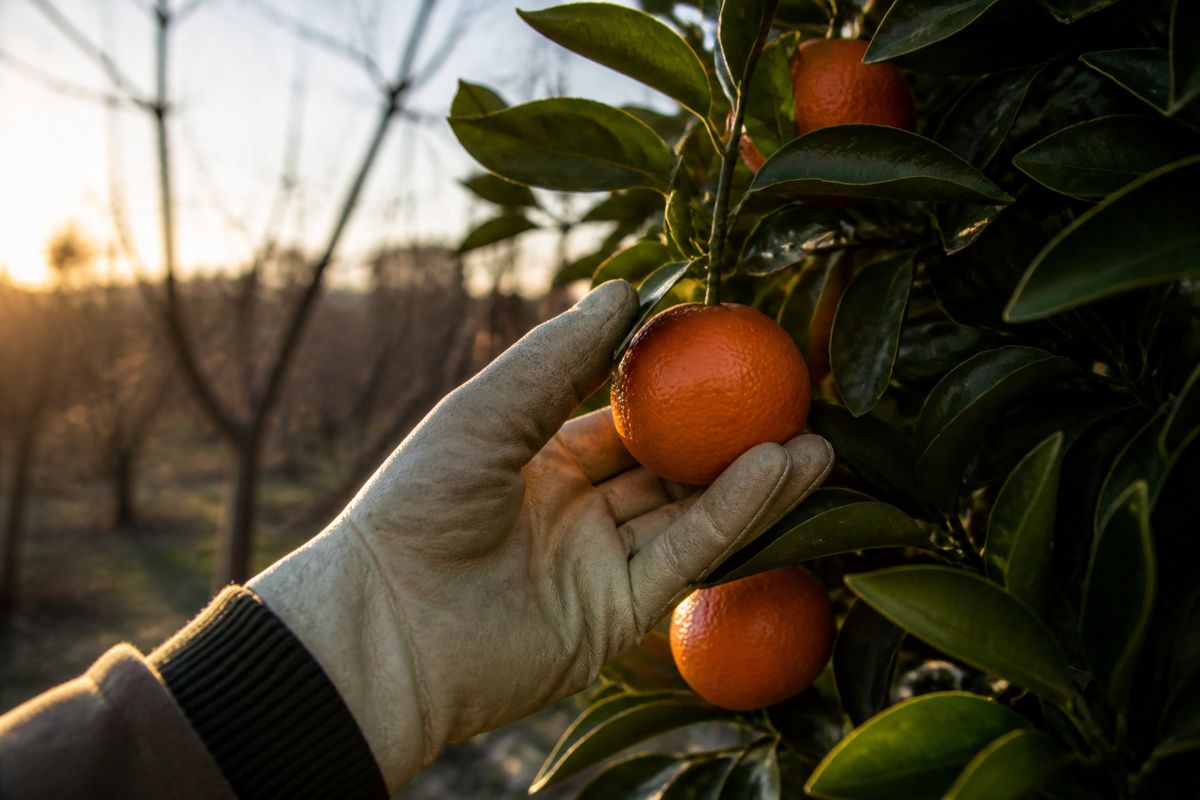
Figs (Celeste, Brown Turkey, LSU Purple) are close to foolproof here and shrug off both heat and the occasional hard freeze by resprouting from the base. Cold-hardy citrus is the better citrus choice over sweet oranges: satsuma mandarins tolerate temperatures down to about 14°F and kumquats down to about 16°F, according to UF/IFAS Gardening Solutions, which is enough to survive most North Florida winters if they're sited well. Peaches and Japanese plums do well once you're on a moderate-chill cultivar. Pears (especially fire-blight-resistant types like Pineapple or Orient), Asian persimmons, and rabbiteye blueberries round out a realistic short list.
- Pick one or two tree types that match your freeze risk (citrus and figs only in protected, sunny spots).
- Choose moderate-chill cultivars bred for north Florida, not the low-chill varieties aimed at Central Florida.
- Confirm mature width fits your space before you buy; a tree crowded against a fence line will need more pruning for years.
What to avoid if your yard stays wet or freezes hard
Two things sink fruit trees fast here: standing water and repeated hard freezes on tender species. If your yard holds water for more than a day after a storm, roots suffocate and root rot fungi move in; either regrade or pick a tree that tolerates wet feet better (figs are more forgiving than stone fruit). If your property is in a low spot that collects cold air on freeze nights, don't plant sweet oranges, lemons, or other freeze-tender citrus there. Sweet oranges are a common disappointment in North Florida because a single hard freeze can kill the tree to the ground, not just the fruit.
- Don't plant in low areas that hold water more than a day after rain.
- Don't choose ultra-low-chill cultivars marketed for Central/South Florida; they underperform farther north.
- Don't use exposed low spots or north-facing corners that catch the coldest air on freeze nights.
How to choose the right fruit tree before you buy
Pick between seedlings, grafted trees, and dwarf varieties
Seedling fruit trees are a gamble: fruit quality, ripening time, and even whether the tree bears at all can vary a lot from the parent. Grafted trees pair a known-good variety onto a rootstock chosen for local soil and vigor, which is why nurseries sell most fruit trees this way. Dwarf and semi-dwarf trees fruit at a smaller size and are easier to net, spray, and pick, which matters more in humid North Florida than in a dry climate. Buy from a nursery that labels the cultivar, rootstock, and expected mature size, not just "peach tree."
- Choose grafted trees for predictable fruit quality and timing.
- Choose dwarf or semi-dwarf if your yard or maintenance time is limited.
- Only choose seedling stock if you're fine with unpredictable taste, size, and bearing age.
Choose the best planting spot for sun, drainage, and wind
Fruit trees need 6 to 8 hours of direct sun to flower and fruit well, and most hate wet feet. Prioritize a site with fast drainage and open airflow, since North Florida's humidity pushes fungal leaf and fruit diseases hard in a stagnant, shady spot. For citrus and figs, the south or southeast side of a house, with a fence or evergreen windbreak to the north, buys you several degrees of frost protection on the coldest nights. Skip low corners that pool water and open north-facing exposures that catch the worst wind on freeze nights.
- Pick a site with 6 to 8 hours of direct sun.
- Confirm the ground drains; skip low spots and lawn dips.
- Put cold-tender trees on the warmest side of the property with wind protection.
Check soil pH and spacing before planting
Most fruit trees prefer slightly acidic to neutral soil (roughly pH 6 to 6.5); North Florida's native soils run from sandy to heavier clay-loam depending on where you are, so a real soil test (through your county extension office) beats guessing. Space trees for their mature width, not the size in the nursery pot; crowding them close together means more pruning, more shaded-out fruit, and more disease from poor airflow.
- Get a soil test through your county extension office before you amend anything.
- Use the mature-size figure on the tag to set spacing, not the current pot size.
- Leave room to walk around the tree for pruning, spraying, and picking.
When and how to plant for the best start
Best time of year to plant fruit trees in North Florida
Late winter through early spring, once the worst hard-freeze risk has passed but before summer heat arrives, is the best planting window for most North Florida fruit trees. Roots grow fastest in that mild stretch, ahead of the tree having to cope with July heat. Fall planting can work for tougher species like figs if you're consistent about watering and prepared to protect a young trunk from frost, but spring gives new trees an easier first season.
- Aim for late winter to early spring, after the worst freeze risk.
- If you plant in fall, plan on frost protection (blankets, mulch mounding) for the first winter.
- Don't plant a tender species right before a forecast hard freeze.
How to plant a fruit tree correctly the first time
Planting too deep is the single most common mistake and the slowest to show up as a problem. Dig the hole two to three times as wide as the root ball but no deeper, so the trunk flare sits at (or slightly above) the surrounding grade, not buried. In Florida's sandy soils in particular, a too-deep hole can also become a bowl that holds water around the roots after rain. Backfill with the native soil you dug out (skip heavy soil amendments in the hole itself), water in thoroughly to collapse air pockets, then mulch.
- Dig 2 to 3 times wider than the root ball, no deeper.
- Set the trunk flare at the same height it was in the container, or slightly above.
- Backfill with native soil and water deeply right away to remove air gaps.
Mulching, watering, and staking for young trees
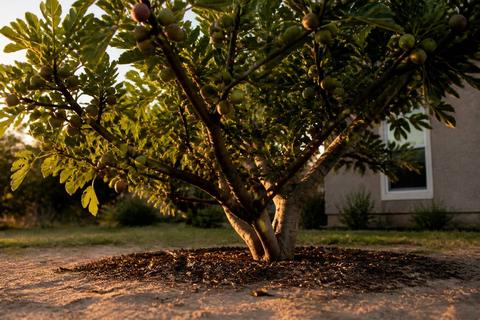
A 2 to 4 inch layer of pine bark or wood-chip mulch buffers soil temperature and moisture, but keep it a few inches off the trunk; mulch piled against the bark holds moisture against it and invites rot and borers. Water newly planted trees deeply two to three times a week for the first month, then taper off as the root system spreads outward. Stake only if the tree genuinely rocks in wind, and loosen or remove ties once the trunk has firmed up so they don't girdle it.
- Mulch 2 to 4 inches deep, leaving a gap around the trunk.
- Water deeply 2 to 3 times a week for the first month.
- Stake only for stability and check ties regularly so they don't cut into the bark.
Care that helps young trees establish fast
Watering schedules for the first year
New trees build roots before they build much top growth, and shallow, frequent sprinkling trains roots to stay near the surface, where they dry out fast in North Florida's summer heat. Water deeply, let the top few inches dry, then water again, rather than a light daily splash. Sandy soil drains fast and needs more frequent watering than the heavier soils found in parts of the Panhandle; adjust to what your specific yard does after a hard rain.
- Month 1: deep watering 2 to 3 times per week.
- Months 2 to 6: taper to about once a week, more in extreme heat or drought.
- After 6 months: water mainly during dry stretches, always a deep soak rather than a quick spray.
Fertilizer basics, including when to use balanced blends
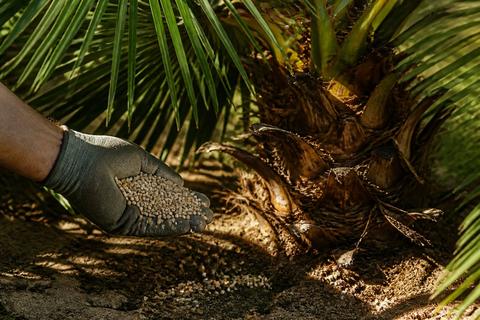
Go light on fertilizer while a tree is establishing. Too much nitrogen pushes soft, fast growth that draws pests and delays flowering and fruit set. Wait until you see active new growth, then use a balanced fertilizer labeled for fruit trees at the rate on the bag for your tree's size or age, and water it in so it reaches the root zone instead of sitting on top of dry mulch. If a tree is putting out dark, leafy growth with no structure and little flowering, back off the next feeding.
- Wait for active growth before the first feeding of the season.
- Use a balanced fertilizer at label rate for the tree's size, not a guess.
- Water after fertilizing to move nutrients into the root zone.
Pruning to shape the tree without slowing growth
Early pruning is about building a strong scaffold of evenly spaced branches, not cutting the tree back hard. Remove crossing limbs and anything growing straight into the center of the canopy. Do structural pruning in late winter, while the tree is still dormant, before spring growth starts. Avoid heavy pruning during hot, humid months, since fresh cuts recover more slowly and the tree is already under more stress from heat.
- Prune in late winter to set structure ahead of spring growth.
- Remove crossing, dead, or weak branches and keep one clear central framework.
- Don't top the tree; space scaffold branches evenly around the trunk instead.
Prevent common pests, disease, and fruit loss
Most common insect and disease problems in North Florida
Humidity is the theme here: fungal leaf spots and fruit rots thrive when foliage stays wet, especially in a dense, poorly ventilated canopy. Scale insects and borers (which often target trunks and branches already stressed by heat, drought, or mower damage) are the most common insect problems. Birds and mammals will also take a share of ripening fruit before you get the chance. Checking the tree regularly, rather than waiting for obvious damage, catches most of this early enough to matter.
- Check leaf undersides periodically for scale insects or sticky residue.
- Look at the trunk and main branches for gumming or sap ooze, a sign of borer activity.
- Thin dense canopy growth to cut down how long leaves stay wet after rain or dew.
Simple prevention for fungal issues, scale, and borers
Water at the soil line instead of overhead, since wet foliage overnight is what most fungal problems need to take hold. Keep grass and weeds back from the trunk, both for airflow and so a string trimmer doesn't wound the bark (a common way borers get an entry point). Prune for airflow and remove badly diseased leaves promptly rather than letting them sit under the canopy. For scale and borers, a healthy, unstressed tree is your first line of defense; treat only what you actually see, and treat it early rather than waiting for heavy damage.
- Water at the soil line rather than with an overhead sprinkler.
- Keep the trunk base clear of grass, weeds, and trimmer damage.
- Prune for airflow and treat scale or borer activity as soon as you spot it.
Protecting ripening fruit from birds, raccoons, and squirrels
Once fruit starts coloring, wildlife moves fast, often faster than you'd expect. Bird netting, put up before fruit is fully colored and secured tightly at the ground, keeps birds off without much extra work. Raccoons and squirrels are harder to exclude; sturdy fencing helps for raccoons, and cleaning up fallen or overripe fruit daily removes the scent that draws animals back night after night. Motion lights or noise deterrents work for a while but animals adapt, so treat them as a backup, not the main plan.
- Put up bird netting before fruit fully colors, and secure the edges.
- Clean up fallen fruit daily to cut down repeat visits.
- Use fencing or hardware cloth where raccoons are reaching low-hanging fruit.
Harvest timing and realistic expectations
How long each fruit tree takes to produce
A grafted tree, sited and cared for well, commonly starts bearing within 1 to 3 years, since it's already past the juvenile stage the rootstock and graft went through. Seedling trees take longer and are far less predictable in both timing and fruit quality. Dwarf trees often bear sooner simply because they reach mature structure faster, but they still need a full season or two of steady watering and care first. Young trees dropping some flowers or small fruit in their first couple of seasons is normal, not a failure.
- Grafted trees typically bear within 1 to 3 years.
- Seedling trees take longer and vary more in fruit quality.
- Flower or small-fruit drop in the first year or two is normal while the tree establishes.
Typical harvest windows for popular North Florida fruits
Exact dates shift with the cultivar and how mild or cool the spring runs, but the general order holds most years: figs ripen over a long stretch from late spring through fall, sometimes with a second, smaller crop late in the season. Peaches and Japanese plums usually come in from late spring into early summer. Pears and Asian persimmons ripen later in the year as temperatures cool. Rabbiteye blueberries generally run through late spring into early summer depending on variety and how well-established the planting is.
- Peaches and plums: late spring into early summer.
- Pears and persimmons: later in the year, as it cools.
- Figs: warm months, often with a second smaller wave.
How to tell when fruit is ripe
Color change and fragrance are the first clues, especially for peaches, plums, and figs; a fig that's still firm and pale rarely improves after picking. Gently lift the fruit toward the stem; ripe fruit separates with light pressure, while unripe fruit resists. Berries won't sweeten much further once picked, so pick them fully colored rather than early. If you're unsure on a new tree, taste a sample piece from a few spots on the canopy before committing to a full picking pass, since sun exposure changes ripening speed within the same tree.
- Watch for color change and fragrance, then check that fruit separates easily from the stem.
- Taste a sample piece the first time you think a tree has hit peak ripeness.
- Don't pick early expecting fruit to finish sweetening off the tree; most Florida fruit doesn't.
Helpful extras for homeowners and gardeners
Planting under fruit trees without hurting the roots
Fruit tree roots want oxygen and room, so digging in shallow-rooted groundcovers or bedding plants right under a young tree's canopy competes with it for water and nutrients exactly when it can least afford that. If you want something under the tree, keep it low-growing and low-maintenance so you're not digging near the root zone every season, or simply keep a mulch ring and skip underplanting until the tree is well established. Water the fruit tree's needs first; don't let a thirsty ornamental nearby force you into overwatering the tree.
- Keep a mulch ring around the trunk instead of digging in companion plants early on.
- If you do underplant, choose low-growing options that don't need frequent digging.
- Prioritize the fruit tree's watering needs over anything planted nearby.
Native trees versus fruit trees: what fits your landscape
Native shade trees ask less of you once established and support local wildlife, but they don't put food on the table the way a fruit tree does. Fruit trees pay you back with something to eat, but only if you keep up with pruning, pest checks, and picking a variety suited to North Florida's chill and freeze pattern. If your yard has poor drainage, deep shade, or you don't want the maintenance, native trees are the lower-stress pick. If you've got sun, space, and are willing to do the seasonal work, fruit trees fit well alongside a mostly native landscape.
- Pick natives where low maintenance and wildlife value matter most.
- Pick fruit trees where you have sun and are willing to manage pruning and pests.
- Match the choice to your yard's real constraints, especially drainage and freeze exposure.
Where leaf shape, bark, and fruit photos help with identification
Plenty of "problems" gardeners report turn out to be a nutrient deficiency, a mismatch between expectations and what the cultivar actually does, or a completely normal seasonal leaf drop. Leaf shape, bark texture, and fruit form are the fastest way to confirm what you're actually looking at, whether that's your tree, a weed seedling nearby, or a look-alike ornamental. Take clear photos in good light: the whole tree, a leaf close-up front and back, the trunk bark, and any fruit showing color, then compare against your nursery's cultivar description or ask your extension office. Track how symptoms change over a couple of weeks rather than judging from a single day.
- Photograph the leaf, trunk, and fruit in good, consistent light.
- Compare against the cultivar description from where you bought the tree.
- Track changes over time instead of reacting to one day's appearance.
Frequently Asked Questions
What is the best fruit tree for North Florida overall?
There's no single best answer, but figs, cold-hardy citrus (satsuma, kumquat) in protected sites, moderate-chill peaches and plums, pears, persimmons, and rabbiteye blueberries are the most reliable choices for most North Florida yards.
When is the best time to plant fruit trees in North Florida?
Late winter to early spring, once the worst freeze risk has passed, is usually best. Fall planting can work for tougher species like figs if you water consistently and protect young trunks from frost.
How do I know if my yard is good for fruit trees?
Look for 6 to 8 hours of direct sun, soil that drains within a day of heavy rain, enough room for the tree's mature width, and some shelter from standing water and hard winter wind.
Should I plant one fruit tree or more than one?
It depends on the species. Some fruit trees are self-fertile on their own, while others need a second, compatible variety nearby to pollinate and set fruit well.
What fertilizer should I use on young fruit trees?
A balanced fertilizer labeled for fruit trees, used lightly at the label rate. Too much nitrogen produces soft, fast growth that draws pests and cuts into flowering and fruit set.
How long until a fruit tree produces fruit?
It depends on the type and whether it's grafted. Grafted trees often bear within 1 to 3 years; seedling trees usually take longer and are less predictable.