Citrus Tree Freeze Protection
If you have citrus in Florida, a cold snap can feel random, but freeze damage follows predictable rules. Citrus tree freeze protection starts before the first frost night, because what you do in the 24 to 48 hours before the cold matters as much as what you do during the freeze. This guide covers what to watch for, what to cover, and how to help your trees recover once the danger passes.
For more help, see our How to Grow Fruit Trees in Florida guide.
Why Florida fruit trees are vulnerable to cold snaps
Frost, freeze, and wind chill are not the same threat
Frost is ice forming on surfaces when air temperature is near freezing and moisture condenses on leaves and fruit. A freeze is harder: air temperature drops to 32°F or below and stays there long enough to freeze plant tissue. Wind does not lower the tree's actual tissue temperature the way a hard freeze does, but it strips away the thin layer of warmer air near the plant, so a windy, clear night does more damage than a calm one at the same reading.
For citrus, duration matters as much as the number on the thermometer. A brief dip with wind can still scorch tender leaves, while several hours at or below freezing is what kills buds, young wood, and fruit still on the tree.
Which trees and growth stages take the worst damage
Citrus is most exposed when new growth and flower buds are actively pushing. Young trees also carry less stored energy in their wood and a smaller root system, so they cool and freeze faster than mature trees. Sweet oranges and other tender varieties suffer more in a hard freeze, while satsuma mandarins and kumquats are considerably more cold-tolerant and are the varieties UF/IFAS recommends for North and Central Florida for that reason.
In North Florida (zone 8b-9a), put your effort into any tree pushing new shoots, plus trees already stressed by drought or a recent hard pruning. Fruit still hanging on the tree is also a weak point, especially after a warm stretch that encouraged a late flush of growth.
Recognizing cold injury after the fact
Cold damage usually shows up after the event, not during it. Leaves go dull, then develop dark, water-soaked patches that dry into a scorched look over the following days. Buds darken and shrivel, and fruit can discolor or turn soft where the rind froze.
Bark injury matters most on young trees. Check for sunken, discolored patches or peeling bark near the graft union. If small twigs bend and stay limp, or snap and show brown tissue inside, that wood is dead or dying and won't leaf out again.
Prepare trees before temperatures drop
Water the day before a freeze, not during it
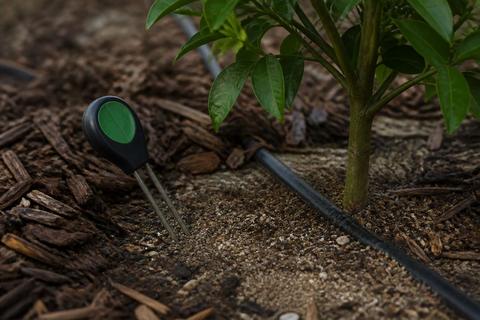
Moist soil holds and releases more heat overnight than dry soil, which is why UF/IFAS extension recommends watering citrus the day before a freeze arrives so the soil can radiate that stored heat back up around the tree overnight. Florida's sandy soils drain fast, so a light sprinkle right before the cold does very little.
- Water the root zone deeply in the morning or early afternoon, 24 hours or more before the cold air arrives, soaking down several inches.
- Skip a second watering unless the top few inches of soil are visibly dry and temperatures are still well above freezing.
- Stop watering once temperatures are already near freezing. Wetting foliage at that point adds ice risk instead of heat.
Keep mulch off the trunk, and don't overdo it right before a freeze
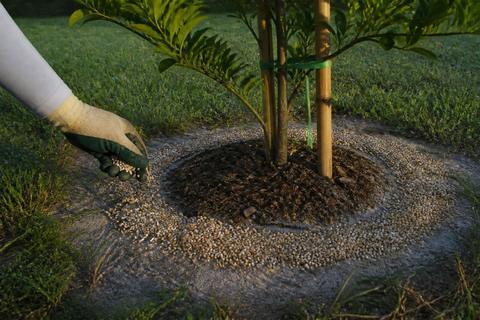
A mulch ring helps roots by buffering soil temperature swings and holding moisture during the rest of the year. The trunk is a different story: piling mulch against the bark traps moisture against it and invites rot, and a thick mulch layer right at the base can also block the bare soil from radiating heat upward on a freeze night.
- Keep mulch in a ring out to the drip line, 3 to 6 inches deep, but leave a clear 4- to 6-inch gap around the trunk itself.
- Keep mulch off the graft union on young trees.
- Replace any mulch that has gone soggy or matted, since compacted wet mulch does not insulate as well as a loose layer.
Stop fertilizing and pruning before cold season, not during it
Late-season fertilizer pushes tender new growth that freezes first and worst. Pruning does the same thing by triggering fresh sprouts, and open pruning cuts give cold and disease an easier way into the wood.
- Stop fertilizing citrus and other tender fruit trees well ahead of your area's typical first hard freeze.
- Don't prune once you see active new growth. If a safety cut is unavoidable, do it well before winter, not in the middle of a cold snap.
- Leave storm or frost-damaged wood alone until you can see which parts actually died.
Wrap trunks and protect graft unions on young trees
Young citrus has thin bark and an exposed graft union, both of which need extra protection before the cold arrives.
- Wrap the trunk in a breathable tree wrap or commercial guard, from the base up past the lowest branches you want to protect.
- Cover the graft union without squashing it under tight material.
- Secure the wrap so wind can't work it loose and expose bare trunk overnight.
Take wraps off once spring growth resumes so trapped moisture doesn't cause bark problems later in the season.
How to protect citrus trees during a freeze event
Cover the canopy with frost cloth, not plastic
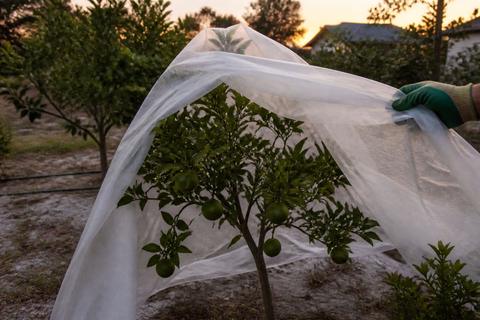
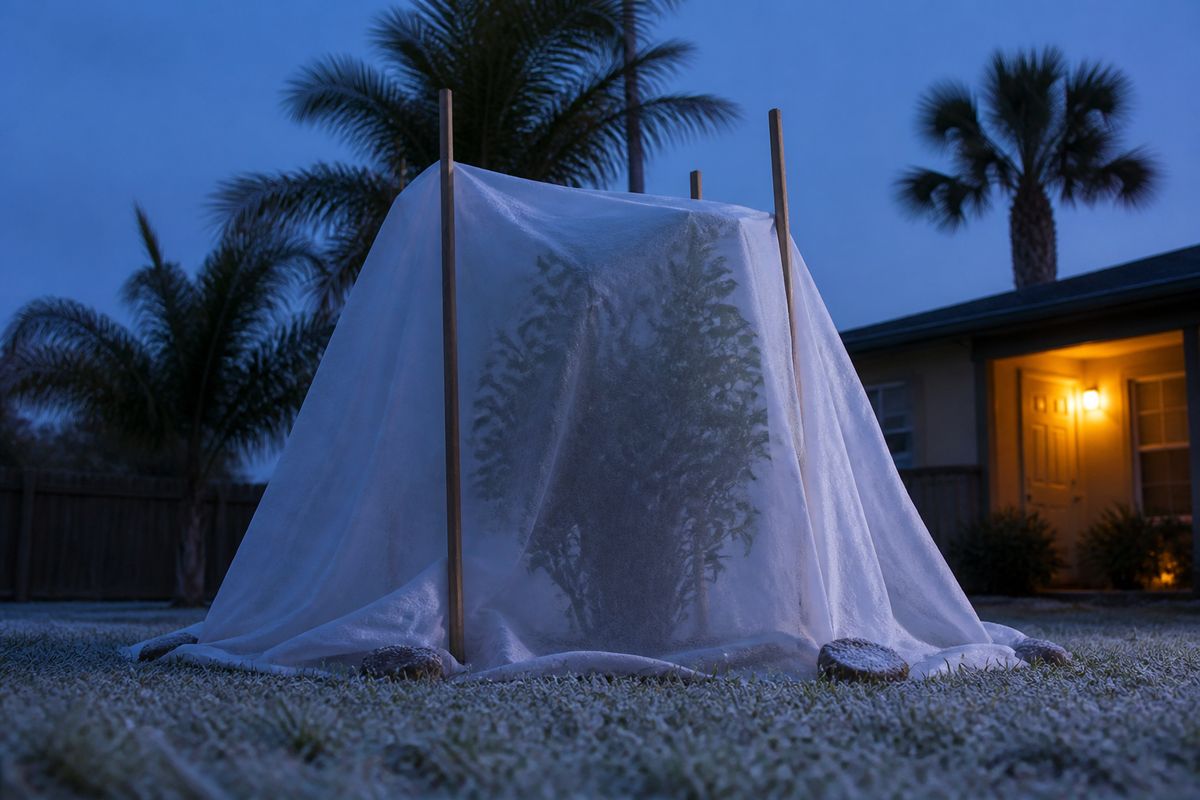
A cover works by trapping heat radiating up from the ground, so UF/IFAS recommends cloth over plastic and draping the cover all the way to the ground on young trees so that heat stays trapped underneath instead of escaping at the edges.
- Drape breathable frost cloth over the whole canopy, letting it reach the ground on small and young trees.
- Get covers on before temperatures hit freezing, not after, ideally as soon as the forecast firms up.
- Stake or weight the edges down so wind can't lift the cloth off partway through the night.
Keep the cover off the leaves themselves
Wherever fabric presses against a leaf or piece of fruit, cold moves straight through and that spot freezes anyway. An air gap is what actually insulates.
- Use stakes, PVC hoops, or a simple frame so the cover stands off the canopy instead of draping directly onto it.
- Check the cover after wind gusts and re-lift any section that has sagged onto foliage.
- Don't let extra fabric bunch and sag into the canopy overnight.
Add heat only with equipment built for it
Supplemental heat can save tissue in a hard freeze, but an unsafe setup risks fire or fume buildup under the cover, which is worse than doing nothing.
- Use an outdoor heat source made for frost protection, positioned near the trunk with clearance from any fabric.
- Follow the manufacturer's placement and clearance instructions exactly. Don't improvise with space heaters or open flame under a cover.
- Reserve heat for forecasts showing a hard freeze well below 32°F, not routine chilly nights.
If you don't have safe heat equipment on hand, a well-secured full canopy cover on its own still helps.
Use a windbreak to cut heat loss
Wind pulls the thin layer of warmer air away from the tree faster than it can be replaced, so cutting wind exposure often matters as much as the cover itself.
- Put a solid panel or barrier on the windward side without shading the tree too heavily during the day.
- Don't block all sun before the cold front arrives. Trees that warm up during the day handle the following freeze better.
- Tie down loose cover edges so gusts don't lift them into the canopy.
Special care for young and newly planted trees
Thinner bark and shallow roots mean faster freezing
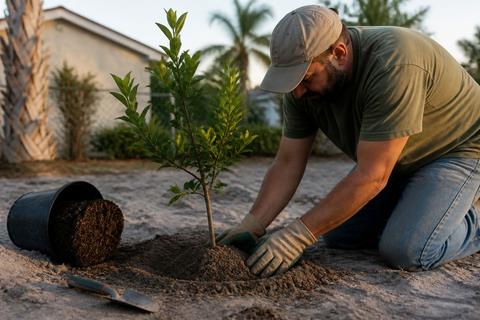
Newly planted citrus has thin bark, less wood mass, and a root system that hasn't spread out yet, all of which make it freeze faster than an established tree.
- Wrap the trunk from the base up past the area most likely to freeze.
- Pad the graft union so it isn't exposed to direct cold wind.
- Secure everything against wind without cinching it so tight it restricts the trunk.
A simple stake-and-cloth frame beats draping cloth loosely
For a small tree, a cage or a few stakes give you something to drape frost cloth over so it holds its shape through the night instead of collapsing onto the canopy.
- Set stakes or a lightweight cage around the tree, then drape the cloth over that frame.
- Build the frame wide enough that there's real air space between cloth and leaves.
- Anchor the base so the whole shelter doesn't blow over.
Water and mulch young trees the same way, just more carefully
Shallow roots cool faster than deep ones, so the same watering and mulching rules apply, with less room for error.
- Water in the day or two before the freeze so soil is evenly moist, not soggy.
- Keep mulch out past the root zone but clear of the trunk and graft union.
- Prioritize full canopy coverage. A small canopy loses heat faster and freezes more evenly than a large one.
Protecting fruit and the canopy
Netting and fruit bags solve a different problem than freezes
Bags and netting help against birds and some insects, but they don't do much for freeze protection on their own, and a tight bag can trap moisture against the fruit.
- Use fruit bags or netting for a specific pest or animal problem you've actually seen, not as a default freeze plan.
- If you bag fruit, use a breathable material and avoid tight contact with the fruit surface.
- Loosen or remove bags on warm days so heat doesn't build up inside them.
Canopy coverage is what protects against a freeze. Fruit bags are a separate tool for a separate problem.
Skip plastic. It traps cold and moisture against the plant
Plastic looks like it should insulate, but wherever it touches a leaf it conducts cold straight through, and it traps condensation that can refreeze against the plant later in the night.
- Use frost cloth or another breathable cover for the canopy, not plastic sheeting.
- If you use anything non-breathable for wind resistance, keep it held up off the canopy with a breathable layer underneath.
- Never let plastic sit directly on leaves or fruit.
After a freeze: assess damage and help trees recover
Don't prune right away
Cutting too soon removes wood that might still be alive, and it can trigger new shoots while the tree is still weak. You need to see what actually survived before you start cutting.
- Wait until new spring growth shows you which branches are alive and which are not.
- Remove only wood that's clearly dead and detached, cutting back into healthy tissue.
- Leave anything you're unsure about until the tree tells you one way or the other.
Check bark, buds, and fruit for damage you can't see right away
Leaf scorch is obvious within days. Bark and bud injury can take longer to show.
- Look for discolored or peeling bark, especially around the trunk and graft union on young trees.
- Check buds for dark, dried tissue and small twigs for dieback.
- Pull off severely damaged fruit only after you've confirmed it's not going to recover.
Resume watering and feeding on the tree's schedule, not the calendar's
A stressed tree needs support, but pushing it too hard too soon backfires.
- Water based on soil moisture. Deep water when the top few inches are dry, and avoid keeping the soil constantly wet.
- Hold off on fertilizer until you see real recovery, like a new flush of leaves.
- Fix mulch that shifted during the freeze and pull off any cover that stayed on too long.
Recovery after a hard freeze is slow. Steady, modest care beats trying to force fast regrowth.
Long-term freeze planning for Florida homeowners
Variety and placement matter before you ever buy a cover
Sweet oranges take more damage in a hard freeze than cold-tolerant options. Satsuma mandarins tolerate temperatures down to roughly 14°F and kumquats down to roughly 16°F once established, which is why UF/IFAS lists them as the most cold-hardy citrus choices for North and Central Florida yards.
- Choose low-chill, cold-tolerant varieties suited to your part of the state rather than pushing a tender variety past its limits.
- Plant on the south or southeast side of the house for reflected warmth and some wind shelter.
- Avoid low spots where cold air pools, and pick ground that drains well so roots stay healthy through winter rain.
Keep a cold-weather kit ready before the first cold front
Scrambling for supplies after a freeze warning posts is how coverage goes on late or not at all.
- Keep frost cloth sized for your canopy, spare stakes or a simple frame, and clips that secure fabric without crushing leaves.
- Store breathable trunk wraps and guards for young trees along with wind-rated tie-downs.
- Keep a thermometer you trust on site, since forecast lows and what actually happens in your yard can differ by several degrees.
Know when to call in an arborist or your local extension office
Some damage is beyond DIY fixes, especially on young trees, damaged graft unions, or large mature canopies.
- Call a certified arborist if the graft union is damaged, the trunk shows deep injury, or more than a third of the canopy is dead.
- Contact your local UF/IFAS extension office for region-specific guidance on pruning timing, fertilizing schedules, and which varieties suit your area.
- If you're considering heat devices, ask about safe equipment and placement for your specific yard.
Frequently Asked Questions
What is the best way to protect citrus trees from frost in Florida?
Combine deep watering the day before the cold arrives, a breathable canopy cover that reaches the ground on young trees, trunk protection at the base and graft union, and supplemental heat only when the forecast shows a hard freeze well below 32°F. Get the cover on before it gets cold, keep it supported so it doesn't touch leaves or fruit, and secure the edges against wind.
Should I use plastic to cover fruit trees during a freeze?
No. Plastic traps moisture against leaves and fruit and conducts cold straight through wherever it touches the plant. If you use plastic at all for wind resistance, keep it raised above the canopy with a breathable layer underneath doing the actual insulating.
How do I protect young fruit trees from freezing temperatures?
Young trees need more help because they have smaller canopies, thinner bark, and less established roots. Use trunk wraps or guards, keep mulch away from the trunk, and cover the full canopy during a freeze. A simple stake or cage frame keeps the frost cloth floating above the leaves instead of resting on them.
Can frost cloth really help citrus trees?
Yes. Breathable frost cloth traps heat radiating up from the ground and reduces freeze damage, especially when it goes on before temperatures drop and stays secured against wind. Support it so there's an air gap, and don't let it settle onto leaves and fruit.
When should I remove freeze protection from fruit trees?
Take covers off once temperatures rise back above freezing, ideally the next day. Leaving a cover on for multiple days can trap heat and humidity around the foliage, which invites fungal problems and pest pressure, so pull covers as soon as the immediate cold threat has passed.
What should I do if my citrus tree already shows freeze damage?
Don't prune right away. Wait until new growth shows you what actually died, then remove only clearly dead wood. Keep watering appropriately, fix any mulch that shifted, and hold off on heavy fertilizing until you see real recovery so you're not pushing fragile new growth while the tree is still stressed.