How to Grow Fruit Trees in Florida
If your fruit trees keep struggling through Florida heat, sandy soil, and sudden cold snaps, you are not alone. How to grow fruit trees in Florida comes down to matching the tree to your specific microclimate, then giving it exactly what it needs on watering, feeding, and cold protection. Get the variety and the site right first, and the maintenance gets a lot easier.
Choose the Right Fruit Tree for Florida
Success starts before you dig a hole. Florida is not one climate: North Florida (roughly zone 8b-9a) gets real winter freezes, Central Florida (9b-10a) gets occasional hard frost, and South Florida (10b-11) rarely freezes at all but can't grow high-chill fruit like apples or most peaches. Pick trees that match your zone's cold minimums and chill-hour range, plus the site's drainage and sun.
- Match cold tolerance to your zone. In North Florida, cold-hardy citrus like satsuma mandarins and kumquats hold up far better than sweet oranges or grapefruit, which take serious damage below the high 20s F. Mature, fully dormant satsuma trees tolerate temperatures down to around 15°F, but young or actively growing trees are only reliably hardy to about 26°F, so they still need protection in a hard freeze.
- Prioritize disease resistance where it's sold as a trait. Ask your local extension office or a reputable nursery about varieties bred for resistance to citrus greening, scab, or brown rot in your county, since pressure varies block to block.
- Check mature height and spread before you plant, not after. Undersizing the spacing is the single most common reason backyard orchards turn into a shaded, airless mess by year five.
- Confirm full sun and drainage. South or southeast exposure is ideal. Dig a test hole, fill it with water, and if it hasn't drained in a few hours you have a site that will rot roots, not grow fruit.
When to Plant Fruit Trees in Florida
Timing lets new roots establish before Florida's most stressful weather hits. The right window shifts by region, so plant to local conditions, not a fixed calendar date.
- In North Florida, plant in spring once the hard-freeze risk has passed and soil has warmed, so roots grow instead of sitting cold and stalled.
- In Central Florida, fall through early winter is a strong window for many fruit trees, since the worst summer heat has broken and rainfall is more dependable.
- In South Florida, avoid planting into the most punishing late-summer heat waves; aim for a stretch that's warm but not scorching.
- If a cold snap or heat spike is in the forecast, wait. A newly planted tree needs stability far more than it needs a head start.
For exact regional windows and month-by-month timing, see the linked guide.
Full Guide: When to Plant Fruit Trees in Florida
How to Water Fruit Trees Correctly
Watering is where Florida gardeners either build strong roots or create chronic stress. Newly planted trees need frequent deep watering; established trees need less, with the soil allowed to dry between cycles so roots don't rot. The goal is moisture that reaches the root zone, not a perpetually soggy patch around the trunk.
- For the first month after planting, water deeply 2 to 3 times a week.
- After that first month, taper to 1 to 2 times a week, adjusting for rainfall and heat.
- Water in the early morning so foliage dries out during the day, which keeps fungal pressure down.
- In sandy Florida soil, shorten the interval between waterings rather than cutting the depth of each one. Sandy soil needs more frequent watering, not shallower watering.
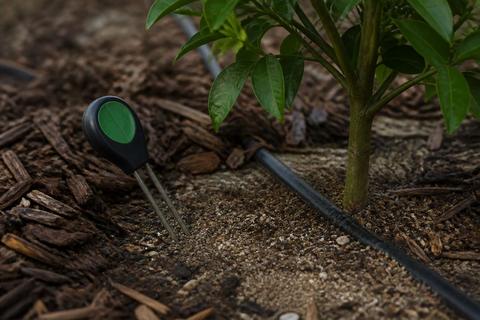
- Check root-zone moisture by digging down 6 to 10 inches near the drip line. If it's still wet, hold off.
- Keep mulch pulled back from the trunk. Piling it against the bark traps moisture and invites rot and collar disease.
Overwatering does just as much damage as drought. Yellow leaves over consistently soggy soil means cut back immediately, not add more water.
Full Guide: How to Water Fruit Trees Correctly
How to Fertilize Fruit Trees: Type, Rate, and Timing
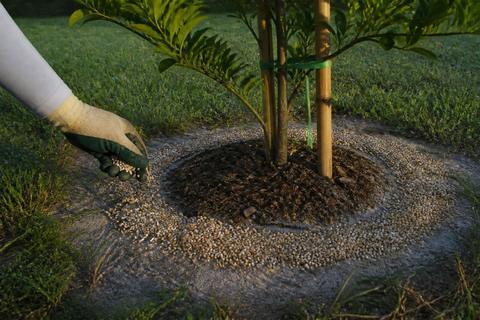
Fruit trees need steady nutrition to grow, flower, and set fruit, but Florida's sandy soils drain fast and hold onto very little of what you feed them. The goal is consistent, moderate feeding tied to the tree's growth stage, not a single big dose on a fixed date.
- Use a balanced fertilizer while the tree is young and building structure, then shift toward a fruit-focused, lower-nitrogen formula once it starts flowering heavily.
- Feed in split applications through spring and early summer, then ease off by late summer so you're not pushing tender new growth into cooler weather, which is more freeze-vulnerable.
- Follow label rates by tree size and age, not by the calendar. Overfeeding produces lush leaves and weak fruit set.
- On very sandy soil, work in organic matter to hold nutrients longer, then feed more often at smaller doses instead of big infrequent applications.
- If leaves look lush but fruiting stalls, back off nitrogen next cycle.
- Water in after fertilizing to move nutrients to the root zone and avoid fertilizer burn.
For exact rates, product picks, and a simple month-by-month schedule, see the linked guide.
Full Guide: How to Fertilize Fruit Trees: Type, Rate, and Timing
How to Transplant a Fruit Tree Without Killing It
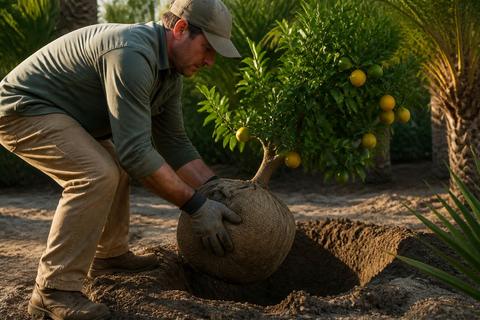
Transplanting stresses a tree because it damages roots and cuts its ability to take up water right when it needs it most. Minimize root disturbance, dig a root ball sized to the trunk, and plan aftercare so the tree can recover fast in Florida heat.
- Water the tree well 1 to 2 days before digging so the root ball holds together instead of crumbling.
- Dig a root ball sized to the trunk diameter. For most fruit trees, going a bit larger helps survival more than moving fast does.
- Keep roots shaded and moist in transit. Never leave bare roots exposed to sun or wind, even briefly.
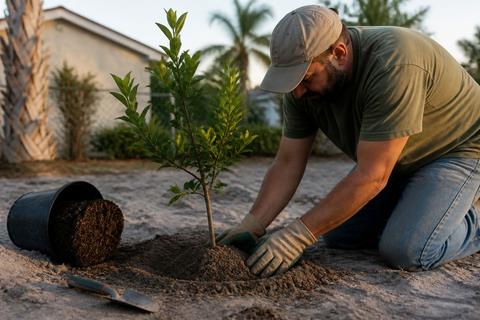
- Set the tree at the same depth it was growing before. Matching the old soil line on the trunk matters more than most people expect.
- Backfill firmly and water immediately to close air pockets around the roots.
- Use shade cloth for the first couple of weeks if the weather turns harsh, to cut transplant shock.
- Water deeply at first, then taper off gradually as you see new growth.
Careful technique at each step meaningfully raises survival odds.
Full Guide: How to Transplant a Fruit Tree Without Killing It
Protecting Fruit Trees from Cold and Freeze in Florida
Florida freezes are often brief, but the damage is real, especially for young trees and for blossoms and tender new growth on any age tree. A simple cold plan heading into a freeze night can prevent scorched leaves, split bark, and dropped fruit.
- Know your yard's cold spots. Cold air pools in low areas, so identify those spots first and prioritize protection there.
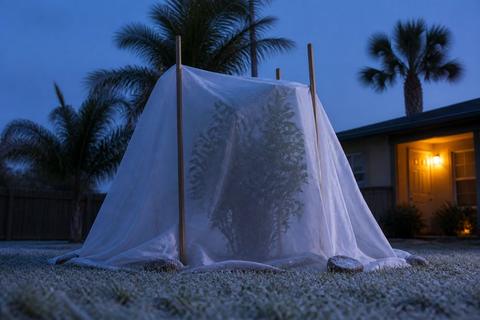
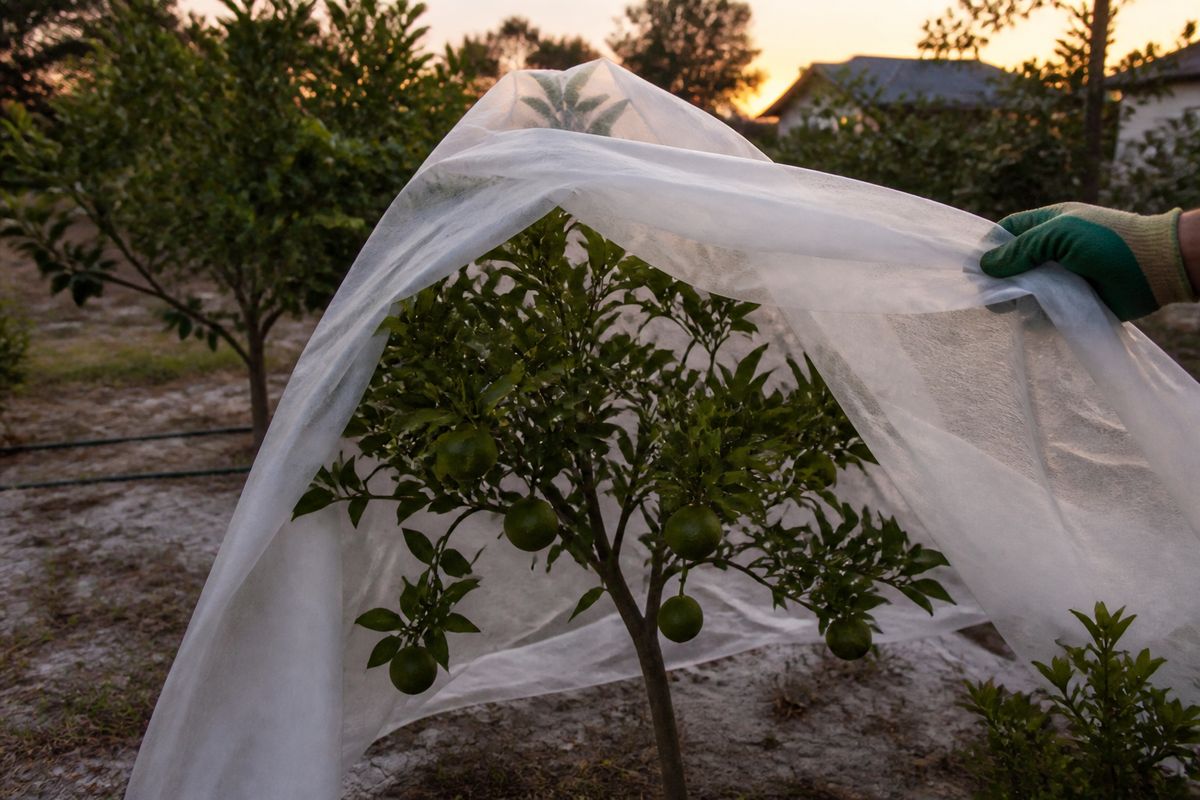
- Young or newly planted trees are the most vulnerable and are usually only reliably cold-hardy into the mid-20s F even for varieties that survive much lower temperatures once mature and dormant, so cover them ahead of a hard freeze. UF/IFAS Extension recommends covers that reach all the way to the ground and specifically warns against plastic tarps, which trap heat and moisture and can scorch the tree once the sun comes back out.
- Give the tree a windbreak where you can. Planting or siting it on the south or southeast side of a structure blocks north wind and holds a little extra warmth overnight.
- Skip pruning right before a cold snap. Fresh cuts are more freeze-sensitive than established wood.
- Cover blossoms the same way you'd cover the whole tree if a cold night is forecast during bloom; open flowers are more freeze-sensitive than dormant wood.
- Pull covers off once temperatures climb back up. Frost cloth can generally stay on a bit longer than sheets or blankets, but leaving any cover on through a sunny, warm day can overheat the tree.
- After a freeze, wait a few days before cutting anything back. Prune only the tissue that's clearly dead once you can see where new growth is resuming.
For a specific frost checklist and crop-by-crop sensitivity notes, see the linked guide.
Full Guide: Protecting Fruit Trees from Cold and Freeze in Florida
Frequently Asked Questions
What are the best fruit trees to grow in Florida?
It depends on where in Florida you are. North Florida gardeners generally do better with cold-hardy citrus like satsuma mandarins or kumquats, since sweet oranges and grapefruit take real damage in hard freezes that satsumas shrug off once established. Central and South Florida can grow a much wider tropical range, including mango and avocado. Low-chill peach varieties can work in Central Florida, but they get more marginal the further south and warmer you go, since even peaches need some winter chill to fruit well. Match the fruit to your zone first, then to your site's sun and drainage.
How much sun do fruit trees need in Florida?
Most fruit trees need full sun, meaning at least 6 to 8 hours of direct light a day. More light generally means better flowering and more consistent fruiting, and it also helps foliage dry out faster after rain or irrigation, which cuts down on fungal disease. If your yard only offers partial shade, either pick a variety that tolerates it or choose a different spot for the planting.
Can fruit trees grow in Florida's sandy soil?
Yes, but sandy soil takes more careful water and fertility management than loam or clay. It drains fast and holds little moisture, so young trees typically need more frequent, deep watering until roots are established. Working in organic matter improves both water retention and nutrient holding, and fertilizing in smaller, more frequent doses works better than a few heavy feedings. With the right site prep, sandy soil is very workable, not a dealbreaker.