How to Water Fruit Trees Correctly
Most fruit tree problems that look like disease or nutrient deficiency actually trace back to how to water fruit trees correctly. A tree that drops leaves, stalls out, or fruits unevenly is usually getting water at the wrong depth, the wrong frequency, or both. A dedicated fruit tree watering system, whether that's drip line, soaker hose, or basin flooding, fixes this by putting water where the roots actually are instead of wherever gravity and wind happen to take it.
For more help, see our How to Grow Fruit Trees in Florida guide.
Young trees and mature trees need different watering
Why age changes the watering rules
A tree in its first year has a root system that barely extends past the original root ball. It can't reach moisture six feet away the way a five-year-old tree can, so it depends on you far more heavily. Water a young tree too lightly and its roots stay shallow and heat-stressed. Keep an established tree constantly wet and you push oxygen out of the root zone, which is how root rot starts.
- Young trees: water more often, and keep the root ball and surrounding soil evenly moist rather than letting it swing between soaked and bone-dry.
- Mature trees: water less often but more thoroughly, soaking the zone deeply, then letting the surface dry before the next round.
- Use a soil check, not a calendar, as the trigger. Rainfall and irrigation coverage are never uniform across a yard.
What correct watering actually looks like
The target isn't a lawn that stays soggy for days. It's even moisture down where the active roots are, applied slowly enough to soak in instead of running off.
- Water in the morning. Evaporation loss is lower and leaves dry off before evening, which matters for disease pressure in humid climates.
- Apply water slowly. If it's puddling and running off the surface, you're applying it faster than the soil can absorb it.
- For established in-ground fruit trees, UF/IFAS recommends soaking to roughly 24 inches deep, which is deeper than most home gardeners assume. Shallower checks (6 to 12 inches) are still useful for judging whether the surface zone dried out enough to water again.
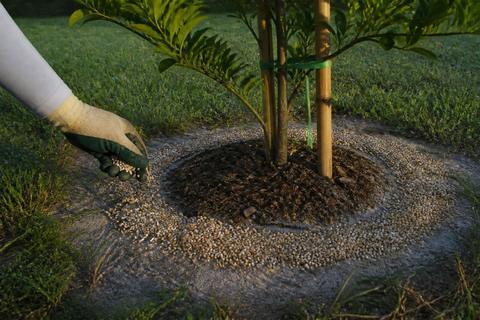
- Keep mulch over the root zone but hold it 3 to 6 inches back from the trunk. Mulch piled against bark traps moisture against the trunk and invites rot and borers.
How soil, heat, and wind change the math
Soil texture decides how fast water moves through and how much it holds onto between waterings. Heat speeds up evaporation. Wind pulls moisture out of soil and leaves even when the ground still looks damp.
- Sandy soil (most of Florida, plus a lot of Texas outside the Blackland Prairie) drains fast and holds very little water, so it needs shorter intervals between waterings even though each application still needs to reach depth.
- Clay soil holds water much longer and floods easily, so it needs longer gaps between waterings to avoid waterlogging.
- On hot, windy days, water earlier in the day and apply enough volume to offset the faster evaporation.
- After a heavy rain, skip the next scheduled watering and check soil moisture before turning the system back on, especially on clay.
Pick the right fruit tree watering system
Drip irrigation for efficient, deep watering
Drip line delivers water slowly right at the root zone, so less is lost to evaporation or runoff, and the leaves stay dry. Dry foliage matters more in the Southeast than people expect: humidity plus wet leaves is a fungal disease combination, and UF/IFAS notes that wetting the soil instead of the foliage helps prevent plant disease.
- Place emitters at the drip line (the edge of the canopy), not tight against the trunk, because that's roughly where the active feeder roots are.
- If your water source has sediment, run it through a filter. Clogged emitters are the single most common cause of uneven watering under drip systems.
- Run shorter, repeated cycles that add up to the needed depth rather than one long continuous flood, especially in sandy soil where water moves straight down instead of spreading out.
- After a run, check soil moisture at a few spots under the canopy to confirm the whole root zone got wet, not just the spots directly under emitters.
Soaker hoses and basin watering
Soaker hoses release water along their length and work well for small home orchards or mixed beds. A shallow watering basin, a low ring of soil around the tree, holds water in place long enough to soak in instead of running downhill.
- Coil the soaker hose in a ring roughly matching the canopy width and cover lightly with mulch to cut evaporation.
- Water in cycles: let it soak in, then run again until the target depth is reached.
- Build the basin as a shallow ring, not a deep bowl, so water spreads outward instead of pooling against the trunk.
When sprinklers work against you
Overhead sprinklers waste water to wind drift and often spray past the actual root zone. They also leave foliage wet for hours, which is exactly the condition fungal diseases like anthracnose and citrus scab need.
- Skip overhead sprinklers if you already have recurring leaf disease, or if you can't realistically water early enough for leaves to dry by midday.
- If sprinklers are what you have, run them early morning only and stop the habit of evening watering.
- Watch for runoff, puddling near the trunk, or a dry ring further out. That pattern means water isn't reaching where the roots actually are.
Watering newly planted fruit trees
How often for the first year
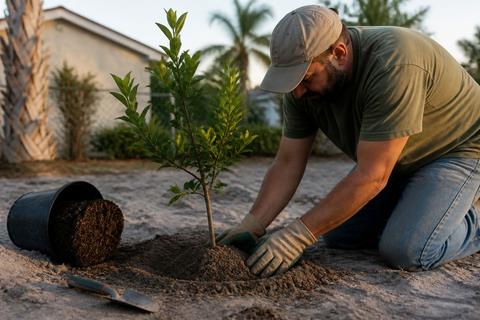
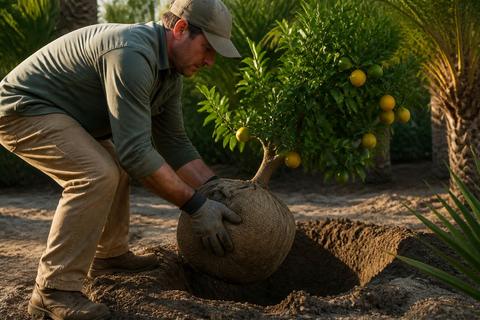
A newly planted tree has almost no root spread yet, so you're doing the job the roots will eventually do themselves.
- First month: water deeply 2 to 3 times a week, more in a heat wave, less after a soaking rain.
- Each watering should soak the original root ball and the soil immediately around it, not just wet the surface.
- Months two and three: taper toward roughly once a week if the top few inches of soil are drying out between waterings.
- During drought stretches, keep watering by soil moisture, not by a fixed schedule you set months earlier.
How much is enough, without drowning the roots
Too little water keeps roots shallow and weak. Too much suffocates them. The safest approach is a slow soak to depth, then a pause before the next cycle.
- For in-ground trees, aim for a slow soak and then stop. Multiple short cycles usually beat one long flood, particularly in sandy soil where water runs straight through.
- Never leave a root ball sitting in standing water after irrigation ends.
- For container trees, water until it drains from the bottom, then dump the saucer. A tree sitting in standing water in a saucer is a slow way to kill it.
Checking whether water is actually reaching the roots
Guessing is where most watering schedules fail. A simple probe test tells you the truth.
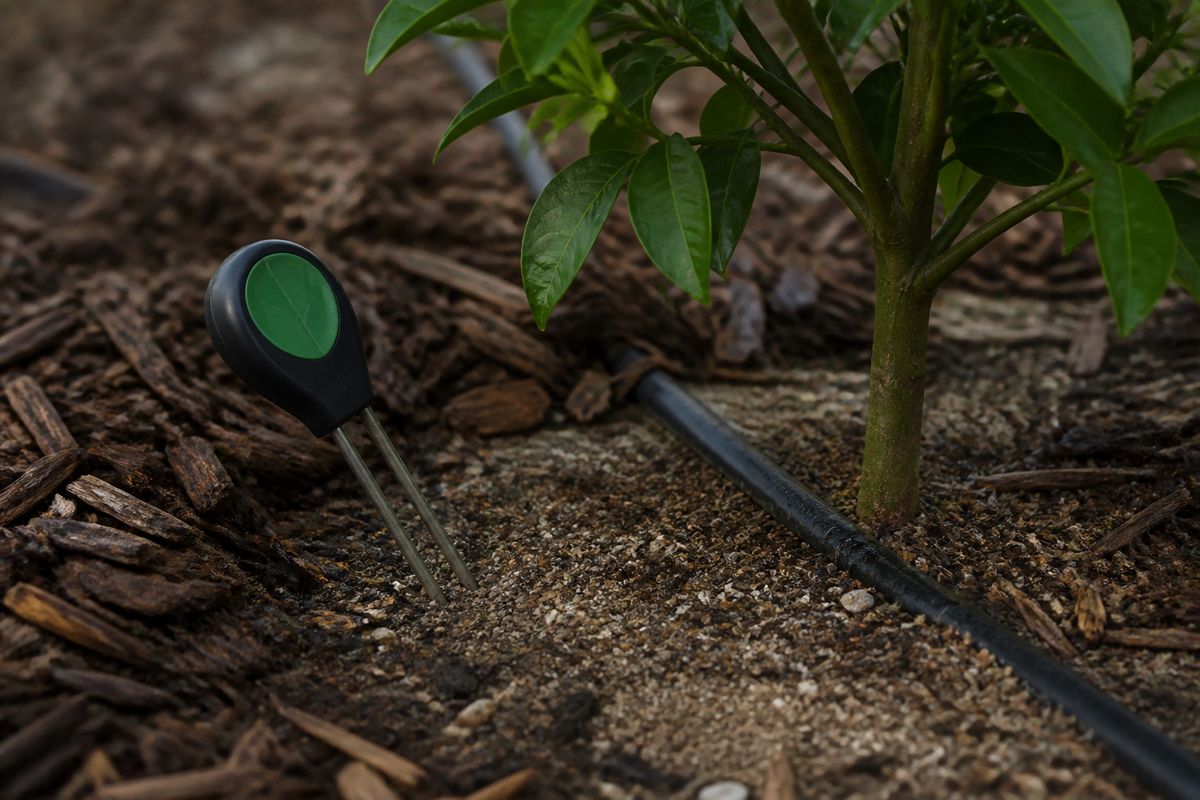
- Push a clean screwdriver or soil probe into the ground at the drip line, 6 to 12 inches down.
- If it slides in easily and the soil feels cool and moist at depth, the water reached the roots.
- If the top inch is wet but the probe hits dry soil below, you're watering too little, too fast, or the water is running off before it soaks in.
- Recheck after your next watering cycle so you can lock in a run time that actually works for your setup.
Adjusting watering by season
Spring: new growth and bloom
Spring brings fast leaf growth and bloom, both of which raise water demand, but cool rainy stretches can cut irrigation needs sharply.
- Start deep watering once the root zone shows it's drying to your target depth.
- If rain is frequent and temperatures are mild, skip irrigation and rely on soil checks instead of habit.
- Ramp up as temperatures climb and active leaf growth kicks in.
Summer: heat, drought, and fruit fill
Summer is where most fruit trees either thrive or fall apart, because heat drives evaporation up right as fruit fill is raising the tree's actual water demand.
- Water early morning, and run long enough to wet the root zone, not just the surface.
- In a heat wave, shorter, more frequent cycles work better on fast-draining soil, as long as the total still reaches depth.
- Avoid watering late in the day. Wet leaves overnight in July humidity is asking for fungal problems.
- Small fruit and leaf curl during a heat spike usually mean the tree needs more water at the roots, not a fertilizer fix.
Cooler, wetter, and dormant stretches
Cooler weather slows evaporation and rain keeps soil moist longer, while dormant trees simply use less water. The goal shifts to avoiding saturation without letting the tree dry out completely.
- In a wet week, shut irrigation off and check soil before starting again.
- During dormancy, only add water if soil is visibly drying and the tree shows stress. Most dormant trees need very little.
- On clay, stretch the interval between waterings further to avoid waterlogging.
- Recheck mulch depth going into the cool season. Too much piled against the trunk causes rot even when temperatures are low.
Common watering mistakes
Telling overwatering and underwatering apart
Trees don't announce problems clearly at first. You have to read both the foliage and the soil at depth together.
- Overwatering signs: yellowing leaves, wilting despite wet soil, stalled growth, and soil that smells sour or looks perpetually muddy near the root zone.
- Underwatering signs: drooping leaves, dry soil several inches down, undersized fruit, leaf drop, weak new growth.
- If the probe test shows wet soil at depth but the leaves are wilting, that's usually low oxygen or root damage, not a lack of water. More watering will make it worse.
- If soil is dry at depth and leaves are drooping, increase how much water you're applying and how long it runs, while keeping an eye on runoff.
Why frequent shallow watering backfires
Watering a little bit every day trains roots to stay near the surface, because that's the only zone that ever gets wet. Shallow roots dry out faster in summer heat and are the first thing damaged in a hard freeze.
- Water less often but apply more per session so moisture actually reaches depth.
- Check drip coverage under the full canopy occasionally. A single mis-aimed emitter can leave part of the root zone permanently dry while the rest looks fine.
Mulch placement that helps instead of hurts
Mulch cuts evaporation and improves soil structure, but piled against bark it holds moisture where you don't want it and invites trunk rot.
- Spread mulch in a ring over the root area, leaving 3 to 6 inches of bare ground around the trunk flare.
- Don't mound it into a thick pile, especially on clay or already-wet soil.
- If you run drip line under mulch, keep it shallow enough that emitters still function. Buried too deep, they clog or stop delivering evenly.
- Check mulch after heavy rain. Runoff shifts it toward the trunk more often than people expect.
Matching watering to the tree and the site
Low-water versus water-hungry trees
Not every fruit tree treats water the same way. Figs and pomegranates tolerate dry stretches once established; citrus and bananas want more consistent moisture, especially during bloom and fruit fill.
- Even a drought-tolerant tree struggles in saturated clay, so soil type still matters more than the species label.
- For water-hungry trees, prioritize steady moisture through bloom and fruit set, and drip is the easiest way to hold that consistency.
- For low-water trees, let the soil dry somewhat between waterings, then soak deeply rather than sipping often.
- Expect watering needs to drop substantially after the first year or two, once roots have actually spread into the surrounding soil.
Containers and patio trees
A tree in a pot dries out much faster than one in the ground because the root zone is small and fully exposed to sun and wind on every side.
- Use a potting mix that drains but still holds some moisture, and never let a container sit in a saucer of standing water.
- Water when the top inch of mix feels dry, and run it until you see drainage from the bottom.
- In Florida and Texas summer heat, a container tree can dry out within a single day, so check it daily rather than assuming a schedule will hold.
Florida and Texas specifics: sandy soil, heat, and hard freezes
Most native Florida soil, and a good share of Texas outside the Blackland Prairie clay belt, is sandy. UF/IFAS research on sandy soils notes they have very low water-holding capacity and drain fast, which means a tree can look fine one afternoon and show heat stress the next if you skip a watering cycle during a dry, hot stretch.
- Use drip irrigation placed at the canopy edge so water soaks in exactly where the active roots are, instead of running off the sandy surface.
- Match citrus variety to your zone. Straight sweet oranges routinely die back or die outright after a hard North Florida freeze. For North Florida (roughly zone 8b-9a) and the Panhandle, cold-hardy choices actually hold up: satsuma mandarins tolerate cold down to about 14°F, kumquats to about 16°F, and calamondin to about 22°F, per UF/IFAS. South and Central Florida (zones 9b-11) have far more room to grow tender citrus, mango, and avocado without freeze worry most winters.
- On the peninsula, plant cold-sensitive trees on the south or southeast side of a structure. The wall radiates stored heat back at night and blocks the worst of a north wind on a freeze night.
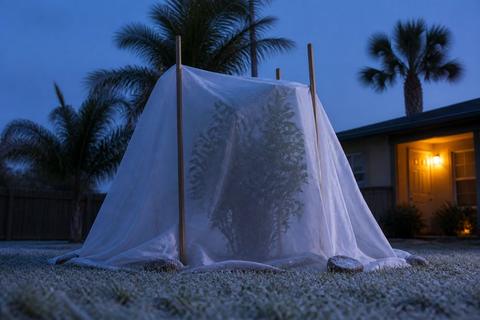
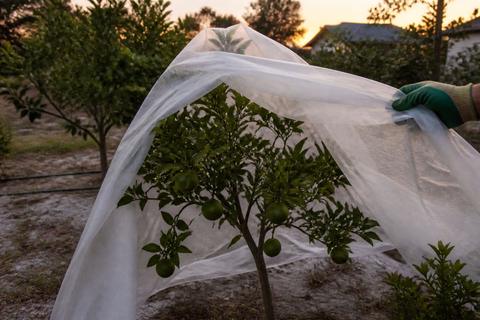
- Below freezing, drape frost cloth (not plastic sheeting) all the way to the ground on young or tender trees to trap ground heat, then remove it once temperatures climb back above freezing the next day.
- Texas gardeners in the Hill Country and North Texas (roughly zone 7b-8a) are dealing with a harder, longer freeze risk than the Gulf Coast (9a-9b), so lean toward more cold-hardy citrus and figs there and skip the tender tropicals entirely.
A simple watering schedule you can actually keep
Weekly and monthly checklist
A short checklist keeps watering consistent through changing weather instead of you reinventing the schedule every week.
- During active growth, check soil moisture at the drip line, 6 to 12 inches down, weekly.
- Only water once that zone is actually drying out, then recheck after the cycle to dial in the right run time.
- Spring: start light, increase as temperatures climb and bloom begins.
- Summer: check more often. Sandy soil dries fast and heat spikes hit quickly.
- Fall and winter: cut back, and only add water if soil is dry and there's been no recent rain.
How watering fits with pruning, feeding, and pest checks
Watering doesn't happen in isolation. Pruning lowers the tree's water demand for a while, fertilizer raises it, and pest problems often show up first as a watering-adjacent symptom like wilting.
- After a heavy pruning, don't overwater just because the tree looks bare. Keep moisture steady so cuts heal without inviting rot.
- Fertilize into moist soil, not dry soil. Fertilizer salts applied to dry ground can burn roots.
- If wilting shows up right after you change the watering routine, check for pests before assuming it's purely a water problem.
- Keep a running note of run times, emitter changes, and pruning dates. It makes cause and effect much easier to track down later.
When to call in a professional
Some problems mimic a watering issue but come from somewhere else entirely: clogged emitters, root damage, poor drainage, or a nutrient deficiency.
- Call an irrigation technician if dry spots under the canopy don't improve after you've adjusted run times and confirmed soil moisture with a probe.
- Call a local arborist if a tree shows ongoing wilting, leaf drop, or dieback even when root-zone moisture checks out fine.
- Get a drainage assessment if water is pooling and staying after irrigation, especially in clay soil or a low spot in the yard.
- For a new fruit tree watering system, a professional can size lines, place emitters, and set pressure regulation correctly the first time, which is cheaper than fixing uneven coverage later.
Frequently Asked Questions
How often should I water a fruit tree?
It depends on age, soil, and weather, but young trees need more frequent deep watering than established ones. The goal is even moisture at the root zone, not constant sogginess. First-year trees: water deeply 2 to 3 times a week, then taper based on soil checks 6 to 12 inches down. Established trees need less frequent but deeper soaks, with enough dry-down time between for oxygen to return to the soil.
Is drip irrigation better than sprinklers for fruit trees?
Usually, yes. Drip delivers water slowly right at the root zone, cuts waste, and keeps foliage dry, which matters for disease pressure in a humid climate. It also lets you target the feeder roots at the canopy edge more precisely than overhead spray can. If your sprinklers are losing water to wind or runoff, switching to drip or soaker hose puts more of that water to actual use.
How do I know if my fruit tree is underwatered?
Common signs: wilting leaves, dry soil several inches down, undersized fruit, leaf drop, weak new growth. The reliable check is a soil probe: push a screwdriver or probe in at the drip line to 6 to 12 inches. Dry at depth means water isn't reaching the roots. Wet at depth but the tree is still wilting usually points to overwatering or a drainage problem, not underwatering.
Can overwatering harm fruit trees?
Yes. Excess water pushes oxygen out of the root zone and leads to root rot and poor fruiting. It can look like yellowing leaves, stalled growth, wilting even though the soil is wet, and a sour or muddy smell near the roots. The fix is watering less often, applying it more slowly, and confirming the site actually drains. A soil probe helps you catch this before it becomes a repeating pattern.
Should I change watering after pruning?
Often, yes, but not by watering more. A pruned tree needs steady moisture to heal cuts and push new growth, not a heavier watering schedule just because the canopy looks smaller. Use the soil probe at the drip line as your decision point: if it's still moist, skip the extra watering; if it's drying out, water deeply enough to reach the root zone.