Vegetable Garden Layout and Design Ideas
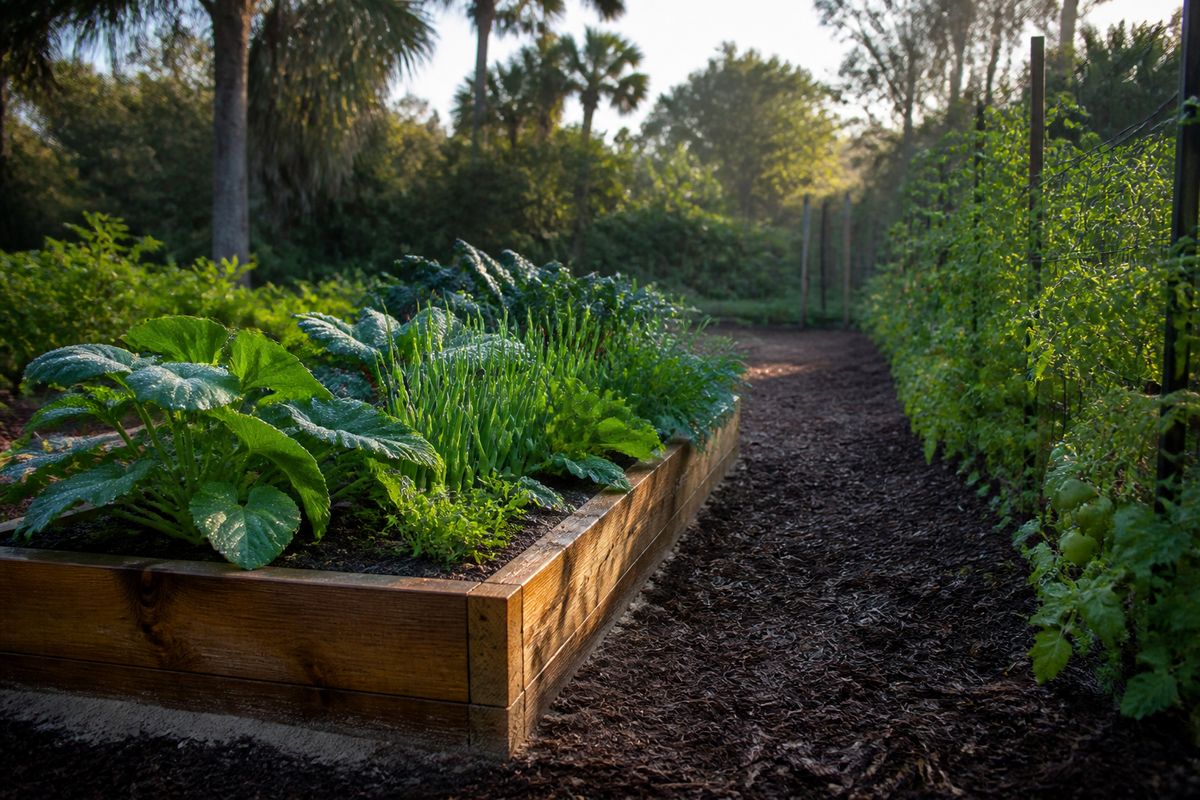
A messy, crowded vegetable garden layout wastes space, blocks sunlight, and turns watering and weeding into a daily chore, and in Florida's heat that chore gets old fast. If you've replanted the same patch twice because plants struggled, the layout is usually the missing piece. Florida also isn't one growing climate: North Florida gets real winter freezes, Central Florida gets occasional frost, and South Florida rarely freezes at all, so the same layout has to work differently depending on where you garden.
For more help, see our Florida Vegetable Gardening Guide guide.
Start with the site and Florida's growing conditions
Pick the sunniest spot you have
Your layout lives or dies on light, and Florida's intense summer sun makes this even more forgiving than cooler climates, as long as you actually have direct sun and not filtered shade from a live oak canopy.
- Walk the yard and note where direct sun lands for most of the day, especially morning through mid-afternoon.
- UF/IFAS recommends locating the garden on a well-drained site, close to a water source, that gets at least six hours of direct sunlight daily; fruiting crops like tomatoes, peppers, cucumbers, and squash do best nearer 8 hours.
- Use the house, fences, and oaks or pines as shade boundaries, not planting partners. A spot that loses sun by early afternoon is fine for lettuce and other greens, but it will starve a tomato.
Keep tall plants and trellises on the north or east edge of the layout so they don't throw shade across shorter crops during the growing day.
Check drainage before you commit to a spot
Much of Florida sits on sandy soil that drains fast and holds almost no water, but low spots and compacted clay pockets (common in parts of the Panhandle and inland ridge areas) can stay soggy long enough to rot roots.
- Run a simple drainage test: dig a hole about 12 inches wide and deep, fill it with water, and time how long it takes to drain.
- If it drains within roughly an hour, in-ground beds are workable. If water is still standing after several hours, plan raised beds instead of fighting the site.
- Set spacing by each crop's mature size, not the seed packet's optimistic minimum. Florida's humidity means leaves need room to dry after rain and dew, or fungal disease moves in fast.
Treat spacing as your first fungal-disease defense, not an afterthought. Airy plants dry out between waterings; crowded ones stay wet and start showing leaf spot within weeks of a rainy stretch.
Design around your region, not a generic frost date
"Find your last frost date" is standard garden advice, but it undersells how different Florida's three regions actually are. Planting dates differ sharply by region: North and Central Florida both plant frost-tender crops in March and need to watch for late frosts, while South Florida is mild enough that many gardeners skip spring planting altogether and grow "spring" crops like tomatoes in fall and winter instead, which changes both your calendar and your layout.
- North Florida (roughly zone 8b-9a: Tallahassee, Jacksonville, Gainesville): plan for real winter freezes. Warm-season crops like tomatoes and peppers generally go in around March, and you need a plan to cover tender plants if a late frost threatens.
- Central Florida (roughly zone 9b-10a: Orlando, Tampa): frost is occasional, not routine. You get a longer warm season but still want beds sited where cold air can't pool against tender crops on the rare freeze night.
- South Florida (roughly zone 10b-11a: Miami, Fort Lauderdale): freezes are rare enough that many gardeners plant "spring" crops like tomatoes in fall and winter instead, since summer heat and rain, not cold, are the limiting factor.
Orient beds north-to-south where possible so one row doesn't shade another, but in Central and South Florida, also plan for airflow first: wider spacing and open rows matter more here than in a drier climate, because Florida's humidity keeps foliage wet longer after a thunderstorm than it would after a quick rain up north.
Choose the layout style that fits your yard
Rows, for larger crops and easy access
Row planting suits Florida yards with enough space, and it keeps airflow open between plants, which matters more here than in cooler, drier states.
- Run rows north-to-south so one side doesn't steal light from the other.
- Leave wide paths between rows, at least 18-24 inches, so you can move a hose or wheelbarrow without brushing wet foliage (a fast way to spread fungal spores in humid weather).
- Put taller crops like pole beans, trellised cucumbers, or indeterminate tomatoes at the north end so they don't shade shorter crops during peak growing hours.
Rows also make it simple to run drip line down each row instead of overhead sprinklers, which keeps leaves dry and cuts down the leaf-spot and powdery mildew pressure that shows up fast in Florida summers.
Raised beds, for sandy soil and standing water
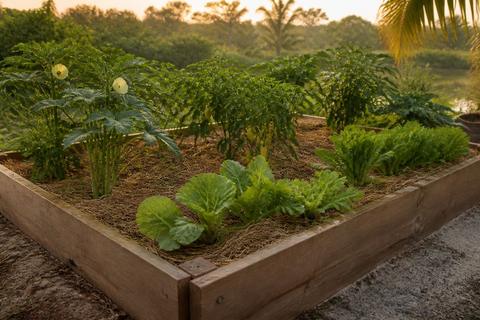
Raised beds solve two very common Florida problems at once: soil that's either too sandy to hold nutrients or, in low yard sections, too slow to drain.
- Build beds about 4 feet wide so you can reach the center from both sides without stepping in and compacting the soil.
- UF/IFAS recommends 6- to 8-inch-tall sides for a standard raised bed, taller if your native soil is especially poor or wet.
- Fill with a well-drained mix, then top with an inch or two of compost each season, Florida's heat and rain break down organic matter faster than cooler climates, so beds need replenishing more often.
Raised beds are close to mandatory if your yard sits over compacted fill dirt or a low spot that holds water, both common in newer subdivisions built on graded land.
Square-foot grids, for small yards and beginners
UF/IFAS's square-foot garden method uses a 4-foot-by-4-foot bed with 6- to 8-inch sides, gridded into sixteen 1-foot squares, which turns "how far apart do I plant this" into a simple visual instead of a guessing game.
- Lay string or wood strips across the bed to mark the sixteen 1-foot squares.
- Assign each square by mature plant size: one square per bush bean or leafy green cluster, but reserve two to four connected squares for a sprawling crop like zucchini or a squash vine.
- The tighter spacing isn't just convenient, the resulting dense canopy also shades out weeds and slightly improves yield per square foot, though it also means you have to stay ahead of watering since less soil surface is exposed to catch rain per plant.
This is the layout most first-time Florida gardeners should start with in a small yard: it caps how much you can overcrowd, which is the single most common beginner mistake here.
In-ground beds, for good soil and a tight budget
In-ground beds work when your native soil drains reasonably well and you don't mind the extra weed pressure that comes with Florida's long growing season.
- Mark bed boundaries clearly with edging so foot traffic and mower wheels stay off the growing area.
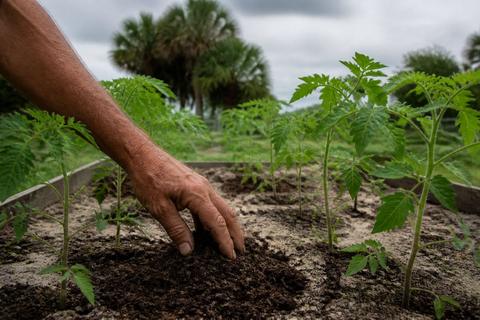
- Work compost and organic matter into sandy soil before planting, straight Florida sand alone won't hold enough nutrients or moisture for vegetables.
- Add defined paths around beds. Florida's rainy season turns bare soil paths into mud that gets tracked everywhere, gravel or mulch paths hold up much better.
If your yard is mostly sand with no low spots, in-ground beds can work fine and cost nothing to build, just budget more compost than you think you need.
Design for airflow, pollination, and disease pressure
Group crops by height and sun, and leave room for air to move
Florida's humidity makes airflow a bigger design factor than it is in drier states. Crowded, still air around wet leaves is exactly what fungal disease needs.
- Put trellised or tall crops on the north or back edge so they don't block sun or airflow to the rest of the bed.
- Group full-sun crops together and shade-tolerant greens together, so you aren't watering a sun-lover and a shade plant on the same schedule.
- Leave a few extra inches of spacing beyond the seed packet's minimum in summer, when Florida's afternoon humidity spikes and rain is nearly a daily event in many areas.
When plants have room to dry between waterings and rain events, you'll see less powdery mildew and leaf spot without changing anything else about your care routine.
Leave real paths, not just gaps between plants
An overgrown path becomes a garden you avoid, and in Florida's growing season, a garden you avoid for even a week can get away from you.
- Plan path routes to every bed corner and to your water spigot before you plant, not after.
- Keep paths wide enough for a wheelbarrow, about 24 inches, since Florida's compost needs (sandy soil eats organic matter fast) mean you'll be hauling material in more often than gardeners on richer native soil.
- Use gravel, mulch, or pavers on paths rather than bare dirt. Florida's rainy season (roughly June through September in most of the state) turns bare paths into standing mud.
Add pollinator flowers without blocking airflow
Florida has strong pollinator activity nearly year-round in the southern two-thirds of the state, which is an advantage if your layout gives flowers room to work without crowding vegetables.
- Use flowers that bloom through Florida's long season, like zinnias, marigolds, and native salvias, along bed borders or between rows.
- Keep flowers out of the vegetable canopy itself. Give vegetables their full recommended spacing first, then fill leftover edge space with flowers.
- Skip dense flower borders directly upwind of your beds if you're already fighting humidity, they can block the airflow you're trying to protect.
Prevent shading before it becomes a summer problem
Florida's sun angle is high and direct for much of the year, so shading problems show up differently than in northern gardens, mainly as a specific tall plant blocking a specific neighbor, not a general low-sun issue.
- Check where shadows fall in mid-afternoon (Florida's strongest sun window) and place tall crops so their shadow lands on a path, not on shorter plants.
- Trellis indeterminate tomatoes, pole beans, and cucumbers so the canopy stays vertical instead of sprawling and shading neighbors at ground level.
- Keep compact, quick crops like lettuce and cilantro on the south edge of the layout in cooler months, then move them to afternoon shade or skip them entirely once summer heat arrives, since both bolt fast once Florida temperatures climb into the 80s.
Build a planting map that matches Florida's calendar
Put daily-harvest crops near the door
Herbs and salad greens you'll pick several times a week should be the closest bed to your kitchen door, both for convenience and because Florida's heat makes you less likely to walk out to a far corner of the yard in July.
- Place herbs, greens, and quick-harvest crops on the nearest path.
- Put heavier-maintenance crops like tomatoes and peppers where you can reach them without crossing other beds.
- Keep this bed's soil in its best condition; it will get the most foot traffic and the most frequent watering checks.
Rotate crop families to break Florida's pest and disease cycles
Florida's warm soil supports pest and disease organisms nearly year-round, so rotation matters more here than in climates with a hard winter that knocks populations back.
- Group crops by family: nightshades (tomatoes, peppers, eggplant), brassicas (cabbage, broccoli, collards), and legumes (beans, peas).
- Move each family to a different bed section each planting season rather than replanting the same family in the same soil.
- Keep a simple written map, with three growing seasons a year in much of Florida, it's easy to lose track of what grew where without notes.
Stagger plantings to match Florida's compressed windows
Some Florida crops have a narrower productive window than gardeners expect, tomatoes, for instance, often stop setting fruit once nighttime temperatures stay above the mid-70s, well before the plant itself dies.
- Start two to four smaller batches of fast crops like lettuce, radishes, and bush beans a week or two apart instead of one big sowing.
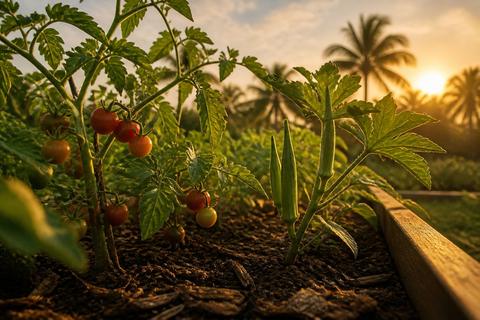
- Replace crops as they finish or as heat pushes them out. A spring bed that bolts in May can go straight into a heat-tolerant summer crop like southern peas or okra.
- Watch your region's calendar rather than a single generic date. North Florida's spring window opens later and closes earlier than South Florida's.
Use companion planting as a small adjustment, not a spacing shortcut
Companion planting can help with pests and pollination, but in Florida's humidity, cramming companions in tighter than recommended spacing does more harm than good.
- Pair basil with tomatoes, or marigolds along bed edges, while keeping each plant's actual spacing requirement.
- Use border strips or edge squares for companions so airflow through the main bed doesn't suffer.
- If leaves start staying wet longer after rain because of new companion plants, thin something, that's a disease risk building, not a minor tradeoff.
Adjust the layout for your part of Florida
Small yards and suburban lots
A compact layout still produces well in Florida's long season, if you don't try to cram too many full-size crops into it.
- Start with one or two 4-foot-wide raised beds plus one path you'll actually use.
- Trellis vertical crops (peas, cucumbers, pole beans) early so they don't sprawl and shade the rest of a small bed.
- Use a square-foot grid for herbs and greens, it keeps a small space from turning into a tangle by midsummer.
North Florida layouts (occasional hard freezes)
North Florida is the one part of the state where a layout genuinely needs a cold-weather plan built in.
- Site beds with south or southeast exposure, ideally near a wall or fence that blocks the coldest winter wind.
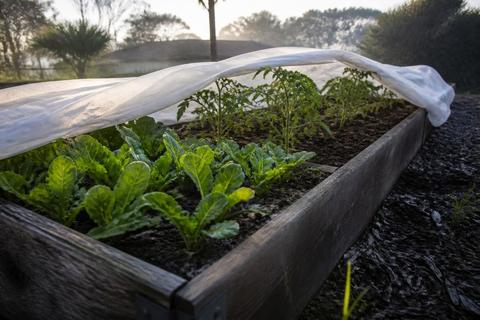
- Leave room to drape row cover or a sheet over tender beds down to the ground on a hard freeze night; ground heat under the cover is what actually protects the plants.
- Plant warm-season crops after your area's typical last frost, generally March for most of North Florida, and keep cold-tolerant crops like collards and cabbage in the layout through winter instead.
Central and South Florida layouts (heat and humidity, not cold)
Once you're south of about Ocala, design the layout around heat and rain more than frost.
- Prioritize airflow: wider row spacing, drip irrigation instead of overhead sprinklers, and morning watering so leaves dry by midday.
- Plan for a summer slowdown on fruiting crops like tomatoes, and have a heat-tolerant crop (okra, southern peas, sweet potato) ready to take that bed's place.
- In South Florida, you can plant many "spring" crops in fall and winter instead, since summer heat, not cold, is the bigger obstacle.
Check HOA rules before you build anything
Some Florida HOAs restrict raised bed height, materials, or visible vegetable gardens in front yards. This is a paperwork problem, not a growing one, but it's cheaper to solve before you build.
- Check bed-height and material rules, along with fence and trellis restrictions, before ordering lumber.
- Document any required approvals in case a neighbor questions the setup later.
- If raised structures are restricted, in-ground beds with simple edging usually pass review more easily.
Make the layout easier to maintain through Florida's growing season
Size paths for real tools, not just foot traffic
- Plan at least 24 inches of path width for wheelbarrow access, more if you'll be hauling compost or mulch often.
- Use gravel or paver paths in wetter yard sections, Florida's summer rain turns bare dirt paths to mud fast.
- Avoid narrow choke points between beds where a loaded wheelbarrow can't turn.
Install drip irrigation and mulch from day one
Skipping irrigation planning is one of the most common Florida garden mistakes, sandy soil dries out fast, and hand-watering a full layout in July heat gets old within a season.
- Run drip line or soaker hose to each bed before planting, aimed at the soil, not the leaves.
- Mulch 2-3 inches deep with straw, shredded leaves, or pine bark once plants establish, keeping it off stems to avoid rot.
- Add edging to keep grass runners like St. Augustine and bahia, both common Florida lawn grasses, from creeping into beds.
Plan vertical supports before you plant, not after
- Identify climbing crops early: peas, cucumbers, pole beans, and indeterminate tomatoes all need support from the start.
- Set trellises and cages at planting time so you don't damage established roots installing them later.
- Place supports on the north or back edge of a bed so they don't shade shorter crops during the day.
Leave room to adapt the layout later
Florida's three-season growing calendar means your layout will keep changing. Leave slack for that instead of locking every square foot in permanently.
- Reserve one open zone for seasonal swaps or a crop you want to try next season.
- Keep main paths in place even as bed contents change, so you're not redesigning traffic flow every few months.
- Hold space in reserve for replanting fast after a summer crop bolts or a rare freeze damages a bed.
Common layout mistakes in Florida gardens
Overcrowding in a climate that punishes it fast
Overcrowding causes problems everywhere, but Florida's humidity turns it into a fungal disease outbreak faster than drier climates do.
- Space by mature plant width, not the seedling's current size.
- Keep tall crops from shading shorter ones for most of the day.
- Thin plants as soon as you notice dense shade in the canopy, rather than waiting for a problem to show up.
Ignoring how big plants actually get
- Look up the mature footprint for your specific variety rather than assuming all tomatoes or all squash are the same size.
- Mark bed sections on paper first, then measure the real space with a string line.
- Swap in compact or bush varieties when space is tight rather than forcing a sprawling variety into a small bed.
Skipping water and tool access
- Keep beds within an easy hose run of your water source, Florida's dry spells make consistent watering non-negotiable, not optional.
- Store basic tools near the garden entrance so a quick weeding session doesn't require a trip to the garage.
- Make sure paths reach every bed from the outside, so you never have to step into planted soil to work.
Designing without a rotation plan
- Split the garden into zones and assign a crop family to each.
- Rotate families every planting season, even if the bed layout itself stays the same.
- Write down what grew where and when. With up to three plantable seasons a year in parts of Florida, memory alone won't cut it.
Frequently Asked Questions
What is the best vegetable garden layout for beginners in Florida?
A single 4-foot-wide raised bed or square-foot grid, sited for at least six hours of direct sun and good drainage, is the easiest starting point. Start with crops that tolerate mistakes and Florida heat, like southern peas, okra, and leafy greens in cooler months, and add a wider layout only after you see how much space and water your first bed actually needs.
Is square-foot gardening a good layout for Florida vegetables?
Yes, especially in small yards. The standard 4-by-4-foot bed gridded into sixteen 1-foot squares keeps spacing honest and limits overcrowding, which is the most common beginner mistake in Florida's fast-growing climate. Just budget for slightly more frequent watering, since the dense planting exposes less bare soil to catch rain per plant.
Should I mix flowers into a Florida vegetable garden layout?
Generally yes. Zinnias, marigolds, and other long-blooming, heat-tolerant flowers support pollinators through Florida's long season. Keep them along borders or between rows rather than inside the vegetable canopy, so they don't block the airflow your plants need in humid weather.
How do I plan a vegetable garden layout for my part of Florida?
Start with your region: North Florida needs a real frost plan and a March-ish start for warm-season crops, Central Florida gets occasional frost with a longer warm season, and South Florida rarely freezes at all, so many gardeners plant "spring" crops there in fall and winter instead. Build the layout around whichever stress, cold or heat and humidity, actually applies to your area.
What's the easiest way to lay out a small Florida vegetable garden?
Use one or two raised beds or a compact square-foot grid, keep taller trellised crops on the north side so they don't shade shorter plants, and leave real paths at least 24 inches wide. Prioritize drip irrigation and mulch early, sandy Florida soil dries out faster than most gardeners expect.