Best Vegetables to Grow in Florida
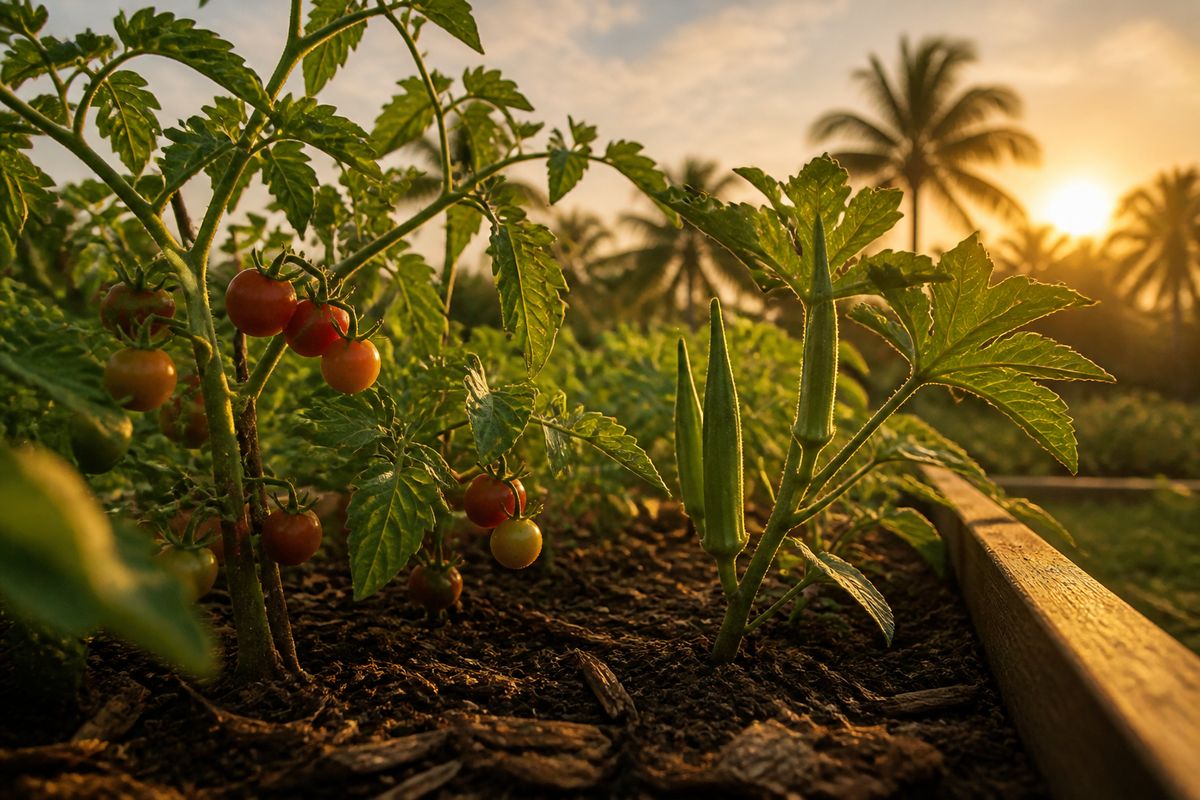
If you keep planting seeds that stall, bolt, or rot the week Florida heat hits, the fix usually isn't the seed packet, it's the calendar. The best vegetables to grow in Florida are the ones matched to your specific stretch of the state and the week your last frost or first heat wave actually lands, not the "spring" and "fall" dates printed for the rest of the country. Get that timing right and you can run a productive garden from October through May, then keep a smaller summer harvest alive without losing everything to July.
For more help, see our Florida Vegetable Gardening Guide.
Why Florida's climate matters more than your USDA zone
Heat, humidity, and frost dates drive the calendar, not the zone number
Florida spans USDA zones 8a in the panhandle to 11a in the Keys, but the zone number tells you almost nothing about when to plant a tomato. What actually matters is your local frost window and how fast humidity ramps up once spring arrives. UF/IFAS splits the state into three planting regions along State Road 40 and State Road 70: North Florida (everything north of SR 40), Central Florida (between SR 40 and SR 70), and South Florida (below SR 70). Each region gets its own planting calendar because a frost date in Tallahassee and a frost date in Fort Myers can be six to eight weeks apart.
For frost-tender crops like tomatoes, peppers, and eggplant, the real skill isn't finding a "best" vegetable, it's setting transplants out after your last frost risk passes but early enough that they mature before summer heat shuts down fruit set. Above roughly 90°F, tomato and pepper blossoms tend to drop instead of setting fruit, which is why "plant in spring, harvest all summer" doesn't work through most of the state.
Planting windows for north, central, and south Florida
Rough windows, adjust a couple weeks either direction based on your specific county's frost history:
- North Florida: cool-season crops (lettuce, carrots, broccoli, collards) go in September through March; warm-season crops (tomatoes, peppers, beans, corn) wait until March or April, after the last frost.
- Central Florida: cool-season planting runs September through February; warm-season crops split into two windows, a smaller one in August or September before it cools off, and the main one in February or March.
- South Florida: cool-season crops can go in as late as October through March; warm-season crops get planted January through April, or again in August or September, since damaging frost is rare across most of this region.
Check the "days to maturity" on your seed packet and count backward from the point your nights stop staying reliably above 55°F (fall) or the point daytime highs start clearing 90°F consistently (late spring). A crop that needs 75 days won't finish if you start it 60 days before serious heat arrives.
Why summer crops fail even when you did everything "right"
Summer failure in Florida is almost always heat stress plus disease pressure stacking on top of each other, not bad seed. Three things actually move the needle:
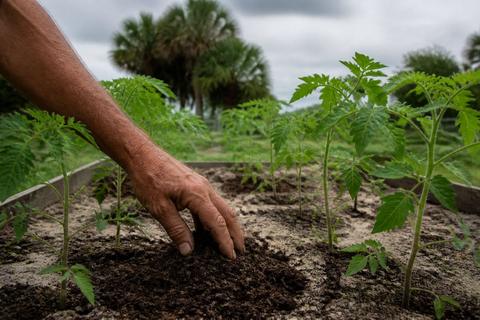
- Harden off transplants outdoors for 7 to 10 days before setting them in the ground, increasing direct sun exposure a little each day so leaves don't scorch on day one.
- Water early in the morning, aimed at the soil rather than the leaves. Drip line or a soaker hose beats an overhead sprinkler every time in Florida humidity, wet foliage overnight is what starts fungal disease.
- Lay 2 to 3 inches of mulch to keep root zones cooler and hold moisture, then strip off any lower leaves touching the soil so air can move under the canopy.
For tomatoes, peppers, and eggplant specifically, rotate where you plant them year to year and pick disease-resistant varieties, the same family in the same bed every summer builds up soilborne disease fast in warm, wet soil. If plants wilt hard at midday, 30 to 40 percent shade cloth over new transplants for their first one to two weeks reduces scorch without starving them of light.
Best vegetables for Florida gardens by season
Cool-season picks for fall and winter
Cool nights and shorter days favor leafy greens and roots. Direct-sow carrots, radishes, and beets; use transplants for faster lettuce and brassica harvests.
- Sow lettuce, spinach, and arugula every 2 to 3 weeks so you get a rolling harvest instead of one big flush that bolts.
- Plant carrots and radishes in loose, stone-free soil and keep the top inch evenly moist until seeds germinate, crusted soil is the most common reason carrot seed fails outdoors.
- Grow collards and mustard greens in blocks rather than single rows, they hold up to light frost better than most lettuce varieties and keep producing after a cold snap.
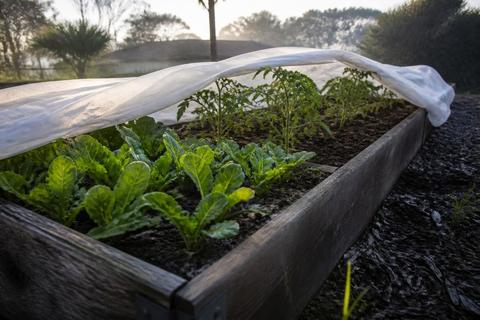
When a hard freeze threatens, cover young plants with frost cloth rather than plastic sheeting. Frost cloth traps radiant heat from the soil and won't crush foliage the way plastic does when it touches wet leaves; pull it off the next morning once temperatures climb back above freezing.
Warm-season vegetables that actually handle Florida heat
Warm-season crops need full sun and enough lead time to establish roots before the worst heat hits.
- Okra, bush and pole beans, peppers, and eggplant all need six or more hours of direct sun to set fruit reliably.
- Start pepper and eggplant transplants early enough that they've got a root system in place before the hottest six to eight weeks of summer arrive, they stall out badly if transplanted into already-brutal heat.
- Trellis vining crops like pole beans and cucumbers so leaves dry faster after rain and morning dew.
If blossoms are dropping without setting fruit, look at watering consistency first, both drought stress and irregular soak-then-dry cycles trigger blossom drop in tomatoes and peppers. In humid weeks, keep plants at full spacing and pull crowded lower growth so air actually moves between rows.
Fast, low-effort crops for beginners
These forgive timing mistakes and don't need elaborate supports, which makes them a good starting point in a first Florida garden.
- Radishes and bush beans are ready in a matter of weeks and give you an early win while slower crops are still establishing.
- Cherry tomatoes in a container or on a small trellis handle Florida's swings better than large slicing varieties, and light pruning improves airflow around the fruit clusters.
- Basil and parsley tolerate the state's heat better than most herbs; harvest from the top down to keep new growth coming.
Whatever you plant, use the spacing printed on the seed packet. Crowding plants "to fit more in" is the single fastest way to turn a minor pest problem into a bed-wide outbreak once humidity climbs.
Regional picks: central, north, and south Florida
Central Florida: the two-season workhorse list
Central Florida gets a long cool season and a genuinely hot summer, so plan for two overlapping crop groups instead of one. Tomatoes, peppers, beans, okra, sweet potatoes, lettuce, carrots, collards, and herbs like basil and parsley cover most of the calendar if you rotate between them as temperatures shift. Tomatoes need stable watering and airflow to avoid leaf disease; peppers and eggplant want warm soil and go in after frost risk passes, with mulch to even out moisture swings. Collards and carrots are the reliable winter anchors, keep the soil evenly moist and weed while seedlings are small.
North Florida: same crops, earlier planning and more frost protection
Gardeners in north Florida can grow most of the same central-Florida list, but need to plant cool-season crops earlier in fall so they mature before spring heat arrives, and keep frost cloth on hand for the more frequent cold snaps. For tomatoes and peppers, row cover during an unexpected cold night, removed the next day for airflow, is worth the extra step. Sandy, fast-draining soil here needs more consistent watering, plants under alternating dry/wet stress are more prone to blossom-end rot and disease.
South Florida: heat-tolerant crops for a longer warm season
South Florida gardeners get a longer productive window because damaging cold is rare. Okra, sweet potatoes, Southern peas, peppers, and eggplant all handle summer conditions well with consistent moisture and full spacing. Malabar spinach is a strong substitute for leafy greens in summer heat, it grows best once temperatures are consistently in the 80s and doesn't bolt the way true spinach does. Trellis vining crops, keep foliage dry, and mulch to hold moisture and suppress weeds, humid heat here means disease pressure runs high nearly year-round.
Planning a productive Florida vegetable garden
Site selection and afternoon shade
Florida sun is intense enough to scorch seedlings and stall flowering in the hottest stretch of summer. Aim for a spot with 6 to 8 hours of sun, especially for tomatoes, peppers, okra, and eggplant, but plan for some relief during the worst weeks.
- A spot with natural afternoon shade from a fence or building works well for heat-sensitive crops.
- Use 30 to 40 percent shade cloth over young transplants for their first one to two weeks after setting out.
- Position trellises so they don't block airflow to the rest of the bed.
Pull the shade cloth back gradually as plants establish so they still get enough light to flower and set fruit.
Raised beds, containers, or in-ground: pick based on your soil
Florida soil ranges from sandy and fast-draining to heavier and slow-draining depending on the neighborhood, so the right method depends on how your ground handles rain.
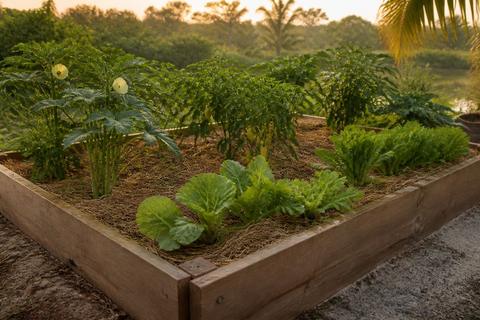
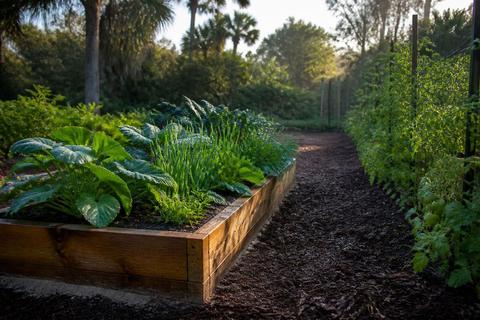
- Raised beds let you control the soil mix, useful for carrots and other root crops that need loose, stone-free texture.
- Containers need to be wide with real drainage holes, narrow pots dry out fast in Florida sun and stress roots daily.
- For in-ground planting, loosen the top 10 to 12 inches and work in compost to improve both drainage and water retention.
If you're unsure which will work, start with one small raised bed and compare its watering needs and growth against your existing ground before committing more space.
Spacing for airflow, the single biggest disease-prevention move
Crowding is the fastest way to turn Florida humidity into a fungal problem. When leaves touch, moisture sits on the canopy longer and pests get cover.
- Water at the base of the plant and let the soil surface dry slightly between waterings, wet foliage sitting overnight is what starts most leaf disease.
- Remove leaves touching the ground, especially on tomatoes and cucurbits.
- Trellis vining crops to keep fruit off the soil and cut down on splash-transmitted disease.
If you see powdery mildew or leaf spot showing up, thin the planting first, then adjust watering, and pick resistant varieties for the next round in that bed.
What to grow in specific garden situations
Containers and patios
Pots dry out fast in Florida sun, so container gardening works best with compact, heat-tolerant crops and a real watering routine.
- Compact cherry tomato varieties with a stake or cage, harvested often, keep producing longer than large slicing types in a pot.
- Bush beans fit small containers without needing a trellis and mature quickly.
- Peppers need a larger pot for root room and steadier moisture than beans or radishes.
Lettuce, herbs, and radishes are reliable cool-season container crops. Empty any saucer under the pot after watering so roots aren't sitting in standing water, and mulch the container surface to slow evaporation.
Flower beds and small city lots
Vegetables can share space with ornamentals if you plan around sunlight and airflow.
- Collards, Swiss chard, and other leafy greens planted in tidy blocks look intentional and harvest easily.
- Parsley and basil work well as edible borders along a bed edge.
- Train tomatoes, cucumbers, or pole beans up a trellis to keep them off the ground and out of the way.
Weed early in small spaces, they get overrun fast, and keep irrigation targeted at the soil rather than overhead to avoid fungal problems spreading through dense plantings.
Best payoff for a small family garden
In a small space, prioritize crops your household actually eats and that keep producing rather than one-and-done harvests.
- Tomatoes or cherry tomatoes give steady picks through the warm months.
- Collards or lettuce provide repeat harvests over several weeks from one planting.
- Peppers, eggplant, and okra are high-yield for the space, okra especially keeps producing the more often you pick it.
Sweet potatoes pay off well too but take patience, set slips out early in the warm season and keep the soil consistently moist while they establish. Rotate heavy feeders to a different bed each year to avoid disease buildup in the same soil.
Practical growing tips
Water deeply and consistently, don't waterlog the roots
Florida swings between heavy rain and dry heat, and vegetables handle inconsistency badly. Deep, infrequent watering builds a stronger root system; shallow, frequent watering encourages surface roots that fail the moment it turns hot and dry.
- Water early morning to cut evaporation loss and keep foliage dry overnight.
- Use drip irrigation or soaker hoses so water goes to the soil, not the leaves.
- Check moisture by feel, the top inch shouldn't stay soggy; aim for even moisture at root depth instead.
Sandy soil often needs shorter, more frequent watering sessions to keep the root zone from drying out between waterings. Heavier soil needs compost worked in to improve drainage, and less water right after a hard rain.
Mulch for heat control, not just weeds
Mulch in Florida is a temperature and moisture tool first, weed suppression second. It keeps roots cooler, slows evaporation, and stops soil from splashing disease spores onto lower leaves during rain.
- Apply 2 to 3 inches around established plants.
- Keep mulch a couple inches back from stems to avoid rot.
- Refresh it at each seasonal changeover so it stays thick enough to matter.
Straw, shredded leaves, and pine bark all work well. Skip solid plastic sheeting unless you have a specific reason for it, it traps excess moisture against the soil once Florida's rainy season stacks up several wet days in a row.
Feed lightly and pick resistant varieties
Florida's sandy soils run low in nutrients, but overfeeding backfires by pushing soft, pest-attracting growth.
- Work compost in at planting, then top-dress every few weeks for steady, moderate nutrition.
- If growth stalls, use a balanced fertilizer at half strength rather than jumping straight to full label rate.
- Choose disease-resistant tomato and pepper varieties where they're available, it cuts down leaf spot and wilt significantly in humid conditions.
Lush, green plants that aren't setting fruit usually mean too much nitrogen, cut back and make sure watering and sun exposure are both consistent before adding more fertilizer.
Common mistakes to avoid
Planting cool-season crops too late
Miss the fall window and cool-season crops run into summer heat before they finish, which shows up as tall, stressed plants that bolt early and lose flavor. Work backward from your region's point of reliable heat using the days-to-maturity on the packet, and lean on transplants instead of direct seed if you're starting late, transplants buy you two to three extra weeks of lead time.
Overcrowding in humid weather
Crowding plants is one of the most common Florida garden mistakes, and it's a direct path to disease and pest buildup once humidity climbs. Follow the seed packet spacing, thin weak seedlings while they're small, and trellis vining crops instead of letting them pile into a dense mat. A crowded bed can look productive early in the season and then collapse in a few weeks once fungal disease gets a foothold.
Ignoring heat tolerance when picking varieties
Seed catalog photos don't tell you which varieties actually hold up here. Cool-season leafy greens bolt fast as temperatures rise, so match variety to season rather than planting a spring lettuce mix in May. For summer, lean on okra, Southern peas, and heat-bred tomato and pepper varieties, and rotate plant families each year so the same soilborne diseases and pests don't build up in the same bed.
Frequently Asked Questions
What are the best vegetables to grow in Florida overall?
Tomatoes, peppers, beans, okra, sweet potatoes, lettuce, carrots, collards, and herbs like basil and parsley cover most of the state well, with the mix shifting by season and by which of the three planting regions (north, central, south) you're in.
When is the best time to plant vegetables in Florida?
Fall through late winter is the easiest stretch for most vegetables statewide. Heat-tolerant crops like okra, sweet potatoes, and Southern peas are the ones worth planting for a summer harvest.
What vegetables handle Florida heat the best?
Okra, sweet potatoes, Southern peas, peppers, eggplant, and Malabar spinach hold up to summer heat and humidity far better than cool-season crops like lettuce or spinach.
Can you grow vegetables year-round in Florida?
Yes, but the crop list has to change with the season. Cool months favor leafy greens and roots; warm months favor heat-tolerant fruiting crops, and south Florida's longer cool season gives more flexibility than the panhandle.
What's the easiest vegetable for a Florida beginner?
Okra, bush beans, radishes, cherry tomatoes, and sweet potatoes are forgiving starting points, they grow quickly, tolerate the state's heat swings, and don't need elaborate supports or precise timing.