Growing Citrus in Containers in Florida
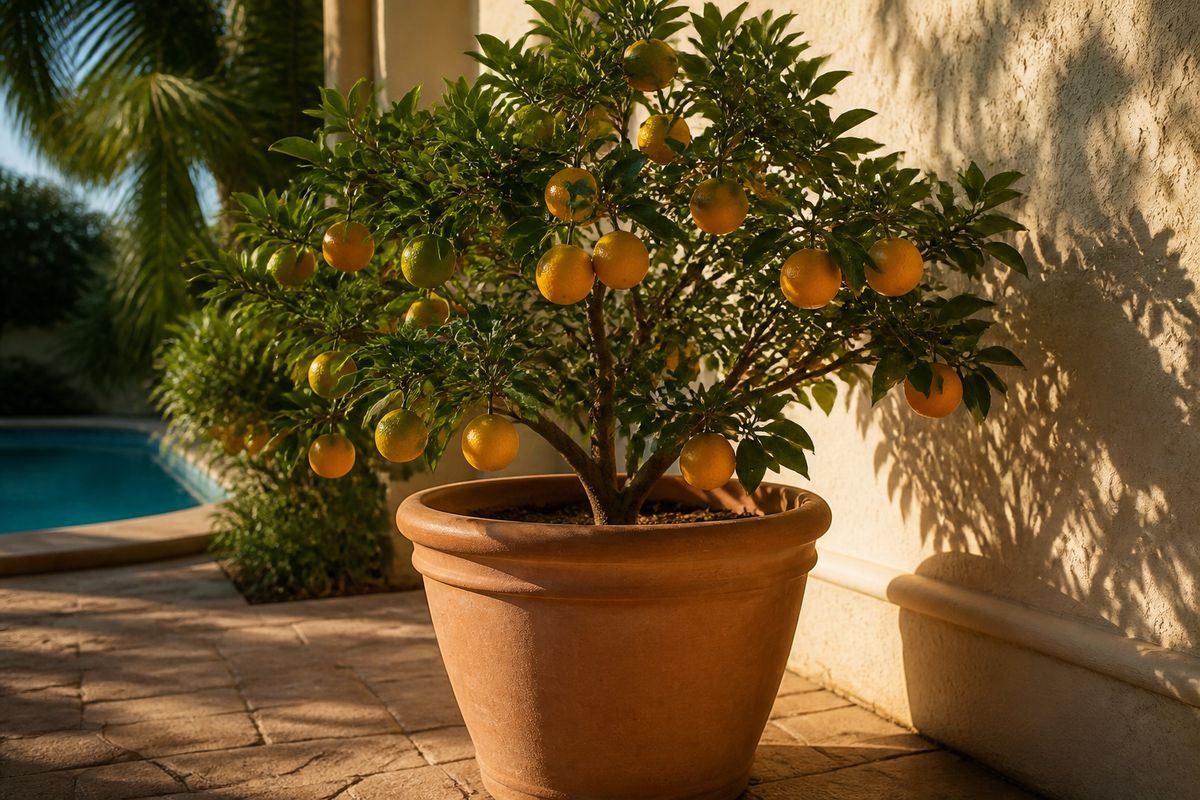
Growing citrus in containers in Florida works well if you get three things right: a compact variety, a pot with real drainage, and a spot that gets hard sun without getting hammered by wind. Skip the yard-space problem entirely and put a tree on a driveway, patio, or sunny corner, and you can still pick your own fruit most winters.
For more help, see our How to Grow Citrus in Florida guide.
Choosing the Right Citrus for Florida Containers
Variety comes before pot size. A tree that's genetically compact is easy to keep in a container for years; a full-size rootstock will fight you every season.
Best citrus varieties for pots and patios
Lemons, limes, and kumquats are the varieties UF/IFAS lists as growing well in containers, and kumquats and Meyer lemon are also among the more cold-hardy choices, tolerant enough to be grown statewide in Florida. That distinction matters more the farther north you are. In the Panhandle and North Florida, lean on kumquats, Meyer lemon, and satsuma mandarins over sweet oranges, since satsumas can take real cold once mature but sweet oranges have much less margin. In Central and South Florida, heat and humidity are the bigger factors, and almost any dwarf citrus will set fruit reliably there. Buy a named, grafted dwarf or "patio" variety from a Florida nursery rather than an unlabeled seedling.
- Buy a grafted dwarf or patio variety from a Florida nursery, not a generic seedling.
- In North Florida, prioritize kumquat, Meyer lemon, or satsuma over sweet orange.
- In Central/South Florida, pick based on taste first since cold is less of a constraint.
Rootstock and mature size
A "dwarf" label isn't a guarantee. Ask the nursery what rootstock the tree is grafted onto and how tall it gets in a pot, not in the ground. Trifoliate orange rootstock is the standard dwarfing rootstock used to keep citrus small enough for container life; a more compact selection of it can hold a tree closer to 6-8 feet, while ordinary dwarfing rootstocks can still push a tree past that if you let the pot keep growing. Decide on your ceiling height before you buy, then choose the pot and rootstock combination that gets you there, since it's much easier to plan for a size limit than to fight one after the tree is established.
What to know before growing from seed
A seed-grown citrus tree is a slow, uncertain project: it typically takes years longer to reach fruiting size than a grafted tree, and because citrus doesn't reliably come true from seed, the fruit you eventually get may not resemble the parent in flavor, acidity, or ripening time. Seedlings also vary more in thorniness and vigor. If your goal is fruit within a reasonable number of years, buy grafted. If you want a long-term hobby project with no guarantees, seed can be worthwhile, just budget the patience for it.
Picking the Best Container and Potting Mix
Florida containers need to drain fast, hold just enough moisture between waterings, and give roots oxygen. Most container citrus problems trace back to a pot without enough drainage or a mix that compacts into a soggy plug.
Container size, drainage, and material
Multiple drainage holes are non-negotiable; citrus roots decline quickly in standing water. A young nursery tree can start in a pot around 15 inches wide and deep, which is the starting size UF/IFAS recommends for a young tree, then move up gradually rather than jumping straight to a much bigger container. Oversizing early keeps the mix wet for longer than the roots can use, which raises root-rot risk. For material, plastic and glazed ceramic hold moisture longer, which helps some in Florida heat, but you still have to watch drainage closely; terracotta breathes and dries faster, which means more frequent watering trips.
- Start young trees in roughly a 15-inch pot, then size up as roots fill it.
- Keep every drainage hole clear, and never let a saucer sit full of runoff.
- Increase pot size in steps at repotting, not in one big jump.
Potting mix ingredients that keep roots healthy
The simplest reliable option is a commercial citrus or "citrus and palm" potting mix; Texas A&M AgriLife extension guidance points to soil-less mixes blended for citrus specifically, since they drain well, stay light, and still hold adequate organic matter for the roots. Skip garden soil and any mix labeled for moisture control, since both stay wet far longer than container citrus roots tolerate. If a handful of moist mix packs into a dense ball that doesn't crumble, it's too heavy for a container and should be cut with perlite or bark fines.
- Use a commercial citrus-specific (soil-less) potting mix rather than a homemade blend.
- Skip garden soil and "moisture control" mixes.
- Confirm drainage by watering fully and checking that runoff stops within a few minutes.
When and how to repot a citrus tree
Repot when you see roots circling at the drainage holes or growth stalls despite otherwise correct care. Expect to repot roughly every few years as the tree matures, moving up in modest increments (about a 25% size increase) rather than doubling pot volume at once. In Florida, early spring or early fall are better repotting windows than the peak of summer heat. Loosen tightly circling outer roots by hand, trim only mushy or dead sections, replant at the same depth, then water in thoroughly.
- Check roots yearly; repot when they circle the drainage holes or growth slows.
- Step up pot size by roughly a quarter at a time, using fresh mix.
- Replant at the same depth and water in deeply right after.
Sun, Heat, and Wind Protection in Florida
Florida light is intense, but container citrus gets stressed less by heat itself than by drying wind and hard freezes. The job is to maximize sun while limiting mechanical and cold damage.
How much direct sun citrus needs
Give the tree 6 to 8 hours of direct sun a day, the target Texas A&M AgriLife gives for container citrus; UF/IFAS agrees citrus needs full sun without putting a specific hour count on it. Either way, sun is the first thing to check if a tree stops producing, before you touch the fertilizer program. Set the pot somewhere fences, other trees, or roof overhangs won't cut into morning or afternoon light. Rotate the pot a quarter turn every couple of weeks so growth stays even instead of leaning hard toward one side.
- Put the pot where it gets 6 to 8 hours of direct sun.
- Rotate it a quarter turn every 2 to 3 weeks for even growth.
- Watch for leaf curl or scorch in the worst summer heat, and adjust only if it's severe.
Finding a protected place for fruiting trees
Pick a bright spot with airflow, not a closed-in corner with stagnant air. A south or southeast-facing wall is a good default: it holds daytime warmth into the evening and can block the north wind that rides in ahead of a cold front. Keep pots away from salt spray near beach-adjacent driveways and out of the direct line of sprinklers that would keep the foliage constantly wet. Once you find a spot that checks these boxes, leave the tree there. Fruiting trees do better with a stable canopy than with a pot that gets moved around.
- Set containers near a south or southeast wall for extra warmth on cool nights.
- Keep airflow open to cut down on fungal leaf issues.
- Avoid salt spray zones and irrigation overspray.
Managing cold snaps, wind, and salt exposure
The goal on a cold night is to reduce stress during the dip, not to freeze-proof the tree permanently. Mature, cold-hardy varieties like satsuma can tolerate real cold once dormant, but young trees or ones that haven't hardened off for the season are far more vulnerable, and fruit on the tree can be damaged even by a temperature that the wood itself would survive, per UF/IFAS Extension cold-protection guidance. As a practical rule for container trees, especially young ones, cover on any night forecast near or below freezing. Use frost cloth that reaches the ground on all sides and is staked or weighted so wind can't pull it loose; UF/IFAS specifically warns against plastic tarps, since they can "cook" the tree once the sun hits an uncovered plant the next morning. Pull the cover as soon as temperatures climb back above freezing. For wind, set pots where gusts can't rock or tip them, using a stable stand or grouping pots together for a windbreak effect. After a salty coastal wind event, rinse foliage and the top of the mix with fresh water to clear accumulated salt.
- Cover young or tender trees ahead of a hard freeze, using frost cloth reaching the ground, not plastic.
- Remove the cover the next morning once temperatures rise.
- Rinse foliage after salt-wind events with fresh water.
Planting and Early Care
Early care sets the trajectory. Get watering, feeding, and pruning right in the first year and the tree becomes far easier to manage through Florida's heat and rain swings later.
How to plant a nursery tree without stressing roots
Slide the tree out of its nursery pot carefully, keeping the root ball as intact as possible. If roots are circling tightly at the edge, loosen just the outer layer so they can grow outward into the new mix instead of continuing to spiral. Set the tree at the same depth it was growing at before, and never bury the graft union, the visible knob or bend low on the trunk where the named variety was grafted onto rootstock. A buried graft union invites rot and can let the rootstock sucker and take over. Water thoroughly right after planting to settle the mix, and only top off soil if it visibly sinks.
- Keep the root ball intact; loosen only tightly circling outer roots.
- Set the tree at its original depth, with the graft union above the mix.
- Water in deeply, then let the top inch dry before watering again.
Watering frequency for Florida's climate
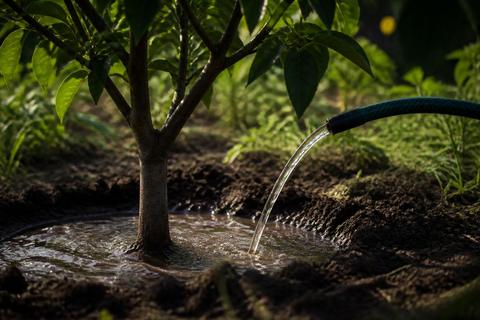
Water deeply, then wait until the top inch or two of mix is dry to the touch before watering again, which matches UF/IFAS guidance for container citrus. Heat, pot size, and material drive frequency more than any fixed schedule: a small terracotta pot in August can need water every day or two, while a larger plastic container holds moisture noticeably longer. For a newly planted tree, that often works out to watering two or three times a week for the first month while roots establish, then tapering off as you get a feel for how fast the mix dries. Skip watering after a soaking rain even if it "isn't your day" to water; check the mix by touch instead of by calendar.
- New trees: water deeply about 2 to 3 times a week for the first month.
- After that, water whenever the top 1 to 2 inches of mix is dry.
- Skip a scheduled watering after heavy rain has already soaked the pot.
Feeding schedule and micronutrients
Frequent watering in a container flushes nutrients out faster than in-ground soil, so container citrus needs more consistent feeding. Use a citrus-specific fertilizer that includes minor nutrients like iron, zinc, and manganese, not a generic all-purpose blend. Start feeding as new growth resumes in spring and continue through the growing season at the label's rate, but hold off on heavy nitrogen right before cold weather, since it pushes soft new growth that freezes easily. Yellow leaves with the veins still green is the classic sign of an iron or manganese shortage, common in container mix, and the fix is a citrus micronutrient product, not more nitrogen.
- Feed on the label schedule starting when spring growth resumes.
- Use a citrus fertilizer with micronutrients (iron, zinc, manganese), not plain N-P-K.
- Treat yellow leaves with green veins as a micronutrient issue, not a nitrogen issue.
Pruning, training, and shaping container trees
Pruning keeps light reaching the inner canopy and keeps the tree at a size you can actually manage. Start by cutting out dead or crossing branches, then shape toward an open center so air moves through the canopy. For a container tree, control height by trimming back new growth after a flush rather than saving up for one heavy annual cut; citrus responds well to light, frequent pruning. Do the bulk of your pruning in the cooler months, when the tree isn't already under heat stress.
- Remove dead and crossing wood first to open up airflow.
- Shape toward an open center so light reaches interior branches.
- Trim new growth back after each flush to hold your target height.
Common Problems and How to Prevent Them
Most container citrus problems come down to a handful of causes: watering extremes, poor drainage, salt buildup, or a nutrient gap. Catching the early signs and adjusting your routine usually beats treating the problem after leaves or flowers start dropping.
Leaf drop, yellowing, and nutrient deficiencies
Leaf drop usually follows a stress event: inconsistent watering, root damage, or a sharp temperature swing. Yellowing has more than one cause. It can be straightforward nitrogen deficiency, but in containers it's just as often iron or manganese deficiency from salt buildup or mix breakdown over time, and periodically flushing the pot with plain water helps carry excess salts out through the drainage holes, per Texas A&M AgriLife's leaching guidance. If new leaves come in yellow with green veins, treat it as a micronutrient issue with a citrus-labeled iron/manganese supplement rather than reaching for more nitrogen fertilizer.
- Water by feel (top-inch dryness), not on a fixed calendar.
- Flush the pot with plain water occasionally to clear built-up salts.
- Match yellowing to the likely cause before adding fertilizer, not after.
Pests and diseases to watch for in containers
Scale, mealybugs, aphids, and spider mites are the common container-citrus pests in Florida, and they show up more on stressed trees or during dry spells. Check leaf undersides and the point where branches meet the trunk weekly. Sooty mold, a black film that grows on the sugary honeydew these sap-feeders leave behind, is usually a sign of an insect problem rather than a disease problem on its own, so treating the insects clears the mold. Root rot is the more serious container killer, and it traces back to dense mix or blocked drainage rather than an outside pathogen finding the tree. If roots smell sour or feel mushy at repotting, cut away the damaged parts and repot into fresh, well-draining mix.
- Inspect weekly, focusing on leaf undersides and branch junctions.
- Treat sap-feeding insects early to head off sooty mold.
- Prevent root rot with good drainage and a breathable mix, not a fungicide routine.
Pollination, fruit set, and fruit drop
Most citrus varieties are self-fruitful and don't need a second tree for pollination, but cold snaps, wind, and nutrient imbalances can still knock flowers or young fruit off the tree. Fruit and flower drop often follows a growth flush or a stress event, like a cold night without cover or a pot that dried out and was watered back too hard. If flowers dropped after the last cold snap, that's a signal to cover sooner next time, not a sign anything is wrong with the tree long-term. Keep watering consistent through flowering and early fruit set, and don't overdo nitrogen, since it favors leafy growth over fruit.
- Cover blossoms and young fruit ahead of cold nights.
- Keep watering steady through flowering; avoid letting the pot swing fully dry.
- Feed with a citrus-formulated fertilizer and avoid excess nitrogen.
Why Container Citrus Can Be Easier Than In-Ground Trees in Florida
In-ground citrus in Florida deals with whatever soil, drainage, and freeze exposure a given yard has, and none of those are easy to change once a tree is planted. A container sidesteps a lot of that: you choose the mix, you control drainage, and you can move a stressed or young tree to a sheltered spot before a hard freeze instead of hoping row cover is enough. The tradeoff is that a container tree depends entirely on you for water and nutrients, since it has no native soil reserve to fall back on, so consistency in watering and feeding matters more than it does for an in-ground tree.
When growing citrus from seed is worth it
Seed-grown citrus makes sense as a slow hobby project, not a fruit plan. Keep expectations at "ornamental tree that might eventually surprise me with fruit" rather than "harvest in a few years." If the goal is fruit you can count on within a reasonable timeframe, put your effort into a grafted dwarf tree, the right pot, sun, and cold protection instead.
Frequently Asked Questions
What citrus grows best in containers in Florida?
Lemons, limes, and kumquats are well-suited to container culture, and kumquats and Meyer lemon are also cold-hardy enough to be grown statewide, which helps if you're in North Florida.
How much sun does a container citrus tree need?
Plan on 6 to 8 hours of direct sun a day. Texas A&M AgriLife extension guidance gives that figure specifically for container citrus, and UF/IFAS agrees full sun is what citrus needs. It's worth checking sun exposure before you blame anything else for a tree that won't fruit.
Can I grow citrus from seed in a container?
Yes, but treat it as a long-term hobby project. Seed-grown trees take years longer to reach fruiting size and won't necessarily match the parent variety's flavor, so a grafted tree is the better bet if you want fruit sooner.
Where should I place a potted citrus tree in Florida?
A bright spot with good airflow near a south or southeast wall works well, since the wall holds warmth on cool nights. Keep it away from salt spray and constant sprinkler overspray.
How often should I water citrus in containers?
Water deeply whenever the top inch or two of mix is dry to the touch, then adjust for heat, pot size, material, and recent rain rather than following a fixed schedule.