Citrus Tree Water Requirements
If your citrus tree keeps dropping fruit or leaves turn yellow, the problem is often water, not fertilizer. Citrus tree water requirements change with the tree's age, the soil type, and Florida's swing between summer downpours and dry winter stretches, so there is no single number that fits every yard. What matters most is how deeply the water reaches the root zone, not how often you hit the surface with a hose.
For more help, see our How to Grow Citrus in Florida guide.
Start with the root zone, not the leaves
Citrus trees pull almost all their water and nutrients through feeder roots, the thin roots concentrated in the top foot or so of soil. Leaves can still look green after the root zone has dried out underneath, so by the time you see wilting or curling the tree is already stressed.
How deep to check and water
In most Florida yards, feeder root activity is heaviest in the top 6 to 12 inches of soil, with in-ground trees sending some roots deeper over time. Deep soaking only helps if the water actually gets past any dry crust and reaches that zone.
- Push a screwdriver or a soil probe in at 6 inches, then again at 12 inches.
- Water until both depths are evenly moist, not just damp on top.
Why a quick daily spray is not enough
Short, frequent watering usually wets only the top inch or two before evaporating in Florida heat. That habit trains roots to stay shallow, which backfires the moment a dry spell or a heat wave hits. If the mulch or soil surface is dry an inch down but the tree still looks fine, that is normal; check deeper before assuming the tree needs water.
What overwatering looks like
Citrus roots need oxygen as much as they need moisture, and constantly soggy soil suffocates them. UF/IFAS Extension lists yellowing leaves, leaf drop, fruit drop, and dieback as symptoms of root and foot rot in citrus, which is often triggered by poor drainage or trees planted too low rather than by drought (UF/IFAS: Citrus Care, Watering, Drainage, and Root Rot). If soil stays wet two to three days after watering in warm weather, cut back and check drainage before adding more water.
How much water a citrus tree actually needs
Forget a fixed "gallons per week" rule. Age, planting method, and container size change the answer more than any chart can capture.
Newly planted trees
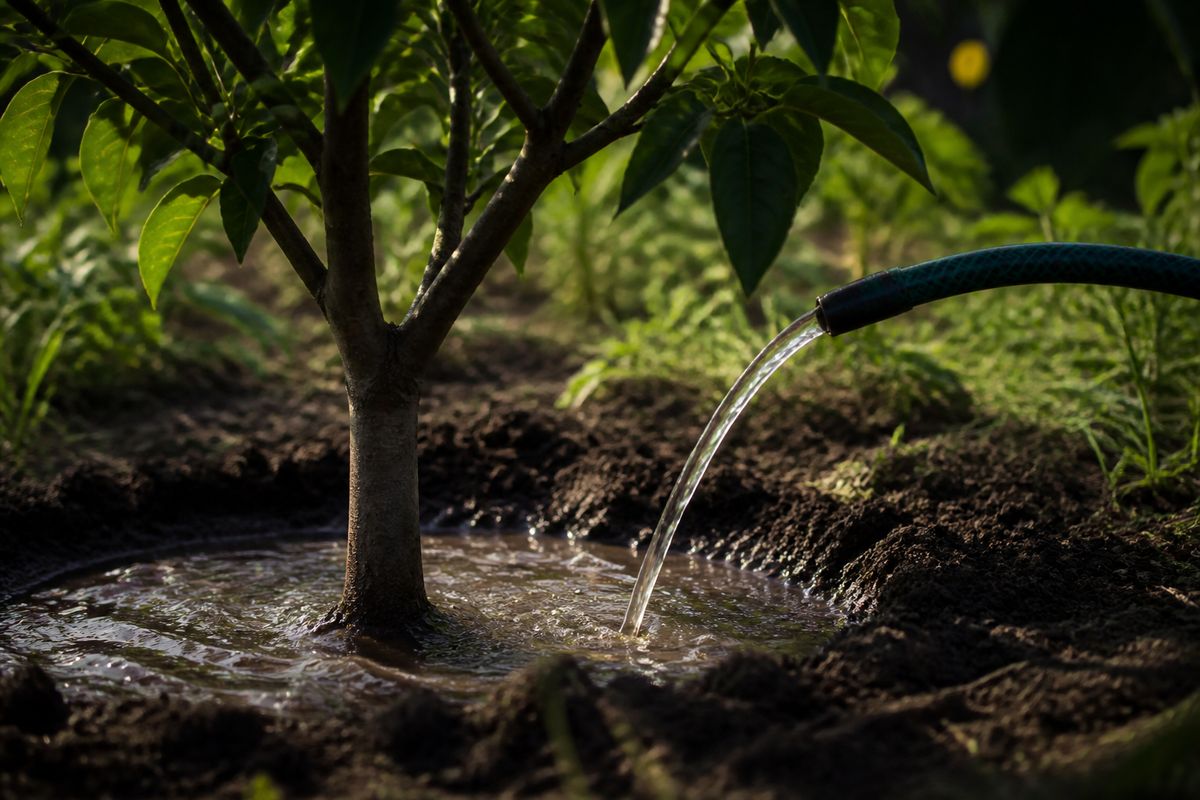
UF/IFAS recommends building a soil basin around a newly planted citrus tree and filling it with 5 to 10 gallons of water, running a hose into the basin for 10 to 15 minutes twice a week for the first month. After that, water becomes less frequent, but you should refill the basin whenever new growth wilts in the mid-afternoon heat. If you are hand-watering without a hose, plan on roughly 8 to 10 gallons per watering (UF/IFAS: Citrus Culture in the Home Landscape).
Young versus established in-ground trees
Young trees (roughly the first one to two years) are still building their root system, so check them more often and correct dry soil quickly. Established in-ground trees have a wider root spread and can go longer between waterings, as long as each session soaks deeply enough to reach 6 to 12 inches. Container trees need the most attention because the pot dries out faster than surrounding ground soil ever would.
Weather, soil type, and pot size
Florida sun and wind pull moisture out of sandy soil fast; sandy soil needs more frequent deep checks than the heavier clay-loam soils found in parts of north and central Florida. In containers, a 5-gallon nursery pot will dry out well before a 15-gallon pot planted in the same spot, so treat pot size as part of the watering plan, not an afterthought.
A practical watering rhythm by tree stage
Use this as a starting schedule for checking soil, then let what you actually feel at 6 and 12 inches decide whether to water.
Newly planted to 1 month
- Fill the basin with 5 to 10 gallons twice a week (per UF/IFAS), or run a hose trickle for 10 to 15 minutes per session.
- Check that moisture reaches 6 to 12 inches, not just the surface.
1 to 24 months (young tree)
- Water when afternoon wilting shows up on new growth, or every 3 to 5 days in Florida's dry season (roughly November through April).
- In peak summer heat, check daily; water deeply rather than adding a light daily splash.
Established in-ground (2+ years)
- Check every 5 to 10 days outside of active drought.
- Water deeply when the 6-inch probe feels dry; established trees tolerate stretches between waterings far better than daily light watering.
Container citrus
- Check daily in summer, every 2 to 3 days in cooler months.
- Water until it runs out the drainage holes, then let the top few inches dry before the next watering.
How to water citrus the right way
The goal is water that soaks in at the root zone instead of running off the surface.
Water slowly so it reaches the roots
A hose left to trickle, a soaker hose, or drip emitters placed near the drip line (roughly under the outer edge of the canopy) let water infiltrate instead of sheeting across hard or sandy soil. If you see puddling or runoff before the soil looks wet, you are applying water faster than it can absorb; slow down or split the session into two shorter runs with a pause between them.
Soak-and-dry beats daily light watering
Watering deeply, then letting the top of the root zone dry partway before the next round, trains roots to grow down into reserve moisture. Daily light sprinkling keeps roots shallow and makes the tree more vulnerable when a hot, dry stretch hits.
In-ground versus container methods
In-ground trees do well with drip line irrigation or a soaker hose looped near the canopy edge, run long enough for slow, even soaking. Containers need a thorough soak until water drains from the bottom, with any saucer water emptied within 10 to 15 minutes so roots are not left sitting in standing water. Avoid overhead sprays that keep the trunk and lower leaves wet for hours, since prolonged wetness at the trunk raises the risk of foot rot.
Adjusting for Florida's seasons
How much a citrus tree drinks changes with the season, and Florida's wet summers versus dry winters make this more pronounced than in many other citrus-growing states.
Summer heat and fruit set
Summer growth and fruit development need steadier moisture, especially during heat waves. The most common summer mistake is a quick daily sprinkle that never reaches 6 inches. Water early in the morning when possible; UF/IFAS recommends morning irrigation specifically to reduce how long the trunk and lower bark stay wet, which lowers the risk of Phytophthora foot rot (UF/IFAS: Citrus Care, Watering, Drainage, and Root Rot).
Florida's rainy season versus dry season
During Florida's summer rainy season (roughly June through September), established trees often need little or no supplemental irrigation between storms. In the dry season, especially a rainless stretch in the spring, check soil moisture more often and be ready to water established trees that would otherwise coast on rainfall. After a rain, wait and check at 6 inches before turning irrigation back on; soil that already feels moist does not need more water on top of it.
After flowering and during fruit development
Once fruit sets, the tree still needs consistent moisture. Drought stress during fruit development causes fruit drop, and so does waterlogged, oxygen-starved soil, which is why a steady soak-and-dry rhythm matters more here than a rigid schedule.
Reading soil and drainage clues
Soil moisture, not the look of the leaves, is the most reliable signal for when to water.
The finger-and-probe test
Push a clean finger or a probe into the soil at 6 inches, then at 12 inches where you can. Dry soil at depth means it is time to water, even if the mulch or surface looks fine.
Mulch and drainage around the trunk
UF/IFAS guidance is more cautious about mulch under citrus than under most landscape plants: mulch is not generally recommended right around citrus trees, and where it is used in a mixed planting bed, it should be kept at least a foot away from the trunk (UF/IFAS: Citrus Culture in the Home Landscape). Keep grass and weeds cleared from under the canopy too, since they can trap moisture against the trunk and invite the same foot rot fungus. If water pools or drains slowly after a storm, improve drainage (grading, a raised planting mound, or French drains) before you assume the tree simply needs less water.
Drought stress versus excess water
Drought stress shows up as leaf curl, midday wilting, and premature fruit drop. Excess water shows up as yellowing leaves on soil that stays wet for days, slower growth, and in bad cases, bark sloughing near the soil line from root or foot rot. When in doubt, check soil at 6 inches before treating either symptom; over-correcting a stressed tree with more water is a common way to make root rot worse.
Special cases
Container and patio citrus
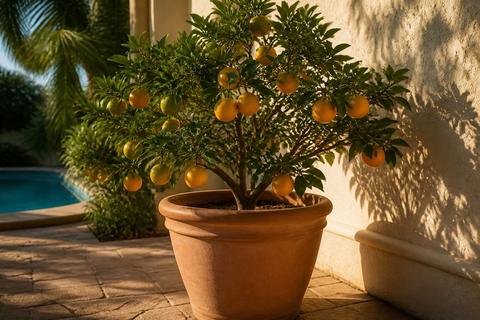
Potted citrus dries out fastest of all, especially on a hot patio where the pot itself absorbs heat. Check daily in summer and water thoroughly once the top couple of inches dry out and the pot feels noticeably lighter. Use a well-draining citrus or general potting mix, not garden soil, which compacts and holds too much water in a container.
Newly planted trees and transplant recovery
A transplant loses some roots in the move, so keeping the root zone evenly moist (not waterlogged) for the first month matters more than any other single thing you do. Follow the UF/IFAS basin-watering routine above for that first month, then taper off and let the 6-inch soil check guide you from there. Trees planted in sandy soil typically need more frequent deep watering than those in loamier soil.
Water sprouts
Vigorous water sprouts along the trunk or main limbs usually follow pruning, cold damage, or general stress, and inconsistent watering can be part of that picture. They are not caused by watering alone, so fix the underlying irrigation or drainage issue first, then remove sprouts that interfere with structure rather than pruning heavily during a recovery period.
Build a simple watering log
A log turns guesswork into a pattern you can trust for your specific yard.
Check-interval starting points
- Containers: check daily in summer, every 2 to 3 days in cooler months.
- Young in-ground trees: check every 2 to 5 days depending on heat.
- Established in-ground trees: check weekly, more often during heat waves or dry-season stretches.
What to record
Keep three columns: date, soil condition at 6 inches (dry, damp, moist), and how long you watered. After a few weeks you will see how fast your specific soil dries and can stop guessing.
Common mistakes
The recurring problems are shallow daily watering, watering on a fixed calendar regardless of soil condition, mulch or turf piled against the trunk, and poor drainage that goes unaddressed. Any of these can starve roots of oxygen or leave them underwatered, and either one shows up later as poor fruit set or fruit drop.
Frequently Asked Questions
How often should I water an orange tree?
Base it on soil moisture, tree age, and season rather than a fixed calendar. Newly planted trees follow the UF/IFAS basin routine (5 to 10 gallons, twice a week for the first month); established in-ground trees need deeper but less frequent watering, often just weekly outside of drought.
What is the best way to water citrus trees?
Water slowly at the root zone with a trickle, soaker hose, or drip line so moisture penetrates 6 to 12 inches. Avoid quick daily sprinkles that only wet the surface.
How do I know if my citrus tree is overwatered?
Yellowing leaves, leaf drop, fruit drop, and dieback on soil that stays wet for days are classic signs of root or foot rot, according to UF/IFAS. Improve drainage and cut back on watering rather than adding more.
Should citrus trees be watered every day?
Usually no, once a tree is established in the ground: daily watering keeps roots shallow and can encourage root rot. Very young trees, sandy soil, or containers on a hot patio are the main exceptions that need closer daily attention.
Should I mulch around my citrus tree?
Be cautious. UF/IFAS does not generally recommend mulch right around citrus, and if you do mulch a surrounding bed, keep it at least a foot back from the trunk to avoid trapping moisture against the bark and inviting foot rot.
Do water sprouts mean my citrus tree is stressed?
They can. Water sprouts often follow pruning, cold damage, or stress, and uneven watering can contribute. Fix the underlying irrigation or drainage issue first, then remove sprouts that affect the tree's structure.