Best Citrus Trees for Florida Backyards
Best citrus trees for Florida backyards depend almost entirely on where in the state you're planting. A satsuma that shrugs off a 22°F night in Tallahassee would be overkill in Naples, and a Valencia orange that thrives in a Fort Myers yard would get knocked back hard by a Panhandle winter. Pick the wrong tree for your zone and you're replacing a freeze-killed sapling every few years instead of picking fruit.
For the full planting and care walkthrough, see our How to Grow Citrus in Florida guide.
Match the Tree to Your Part of Florida First
North Florida and the Panhandle (roughly zone 8b-9a)
This is the toughest part of the state for citrus. Winter lows regularly hit the low-to-mid 20s, and an arctic outbreak can drop into the teens for a few hours. Two trees handle that reliably:
- Satsuma mandarin (Owari or Brown Select) is the standard pick for North Florida. Mature, dormant satsuma trees have survived down to 14°F without serious damage, and the fruit ripens October through December, ahead of the coldest weather, according to UF/IFAS.
- Kumquat handles cold nearly as well, down to about 16°F, and holds fruit from October into March.
Sweet oranges and grapefruit can work in a protected microclimate (south side of a house, near a pond, with a windbreak), but plan on losing a crop to frost some years and don't expect the tree to canopy out fast.
Central Florida (roughly zone 9b-10a)
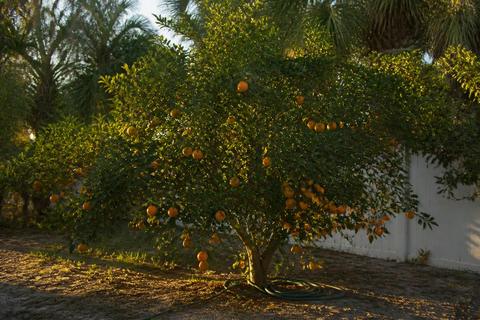
You have more room to experiment: navel and Valencia oranges, grapefruit, lemons, and limes all have a real shot here, but you still need a freeze plan for the first three to five years while the tree is young and thin-barked. A hard freeze that a mature tree shrugs off can kill an unprotected young one to the ground.
South Florida (roughly zone 10b-11)
Freeze risk drops off, which opens the door to limes (Persian/Tahiti and even Key lime), lemons, and heat-tolerant orange and grapefruit varieties. The bigger constraints here are drainage in low-lying yards and, statewide, citrus greening pressure (more on that below).
Site the tree for warmth and drainage, wherever you are
- Plant on the south or southeast side of the house, where the structure blocks north wind and radiates a little heat back at night.
- Give it a windbreak if you're in an open yard. Cutting wind speed during a freeze event helps, since wind chill does real damage on top of the cold air itself.
- Avoid low spots. Cold air is heavier than warm air and pools in ditches, swales, and low corners of a yard, so a tree ten feet away in a low spot can take more freeze damage than one on slightly higher ground.
- Plant in early spring rather than fall, so the tree has a full growing season to establish roots before its first winter.
The Trees Worth Planting, by What You Want From Them
Best for fresh eating: satsuma and other easy-peel mandarins
Satsumas are the reason North Florida can grow citrus at all, and they're also just easy fruit: thin skin, no seeds in most cultivars, ready before Thanksgiving. If you're anywhere in the state and want the lowest-effort, kid-friendly tree, this is it.
Best for cooking and drinks: Meyer lemon and Persian lime
Meyer lemon is more cold-tolerant than true lemons and fruits nearly year-round once established. Persian (Tahiti) lime skips the seediness of Key lime and handles Central and South Florida heat without complaint, but it's noticeably more freeze-sensitive than a satsuma or kumquat, so it's a poor choice for the Panhandle outside of a container you can move.
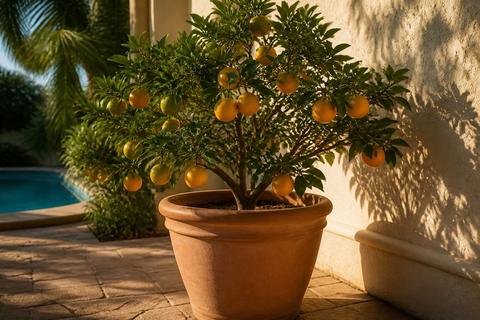
Best for small yards and patios: dwarf citrus on trifoliate rootstock
Ask the nursery what rootstock the tree is grafted onto. Trifoliate orange and its hybrids (like Flying Dragon) keep trees smaller and are also more cold-hardy, which is a double win for a small lot. A dwarf tree on this rootstock tops out well under the 15-20 feet a standard sweet orange can reach, which matters if you're planting near a fence, patio, or septic line.
Best all-around choice if you only plant one tree
Satsuma mandarin in North/Central Florida; Meyer lemon or a mid-season sweet orange in Central/South Florida. Both are forgiving of minor care mistakes, both have a track record of actually fruiting reliably in home yards rather than just looking good at the nursery.
Planting and Early Care That Actually Determines Success
Drainage matters more than most first-time growers expect
Citrus roots need oxygen and will rot in standing water. Before you plant, dig a hole about a foot wide and a foot deep, fill it with water, and see how long it takes to drain. If water is still standing after several hours, plant on a raised mound 8-12 inches high rather than fighting the native drainage.
Watering
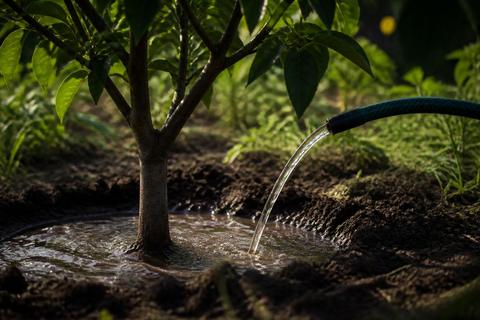
- For the first month after planting, water deeply two to three times a week rather than a little every day. Frequent shallow watering trains roots to stay near the surface, where they're more exposed to both drought and cold.
- After the first month, taper to match rainfall. Established citrus in Florida's sandy soils generally needs supplemental water only during dry stretches, not on a fixed daily schedule.
- Keep mulch 2-3 inches deep out to the drip line, but leave a bare gap right at the trunk. Mulch piled against the bark holds moisture against it and invites trunk rot.
Containers versus in-ground
A container is the right call if you're in North Florida and want to wheel the tree into a garage during an arctic front, or if your yard's native soil drains poorly and you don't want to build a mound. Use a pot with real drainage holes and a well-draining citrus or general potting mix, and expect to water and fertilize more often than an in-ground tree, since pots dry out faster and nutrients wash straight through.
Freeze Protection When a Hard Night Is Coming
- Cover young trees with frost cloth, not plastic sheeting. Plastic in direct sun the next morning can trap heat and cook foliage; if you only have plastic, you have to get out early and pull it off before the sun hits it.
- Drape the cover all the way to the ground and anchor the edges with bricks or soil, rather than just cinching it around the trunk above the ground; a cover sealed to the soil traps far more heat.
- Water the tree beforehand if the soil is dry. A well-hydrated root zone holds and radiates more heat overnight than dry soil.
- Take the cover off as soon as the cold breaks, ideally the next day. A tree left covered for days can break dormancy in the trapped warmth, which leaves it more vulnerable, not less, the next time a freeze rolls through.
- After a freeze, wait until new growth clearly shows where the live wood is before you prune. Cutting too early often means removing wood that would have recovered.
Citrus Greening: The Disease Every Florida Grower Needs to Know
Huanglongbing, universally called citrus greening or HLB, is the reason Florida's commercial citrus acreage has shrunk for two decades, and it affects backyard trees too. It's caused by a bacterium spread almost entirely by a tiny insect, the Asian citrus psyllid: the psyllid picks up the bacterium feeding on an infected tree, then carries and transmits it to the next tree it feeds on, according to UF/IFAS Gardening Solutions. There's no cure once a tree is infected.
What to watch for
- Blotchy mottled leaves are the clearest early sign: a random pattern of yellowing on the leaf that is not mirrored on both sides of the midvein. That asymmetry is what separates greening from an ordinary nutrient deficiency, which usually shows a symmetrical pattern.
- Lopsided or oblong fruit that stays green near the blossom end while coloring up near the stem, smaller than normal, and often bitter.
- Symptoms are visible year-round but show up most clearly from September through March, per UF/IFAS.
- General decline over more than one season: thinning canopy, dieback, poor new flush growth.
What you can actually do about it in a backyard setting
- Buy grafted trees from a reputable, licensed nursery, not a bargain tree of unknown origin. Certified nursery stock is inspected specifically to keep greening and other regulated pests out of new plantings.
- Check leaf undersides for psyllids (small, brown, winged insects that feed at an angle, tail up) especially on new flush growth, which is what they prefer.
- Keep the tree vigorous. A stressed tree (poor drainage, underwatered, malnourished) shows decline from greening faster than a well-managed one, even though good care can't prevent infection.
- If you see the mottled-leaf pattern or misshapen fruit, contact your county extension office. They can help confirm whether it's greening versus a nutrient issue and talk through realistic next steps, which for a home tree is usually managing it for as long as it stays productive rather than an immediate removal.
Pruning and Ongoing Care
Skip the hard prune
Citrus fruits on the outer canopy of the previous year's growth, so a hard cutback removes a real chunk of next season's crop. Most home trees only need dead, damaged, or crossing branches removed, plus light thinning to let light into the interior. Save heavy corrective work, if a tree genuinely needs it, for right after harvest rather than right before bloom.
Fertilizing and pest scouting
- Feed on a steady schedule with a citrus-specific fertilizer rather than one heavy application; Florida's sandy soils don't hold nutrients well, so split applications (roughly every 6-8 weeks during the growing season) work better than a single dose.
- Only add micronutrients (like manganese or zinc) if a soil or leaf test shows a deficiency. Guessing and over-applying can do more harm than good.
- Walk the tree weekly during warm months and check new growth and leaf undersides for psyllids, aphids, and leafminer damage.
- Clean up fallen fruit and heavy leaf litter under the canopy, which cuts down on pest and fungal breeding sites.
Frequently Asked Questions
What are the best citrus trees for Florida backyards?
It depends on your region. In North Florida and the Panhandle, satsuma mandarin and kumquat are the reliable choices because they tolerate winter lows into the teens. In Central Florida, navel and Valencia oranges, grapefruit, and Meyer lemon all do well with a freeze plan for young trees. In South Florida, limes, lemons, and most oranges have little freeze risk and the bigger concerns shift to drainage and citrus greening pressure.
Can I grow citrus trees in Florida without much experience?
Yes, if you match the variety to your zone and get drainage and sun right from the start. The most common beginner mistakes are planting in a low, wet spot, planting in partial shade, and watering on a fixed daily schedule instead of adjusting for rainfall. Start with one tree, water deeply but infrequently, and check for pests weekly rather than only when something looks wrong.
When is citrus season in Florida?
Satsumas and kumquats ripen earliest, from October into winter, which is exactly why they're the North Florida picks (they're done before the hardest freezes hit). Navel oranges generally peak in winter, grapefruit and late oranges can hold on the tree into spring, and lemons and limes produce across a longer stretch of the year. Planting two varieties with different ripening windows stretches your harvest instead of getting everything at once.
How serious is citrus greening in Florida?
Serious enough that it's reshaped the commercial industry, and backyard trees aren't exempt. There's no cure, and the Asian citrus psyllid that spreads it is found throughout the state. The realistic goal for a home grower is buying clean nursery stock, watching for the blotchy mottled-leaf pattern and misshapen fruit, and keeping the tree as healthy as possible, since a well-managed infected tree can often keep producing usable fruit for years even though it won't fully recover.
Should I hard prune my citrus trees?
Generally no. Citrus sets fruit on the previous season's outer growth, so a hard cutback trades this year's convenience for a smaller crop later. Stick to removing dead, damaged, or crossing wood and light thinning for airflow and light. If a tree is badly overgrown, spread the correction across two or three seasons instead of doing it all in one pass.