Tips for Growing Strawberries in Texas
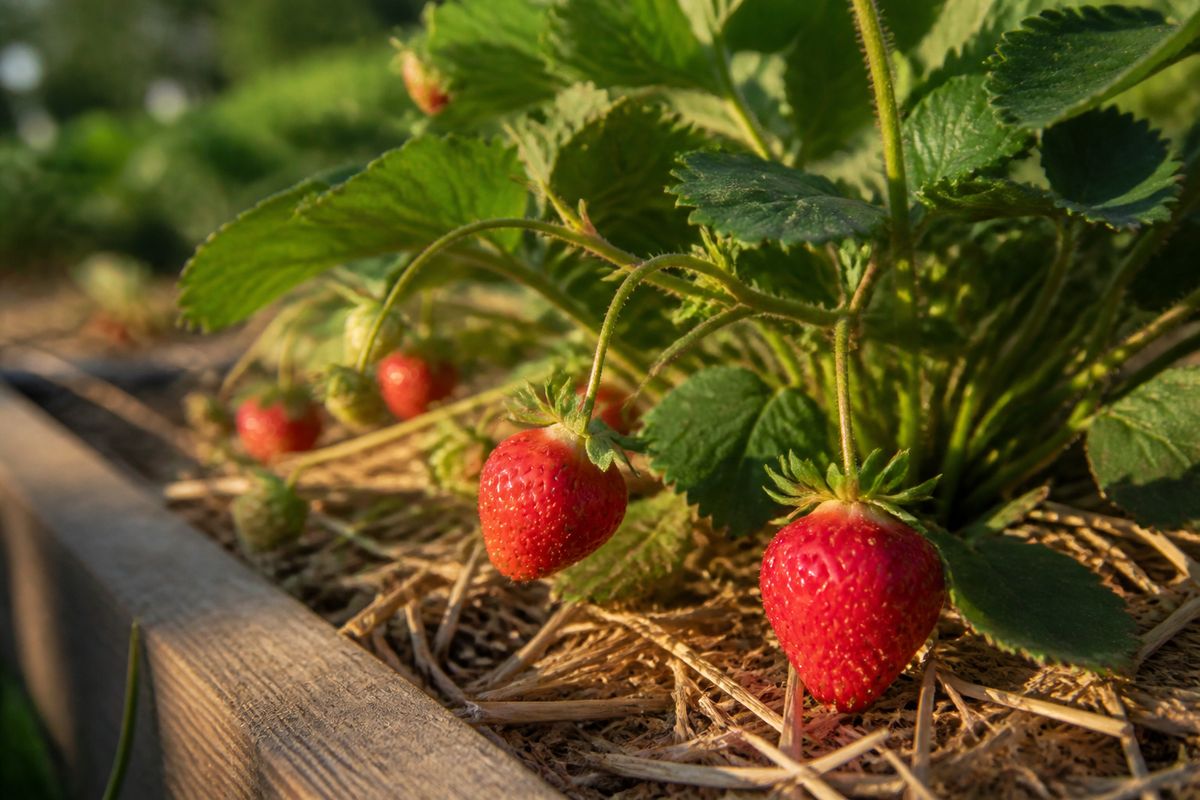
Growing strawberries in Texas works, but the state's heat means you have to run the crop on Texas's schedule, not the one you'll find on a seed packet from a Northern nursery. Texas gardeners plant strawberries as a fall-planted annual that fruits in late winter and spring, then gets pulled before summer heat sets in. Get the timing and variety right and you'll pick berries from February into May.
Texas Growing Conditions: Why the Calendar Runs Backward
Most of Texas sits in USDA Hardiness Zones 7b through 9b, with the Panhandle dipping into 6b/7a and the Rio Grande Valley pushing into 9b/10a. That range matters less for winter cold (strawberries tolerate a freeze fine) than for how few true chill hours the state gets. Texas A&M AgriLife Extension recommends planting in fall, from mid-September through early November, using cold-storage dormant plants for the earliest fall window and freshly dug plants for October and November planting. Cooler fall and winter temperatures give the plants the chill hours they need for strong flower bud development, which is why AgriLife's fall-planting guidance is built around getting plants in the ground before winter, not after it.
Spring planting is possible but sets you up for a smaller harvest: by the time a spring-planted crown establishes roots, Texas heat is already climbing, and strawberry flowering slows down hard once days get long and hot. Treat spring planting as a fallback, not the plan.
Varieties That Actually Fruit Here
Skip whatever your local big-box store stocks in March; most of it is bred for Northern climates and will sulk through a Texas summer. Texas A&M AgriLife's Travis County horticulture program lists Chandler, Festival, Sequoia, Camino Real, Camarosa, and Seascape as varieties that perform in Central Texas home gardens, and the same short-day types (Chandler, Camarosa, Sweet Charlie) show up in commercial variety guidance across the state.
- Festival: a Texas Superstar-designated variety bred and field-tested specifically for Texas conditions. It's a compact, upright plant (8-10 inches) that's easy to pick, tolerates freezes down to the low teens without protection, and is planted late September through October for a February-to-May harvest. If you want one variety proven for Texas specifically, start here.
- Chandler: the variety most Texas commercial growers plant. Large, sweet berries, reliable performance across most of the state.
- Camarosa: large, firm fruit and solid disease resistance; handles Texas's swings between cold snaps and warm spells better than many June-bearing types.
- Seascape: a day-neutral type that keeps fruiting through more of the season instead of dumping one big crop, useful in Central and South Texas where the fruiting window is compressed by early heat.
Skip everbearing varieties bred for Northern summers; they're not built for Texas heat and tend to stall out once temperatures climb past the mid-80s.
Soil Prep
Strawberries want well-drained soil with a pH between 5.5 and 7.0. Much of Texas soil is either heavy clay that drains poorly or sandy soil that drains too fast and needs more frequent watering, so get a soil test through your county AgriLife office before amending blind.
- Test soil pH and nutrient levels 4-6 weeks before your planting window.
- Work in 2-3 inches of compost or aged manure across the bed.
- Build raised rows 6-8 inches high. This is not optional in clay soil; strawberry crowns rot fast in standing water.
- Adjust pH with sulfur (to lower it) or lime (to raise it) only if your soil test calls for it.
Planting: Spacing and Depth
Set plants 12 inches apart in staggered double or triple rows, leaving enough of a path between rows to walk and pick comfortably if you're building raised beds by hand. The crown, the point where roots meet leaves, has to sit right at soil level. Bury it and the crown rots; leave it too high and the roots dry out and the plant never establishes. After planting, water the bed twice daily for about a week to keep new roots and foliage from drying out, then taper down to one or two waterings a week as the plants root in.
Watering Through the Season
Once established, keep soil moist but not soggy: roughly 1 to 1.5 inches of water a week, more during dry stretches. Two things matter more in Texas than elsewhere:
- Water in the morning. Wet foliage that sits damp overnight in Texas humidity invites gray mold and leaf spot.
- Switch to drip irrigation once plants are established. Overhead watering in a Texas summer loses more to evaporation and keeps foliage wet longer than it needs to be.
Feeding
Apply a balanced fertilizer at planting to get roots established, then side-dress again in early spring as new growth starts. If you're running the annual system below, you generally don't need a post-harvest feeding since the bed gets pulled after the spring crop.
Run It as an Annual, Not a Perennial
This is the part of Texas strawberry advice that differs most from guidance written for cooler states. Rather than nursing strawberry crowns through a Texas summer, Texas A&M AgriLife's Travis County horticulture program recommends the annual system for Central Texas home gardens: plant in fall, harvest primarily late February through early May, then pull the plants and turn the bed over to a summer crop. Trying to carry plants through a Texas summer usually costs more in water and disease pressure than a fresh set of fall plants would. If you want to attempt a second season anyway, cut back foliage hard after harvest and give the bed a break from strawberries for 2-3 years before replanting, to cut down on soilborne disease buildup.
Pests and Diseases to Watch For
- Spider mites: show up fast in hot, dry weather and cause stippled, bronzed leaves. Hose down foliage regularly and check the undersides of leaves.
- Gray mold (Botrytis): rots fruit in humid, wet conditions. Morning watering and good airflow between plants (that 12-inch spacing) cut this down significantly.
- Leaf spot diseases: reddish or purple spotting on leaves, worse in wet years. Remove and dispose of affected foliage rather than composting it.
- Strawberry crown borers: larvae tunnel into the crown and cause sudden plant collapse. Crop rotation is the main defense since there's no reliable rescue once a crown is infested.
Mulch and Heat Protection
A 2-3 inch layer of straw or pine bark mulch keeps soil moisture more even and keeps ripening berries off bare soil, which cuts down on rot. In South Texas, and anywhere plants are still fruiting as temperatures climb in April and May, shade cloth over the bed during the hottest afternoon hours can buy another week or two of decent fruit before the plants give out for the season.
Harvest
Pick berries when they're fully red with no white shoulders, and check the bed every 2-3 days during peak season since ripe fruit doesn't hold long in Texas heat. Pick in the cool of the morning, handle berries by the stem rather than squeezing the fruit, and refrigerate promptly. Netting keeps birds off ripening fruit if that's a problem in your yard.
FAQ
Can I plant strawberries in spring in Texas?
You can, but expect a smaller harvest. Spring-planted strawberries miss the fall/winter chill period that drives strong flower bud formation, and the plants are just getting established as Texas heat arrives. Fall planting (mid-September through early November) is what AgriLife recommends and what most successful home growers use.
Do strawberries come back every year in Texas?
They can survive as perennials, but most Texas growing guidance treats them as an annual crop: plant in fall, harvest through spring, then replace the bed. Carrying plants through a Texas summer is possible but usually gives a weaker second-year crop than starting fresh.
Which strawberry variety is best for Texas beginners?
Festival is a solid starting point since it was bred and Texas Superstar-tested specifically for Texas conditions. Chandler and Camarosa are the other names to look for at Texas nurseries in fall.