Tips for Growing Mulberries in Texas
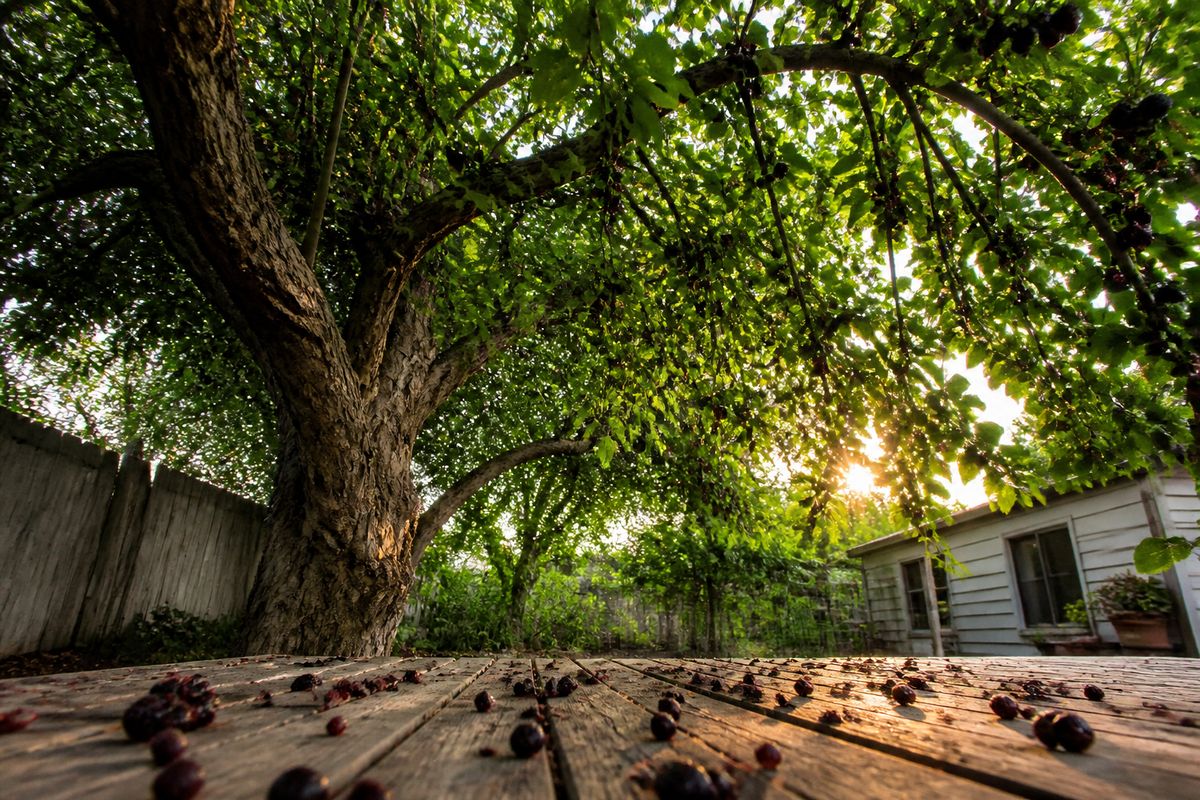
Growing mulberries in Texas is one of the easier fruit-tree projects you can take on, from the humid Piney Woods to the rocky Hill Country. Mulberries tolerate heat, poor soil, and short dry spells better than almost any other fruit tree sold in Texas nurseries, and they don't need a spray program to produce a real crop. That said, which mulberry you plant, and where you put it, changes the outcome a lot.
Which Mulberry Actually Fits Your Part of Texas
Texas spans USDA hardiness zones roughly 6b in the Panhandle up to 9b along the coast, and mulberries are unusual in that nearly every named variety survives that whole range. Cold isn't the limiting factor here; heat, humidity, and soil drainage are what separate a mulberry that thrives from one that limps along.
- Red mulberry (Morus rubra): The only mulberry native to Texas, found naturally along creek bottoms and in the understory from East Texas into the Hill Country. It prefers moist, well-drained soil rich in organic matter and does best with at least part sun, though it tolerates shade better than the other species. Fruit is dark red to purple and smaller than the introduced species.
- White mulberry (Morus alba) and its hybrids: More heat- and drought-tolerant once established, and the source of most named fruiting cultivars sold in Texas (Illinois Everbearing, Pakistan, Oscar). Performs well from Central Texas through the Gulf Coast.
- Black mulberry (Morus nigra): Has the best flavor of the three but is the least heat-tolerant and the slowest to establish. It's a gamble outside of moderate microclimates and generally not worth the trouble in South Texas or on the coast.
For most home growers anywhere from Dallas to San Antonio to Houston, a named white mulberry cultivar or a red/white hybrid like Illinois Everbearing gives the most reliable fruit for the least fuss. If you're planting for wildlife or restoration value rather than for eating, red mulberry is the better native choice.
Soil and Site
Mulberries aren't picky, which is exactly why they show up growing wild in fence rows and vacant lots across the state. But a little site prep pays off in faster establishment:
- Aim for a soil pH between 5.5 and 7.0. Most Central and East Texas soils fall in or near this range; if you're on heavily alkaline caliche in parts of West or South-Central Texas, expect slower growth and some leaf yellowing.
- Drainage matters more than fertility. Check it before you plant: dig a hole about a foot deep, fill it with water, and confirm it drains within a few hours. Standing water for a day or more means you need a raised bed or a different spot.
- Work compost into heavy clay or fast-draining sand at planting time. Mulberries handle both soil types once established, but the first year or two goes easier with organic matter mixed in.
- Full sun (six or more hours) gives the heaviest fruit set. A little afternoon shade is fine in the hottest parts of West and South Texas and won't cost you much yield.
When and How to Plant
Plant bare-root or container mulberries in winter dormancy, from late December through February, so roots can establish before spring growth and summer heat arrive. This mirrors the general planting window Texas A&M AgriLife recommends for fruit trees statewide, rather than waiting until spring growth has already started.
- Dig the hole two to three times wider than the root ball, but no deeper than the root ball itself.
- Set the tree so the root flare (where trunk meets roots) sits at or slightly above grade, not buried.
- Backfill with the native soil, amended with compost if it's heavy clay or pure sand. Avoid burying the hole in straight potting mix, which encourages roots to circle instead of spreading out.
- Water in thoroughly to settle the soil and eliminate air pockets.
- Mulch 2-3 inches deep, keeping it a few inches back from the trunk to avoid rot.
Give a mulberry room. Standard trees reach 30-50 feet with a wide canopy; even semi-dwarf cultivars need 15-20 feet of clearance from structures, fences, and septic lines. Mulberry roots also stain sidewalks and driveways with dropped fruit, so keep the planting spot away from anywhere you park a car or walk barefoot.
Watering and Feeding
Water new trees deeply once or twice a week through their first one to two summers, more often during actual Texas heat waves. Once established, mulberries are genuinely drought-tolerant and often survive on rainfall alone in most of the state, though watering during extended dry spells keeps fruit from turning small and seedy.
Skip heavy fertilizing. A light application of a balanced fertilizer in early spring is plenty; overfeeding pushes leafy growth at the expense of fruit and can make the tree more attractive to aphids and mites.
Pruning
Prune in late winter while the tree is still dormant. Mulberries fruit on new growth from the previous season, so hard pruning removes next year's crop; keep it light.
- Remove dead, damaged, or crossing branches first.
- Thin crowded interior branches so light reaches the canopy, which helps ripen fruit evenly and cuts down on fungal leaf problems in humid parts of the state.
- If you're training a young tree, pick 3-4 well-spaced scaffold branches in the first two winters rather than letting it grow wild; it makes future harvest and pruning much easier on a tree that gets this large.
Pests and Diseases in Texas Conditions
Mulberries are genuinely low-maintenance compared to peaches or plums, but they aren't problem-free in Texas humidity. According to the Texas Plant Disease Handbook from Texas A&M AgriLife Extension, mulberry trees in the state can develop bacterial blight (watersoaked leaf spots with black streaking on shoots), several fungal leaf spots that show up worse in wet years, powdery mildew, and cankers on stressed or damaged wood. White mulberry in particular shows high susceptibility to cotton root rot, a soil-borne fungal disease common in Texas's alkaline clay soils.
Practical takeaways for home growers:
- Prune out dead or diseased wood promptly and avoid wounding the trunk with mowers or string trimmers, which is a common entry point for canker fungi.
- Keep the tree watered and avoid stress during drought; cankers and root rot both hit stressed trees harder than healthy ones.
- If cotton root rot has killed other trees on your property before (common in some Central and North Texas clay soils), a red mulberry or a diverse planting is a safer bet than a large block of white mulberry.
- Spider mites and whiteflies show up in hot, dry weather; a strong hose spray or insecticidal soap usually handles light infestations without resorting to broad-spectrum sprays.
Chill Hours: Less of an Issue Than You'd Think
Unlike peaches or apples, mulberries have a low chilling requirement, generally cited in the range of 200-400 hours of winter temperatures between 32-45 degrees F to break dormancy properly. Texas AgriLife's chill hour guidance for the Austin area puts Travis County in the 550-850 hour range depending on exact location, and most of Texas outside the immediate coast and Rio Grande Valley accumulates well above what a mulberry needs. Practically, that means winter chill is rarely the reason a Texas mulberry fails to fruit; poor drainage, deep shade, or young age (see below) are far more common culprits.
Harvest
In most of Texas, mulberries ripen from late April through June depending on variety and how far south you are, often the earliest tree fruit of the year in a home orchard. Fruit doesn't ripen further after picking and doesn't all ripen at once, so plan on picking every day or two during peak season. The classic trick is spreading a tarp or old sheet under the tree and shaking the branches; ripe fruit drops free while unripe berries stay put.
A newly planted mulberry commonly takes 2-3 years before it fruits at all, and several more years before it reaches full production, so don't judge a young tree's variety or site by its first crop.
FAQ
Do I need two mulberry trees to get fruit?
No. Most mulberry cultivars sold for fruit are self-fertile, so a single tree will set fruit on its own. A second tree of a different variety can modestly improve fruit set for some cultivars, but it isn't required the way it is for many apples.
Can mulberries handle a Texas summer without irrigation?
Established trees (past their second summer) generally tolerate Texas heat and dry spells well and often need no supplemental water in a normal year. Extended drought or a young tree still developing roots is a different story, and both benefit from a deep soak every one to two weeks.
Is fruitless mulberry the same tree?
Fruitless mulberry is usually a male cultivar of white mulberry bred specifically not to fruit, planted for shade without the mess of dropped berries. It has the same fast growth and drought tolerance as fruiting types but obviously won't give you anything to harvest.
Why isn't my mulberry fruiting yet?
Age is the most common reason. Give a young tree at least 2-3 years before expecting a real crop. After that, check for too much shade, waterlogged soil, or storm/freeze damage to the previous year's wood, since that's where the current year's fruit forms.