Tips for Growing Grapes in Texas
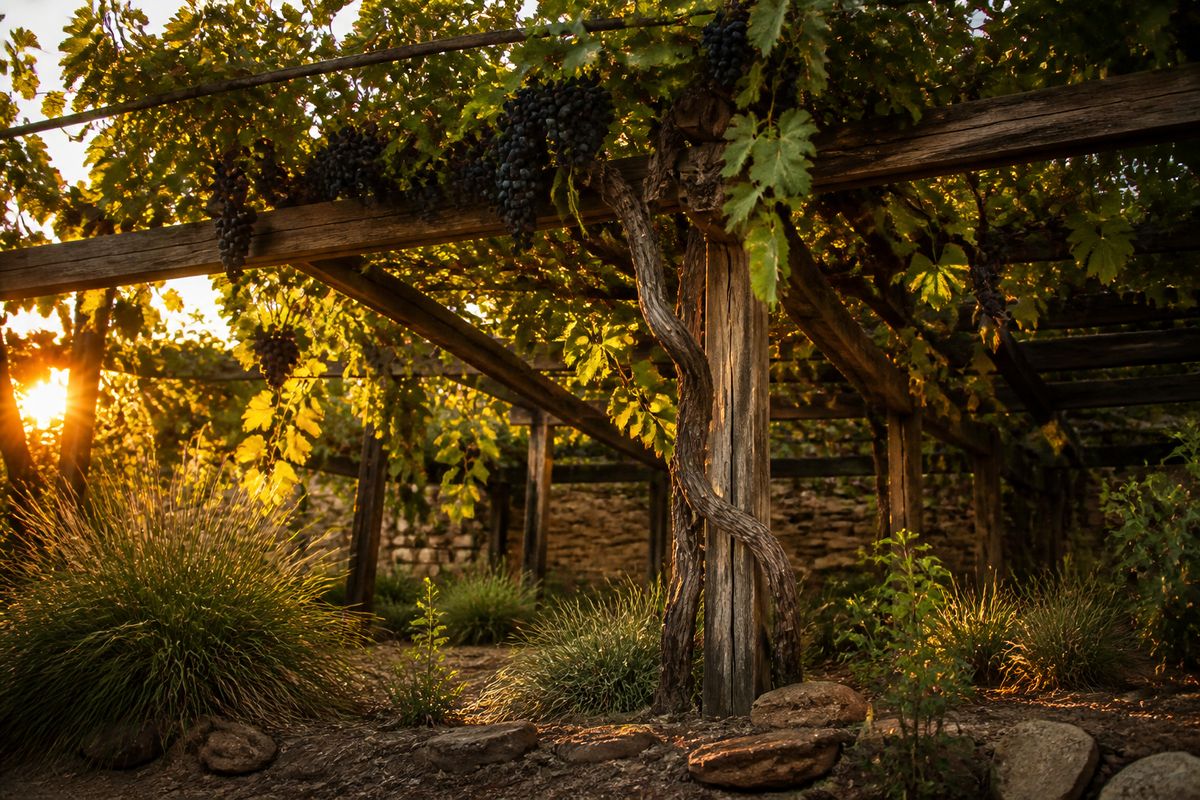
Tips for growing grapes in Texas start with picking the right variety, because the state punishes anyone who plants like they're in California or the Pacific Northwest. Between triple-digit summer heat, heavy clay soil, high humidity, and Pierce's disease, most classic wine grapes (Vitis vinifera like Cabernet or Chardonnay) struggle or die outright within a few years. The growers who succeed pick tough, disease-resistant varieties bred for Texas conditions and manage the vine, not fight the climate.
Know Your Region Before You Pick a Variety
Texas spans USDA hardiness zones roughly 6b in the Panhandle to 9b along the Gulf Coast and Rio Grande Valley, and grape success depends more on humidity and Pierce's disease pressure than on winter cold. Texas A&M AgriLife Extension identifies the Texas Hill Country and the coastal and eastern parts of the state as the historically highest-pressure zones for Pierce's disease, a bacterial infection spread by xylem-feeding sharpshooters and spittlebugs that kills susceptible vines outright. That single fact should drive your variety choice more than anything else on this page.
- Central and South Texas (Hill Country, San Antonio south): High Pierce's disease pressure. Stick to resistant varieties.
- Gulf Coast and East Texas: Humid, high disease and fungal pressure, but muscadines and Black Spanish thrive here.
- North Texas and the High Plains: Cooler, drier, generally lower Pierce's disease pressure, wider variety options including some vinifera with care.
- West Texas and the Panhandle: Low humidity and low disease pressure but harsher winter cold and wind; this is where most of the state's commercial wine industry actually operates.
Varieties That Actually Fruit Reliably in Texas
Skip the grocery-store table grape varieties and European wine grapes unless you're in a low-disease-pressure area with irrigation and a spray program. For a home vineyard or backyard arbor, these are proven performers:
- Black Spanish (Lenoir): The workhorse of Texas grapes. Texas A&M AgriLife notes it grows well in all areas of Texas, and vines have yielded as much as 30 pounds each in South Texas and the High Plains. Strong Pierce's disease tolerance, used for both juice and wine.
- Blanc du Bois: A white hybrid bred for Gulf Coast humidity and Pierce's disease resistance. Good choice for Southeast Texas where vinifera won't survive.
- Champanel: A vigorous hybrid well adapted to heavy clay soils, bred from native Vitis champinii rootstock that gives it strong Pierce's disease tolerance. Fruit is seeded and best for juice or jelly rather than fresh eating.
- Muscadines (Southern Home): Best fit for East Texas and the Gulf Coast. Most muscadine varieties need acidic soil, but Southern Home is under trial with Texas A&M and shows some tolerance for Texas's alkaline clay, making it one of the few muscadines worth trying in Central Texas.
- Herbemont and Victoria Red: Older Texas-adapted hybrids still recommended by AgriLife for home gardeners wanting variety beyond Black Spanish.
If you want a true wine-quality vinifera grape, that's realistically a High Plains or far-West Texas project with drip irrigation, fungicide sprays, and vigilant Pierce's disease scouting, not a backyard undertaking in Houston or Austin.
Soil and Site Prep
Grapes need drainage more than they need rich soil. Heavy, waterlogged clay is the fastest way to lose a vine to root rot.
- Aim for soil pH between 5.5 and 7.0; muscadines want the acidic end of that range, Black Spanish and Champanel tolerate Texas's alkaline clay better.
- If you're planting in blackland clay, build a raised row or mound 8-12 inches high to get roots out of standing water.
- Work in compost to improve structure, but don't over-fertilize the planting hole. Skip fertilizer at planting entirely and let the vine establish first.
- Pick a site with full sun and, if possible, morning sun with afternoon air movement. Good airflow reduces the fungal and bacterial pressure that Texas humidity creates.
When and How to Plant
Plant dormant, bare-root vines on well-drained soil in February or March, while the vine is still dormant but before the spring growth push starts. Dig the hole only as wide and deep as needed to spread the roots without cramping them. Don't add fertilizer to the planting hole. Space vines 6 to 10 feet apart depending on variety and trellis style, wider for vigorous growers like Champanel. After planting, prune the vine back to two buds; this forces the plant to put energy into roots the first year instead of top growth.
Watering Without Rotting the Roots
New vines need regular water through their first full growing season while roots establish, but grapes hate wet feet. Once established, deep-water every 7 to 10 days during dry stretches rather than shallow, frequent watering, and switch to drip irrigation if you can. Drip keeps water at the root zone and off the leaves, which matters in a humid Texas summer where wet foliage invites fungal disease.
Training and Pruning
Grapes fruit best when trellised, both for yield and for airflow through the canopy. Do the bulk of your pruning in February or March while vines are still dormant, training most varieties to a single cordon with spurs cut back to two or three buds each. Remove old, unproductive wood every year, this is what keeps a vine fruiting instead of turning into a tangle of shade-producing leaves with no fruit. If a vine sets a heavy crop, thin clusters so the vine isn't stressed and the remaining bunches size up properly.
Managing Pierce's Disease and Other Problems
Pierce's disease is the single biggest reason vinifera grapes fail in most of Texas, and there's no cure once a vine is infected, only removal. Texas A&M AgriLife recommends an integrated approach:
- Plant resistant varieties (Black Spanish, Blanc du Bois, Champanel, muscadines) as the first line of defense, especially in Central, South, and East Texas.
- Scout regularly for sharpshooter and spittlebug activity and for early symptoms, scorched leaf margins and dieback starting in mid to late summer.
- Remove and destroy any vine confirmed infected; there's no treatment that saves it, and it becomes a source of infection for neighboring vines.
- Keep weeds and wild grasses down near the vineyard, since these vector insects breed in that ground cover.
Beyond Pierce's disease, expect pressure from black rot, powdery and downy mildew, and Japanese beetles. Good spacing, pruning for airflow, and drip irrigation instead of overhead watering handle most of it without heavy spraying.
Harvest
Depending on variety, Texas grapes typically ripen from mid-summer into early fall, Blanc du Bois and Black Spanish often in July and August, muscadines running later into September and October. Taste-test rather than going by the calendar; color change alone doesn't guarantee ripeness in Texas heat. Pick in the cool of the morning, handle bunches gently since Texas grape skins bruise easily in the heat, and get them out of direct sun immediately after cutting.
FAQ
Can I grow Cabernet or Chardonnay in my Texas backyard?
Not reliably outside a handful of drier, lower-disease-pressure pockets like the High Plains or far West Texas, and even there it takes irrigation and a real spray program. In Central, South, East Texas, and along the Gulf Coast, Pierce's disease pressure is too high for most standard vinifera to survive long-term. Plant a resistant hybrid instead.
Do grapes need full sun in Texas, or will afternoon shade help?
Full sun is still correct, grapes need it to ripen properly, but siting the row so the vine gets some airflow and isn't trapped against a wall in dead humid air will cut down on fungal problems without sacrificing sun exposure.
My vine looks great but never fruits. What's wrong?
Usually one of three things: the vine is still too young (most varieties need two to three years before real production starts), it was pruned too hard or not at all so it's putting all its energy into leaves, or it isn't getting enough sun. Check pruning method and site before assuming a variety or soil problem.