Tips for Growing Pears in Texas
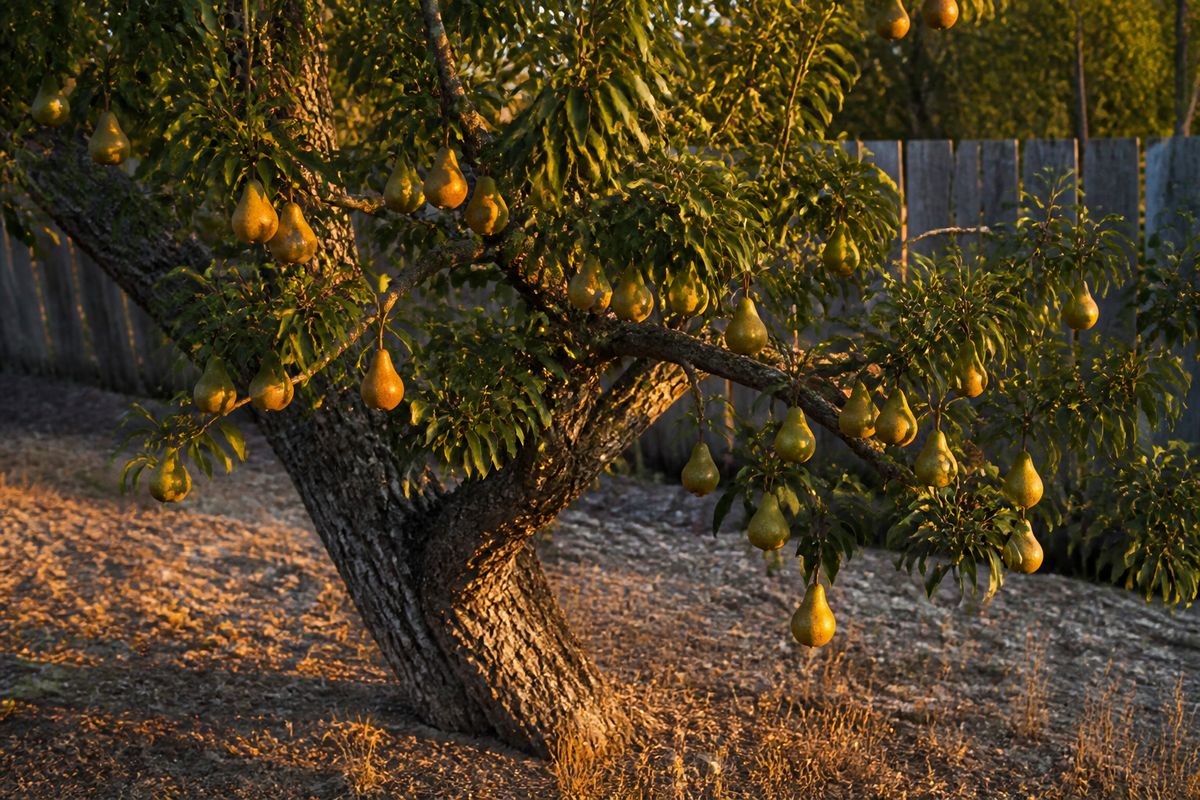
Tips for growing pears in Texas start with one blunt fact: the pear you picture at the grocery store probably will not work here. Bartlett, the classic soft European pear, is not adapted to Texas because fire blight kills the trees, according to Texas A&M's small-acreage crop guide. Grow pears in Texas and you're really growing fire-blight-tolerant Asian and hybrid pears, not the fruit-bowl kind.
Why Texas Pear Growing Is Different
Two things drive every decision below: fire blight and chill hours.
- Fire blight is a bacterial disease (Erwinia amylovora) that blackens blossoms and shoots into a hooked "shepherd's crook" shape and can kill whole branches or trees in a single wet spring. It is the reason soft European dessert pears fail here and hard, gritty varieties dominate Texas orchards instead.
- Chill hours are the accumulated time between 32-45°F a tree needs over winter to bloom normally. Texas chill totals vary a lot by region and by year, Austin-area totals typically run in the neighborhood of 550-850 hours depending on the specific site, and the state has been trending toward shorter, lighter winters, so pick a variety with a chilling requirement your area reliably clears, not just the average. Check your local number through the TexasET Network rather than guessing.
Pear Varieties That Actually Fruit in Texas
Skip the European dessert pears. These are the varieties Texas A&M's Bexar County horticulture program recommends for home orchards, with real fire blight ratings and chill needs:
| Variety | Chill Hours | Fire Blight Resistance | Notes |
|---|---|---|---|
| Orient | ~400-1,200 | Best of the common varieties | Large fruit, good flesh quality, self-sterile (needs a pollinator) |
| Kieffer | ~400-1,200 | Tolerant | Hard, gritty pear best for canning and preserves, heat-tolerant |
| Moonglow | ~700 | Very resistant | Good fresh eating and preserves, widely used as the pollinator for other varieties |
| Garber | Low | Better than LeConte, below Orient | Early, vigorous, apple-shaped fruit good for preserves |
| LeConte | Low-moderate | Poor | An old San Antonio-area favorite, but plant it knowing fire blight will eventually find it |
All of these are self-sterile, so plant at least two compatible varieties with similar bloom times for fruit set, Moonglow is a reliable pollinator partner for the others. Asian dessert pears (the crisp apple-textured type sold as single pieces of fruit in stores) are considered a high-risk, largely untested crop in Texas and aren't a safe bet for a first tree.
Site Selection
- Sun: Full sun, 6-8 hours a day minimum.
- Soil: Well-drained loam, pH 6.0-7.0. Heavy, poorly drained clay invites root rot, if that's what you have, plant on a raised mound.
- Spacing: At least 25 feet between standard trees for air circulation, which matters more for pears than most fruit because wet, still air is exactly what fire blight needs to spread.
- Airflow and frost: A gentle slope or elevated spot drains cold air away from blossoms during late freezes, which are a real risk on Texas pears that bloom early after a mild winter.
Planting and Early Care
- When to plant: Dormant season, roughly December through February, before spring growth starts.
- Graft union: Keep it a couple of inches above the soil line so the rootstock doesn't send up its own growth and the scion doesn't root and lose its disease resistance.
- Mulch: 2-3 inches of organic mulch in a ring around the tree, pulled back from the trunk itself.
- Water: Deep soak weekly through the first two growing seasons while roots establish, more often in July-August heat.
- Pruning at planting: Keep it light. Pears (unlike peaches) don't want to be hacked back hard, over-pruning pushes exactly the soft, vigorous new growth that fire blight infects fastest.
Pruning Without Feeding Fire Blight
This is the one place Texas pear advice really diverges from generic fruit-tree pruning: vigorous new shoots are an infection risk, not just a shaping opportunity.
- Prune in late winter, while trees are fully dormant.
- Remove dead, crossing, or damaged wood, and thin for airflow, but don't overdo it, a moderately pruned tree grows more slowly and stays less susceptible than a heavily pruned one racing to replace lost wood.
- If you spot a blighted shoot with the blackened "shepherd's crook" tip during the growing season, cut it out immediately, 8-12 inches below the visibly damaged wood, and disinfect shears between cuts with a 10% bleach solution or rubbing alcohol so you don't spread the bacteria tree to tree.
- Burn or bag and remove prunings from the property; don't compost fire-blighted wood.
Watering and Fertilizing
- Established trees: deep water every 10-14 days in dry summer stretches rather than frequent shallow watering, which keeps foliage wetter and feeds disease.
- Drip irrigation or soaker hoses beat overhead sprinklers for this exact reason, wet leaves are a fire blight and fungal-disease invitation.
- Fertilize lightly. Pears need less nitrogen than most fruit trees; a soil test before you feed anything is worth the ten dollars, because excess nitrogen produces the same soft, blight-prone growth that overpruning does.
Common Texas Pear Problems
- Fire blight, the big one, covered above. Watch spring bloom closely; infections move fast in warm, humid, or rainy weather right after flowering.
- Cotton root rot, a soil fungus common in Texas alkaline clay soils that can kill a mature tree outright with no warning wilt-and-die symptoms; there's no cure, only avoidance through well-drained soil and resistant rootstock choice at planting.
- Pear psylla and aphids, sap-suckers that leave sticky honeydew and invite sooty mold; usually a cosmetic nuisance more than a tree-killer.
- Codling moth, larvae tunnel into developing fruit; pheromone traps help you time any spray to the actual local hatch instead of a calendar guess.
Harvest and Storage
Pears are one of the few fruits you deliberately pick underripe. Left on the tree, most varieties turn gritty and mealy at the core before the outside looks ready.
- Pick when the fruit reaches full size and the color lightens slightly, and the pear separates from the branch with a gentle upward twist rather than a tug.
- Move harvested fruit to a cool spot immediately; Texas hardy varieties like Kieffer are often used for canning and preserves rather than fresh eating precisely because the texture is coarser than a grocery-store pear.
- Ripen at room temperature for a few days to a week until the neck gives slightly to thumb pressure, then refrigerate to hold.
FAQ
Can I grow Bartlett pears in Texas?
Not reliably. Texas A&M's guidance is direct on this: Bartlett and other high-quality European dessert pears are not adapted to Texas because fire blight kills the trees. Stick to Orient, Kieffer, Moonglow, or similar blight-tolerant varieties instead.
Do I need two pear trees to get fruit?
Yes, in almost every case. The common Texas varieties are self-sterile, so you need a second, compatible variety blooming at the same time for pollination and fruit set.
Why did my pear tree's new growth suddenly turn black?
That's the classic sign of fire blight, especially if the tip has curled into a hook shape. Cut the affected wood out well below the damage, sanitizing your tools between cuts, and remove the debris from the property.
How many years until a Texas pear tree fruits?
Plan on several years of patience, Texas A&M's small-acreage guidance puts general pear establishment at around 6 years to first harvest, though the exact timing varies with variety, rootstock, and how the tree is cared for.
Sources
- Texas A&M AgriLife Extension / Aggie Horticulture - Pears Crop Guide
- Texas A&M AgriLife Extension - Bexar County (Oriental Pears for the San Antonio Homeowner)
- Texas A&M AgriLife Extension / Texas Plant Disease Diagnostic Lab - Fire Blight of Ornamental Pears
- Texas A&M AgriLife Extension - Travis County (Chill Hour Requirements for Austin)