Tips for Growing Pomegranates in Texas
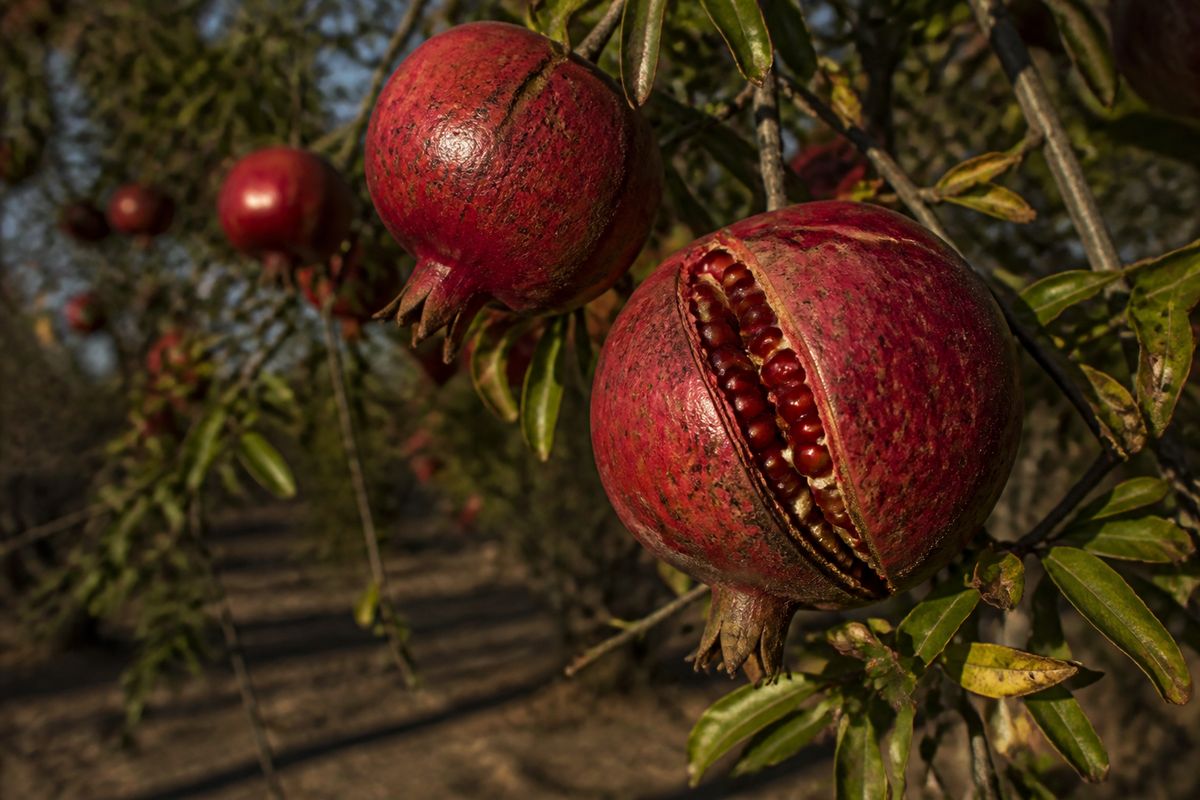
Growing pomegranates in Texas works well across most of the state, but the details matter more than most articles let on. Pomegranates want hot, dry summers and tolerate drought and salty soil better than almost any other fruit crop you can plant here, but cold hardiness and fruit splitting are real limitations, not footnotes, and the variety you pick determines whether you get a bush full of fruit or a bush full of split, rotten skins.
Where Pomegranates Actually Work in Texas
Pomegranates are hardy to USDA Zone 7b at the coldest edge of their range, with some varieties tolerating temperatures as low as 10°F and others damaged at 18°F. According to Texas A&M AgriLife Extension, fruiting types should survive most winters throughout central, southern, and southeastern Texas. North central Texas and the Panhandle are the risk zones: AgriLife's own trial work there focuses on a handful of cold-hardy selections (Al-sirin-nar, Salavatski, Russian 18) specifically because the standard commercial variety isn't reliable that far north. If you garden in Zone 7a or colder, plant a cold-hardy variety in a sheltered, south-facing spot, or expect to lose the crop in a hard freeze some years.
Varieties That Actually Fruit Here
Skip the ornamental pomegranates sold at big-box stores, they flower but rarely set edible fruit. AgriLife's Texas variety trials point to these as reliable producers:
- Wonderful: the main commercial variety and still the most widely available. Vigorous and consistently productive, but AgriLife flags two persistent problems in Texas: it splits near maturity and it has the weakest cold tolerance of the group. Best suited to Central, South, and Southeast Texas, where AgriLife says fruiting types reliably survive winter.
- Russian 18: medium-to-large, bright red fruit with a good sweet-tart balance. Cold hardy, adapted across a wide area of the state, and bears at a young age, one of the varieties AgriLife is specifically trialing for gardeners in north central Texas.
- Salavatski and Spanish Sweet: both good cold tolerance, both ripen mid-October, both very productive in trials.
- Al-sirin-nar: glossy red fruit with rosy-pink arils; has produced some of the best yields in AgriLife trials. Ripens late October.
- Sumbar: soft-seeded and early-ripening, and has survived hard winters around Fredericksburg, but AgriLife notes it risks cold injury if planted too far north.
Order named varieties from an out-of-state nursery if your local garden center only carries decorative types, pomegranates aren't under quarantine, so interstate shipping isn't restricted.
Soil and Site
Pomegranates tolerate a wider soil pH range than most fruit crops: they grow well in the moderately alkaline soils common in South Texas and northern Mexico, and just as well in the slightly acidic soils of East Texas. What they won't tolerate is standing water, so internal drainage matters more than pH. Test new sites for salinity before planting, pomegranates handle salty soil better than most commercial fruit, so a salinity test tells you how much you can safely cut back on irrigation.
Clear a 1- to 2-foot circle of grass and weeds around each planting site before you dig, and pick a spot in full sun. Shaded plants still grow but flower and fruit poorly.
Planting and Spacing
Space plants 12 to 15 feet apart, with 15 to 20 feet between rows. Pomegranates left too crowded get shaded out and produce less fruit, so don't be tempted to tuck them in tighter to save space. If your nursery stock came in soilless potting media, rinse most of it off the root ball before planting so the roots make direct contact with your native soil.
Water thoroughly at planting, then again 2 to 4 weeks later, and start a once-a-week watering schedule once the plant leafs out. A simple trick: build a soil ring a couple of feet across and several inches high around the young plant, then fill it with water as needed, it will settle into the surrounding ground within a few months as the plant establishes.
Watering Established Plants
Once established, water roughly every 7 to 10 days rather than daily, overwatering is a bigger risk than underwatering for an established pomegranate. If you're on drip irrigation, one 1-gallon-per-hour emitter per plant is enough for the first year or two; work up to at least four emitters per plant by year four or five.
Keep watering consistent through dry spells. Pomegranates handle drought well on their own, but fruit commonly splits after a heavy rain or irrigation follows an extended dry stretch, the fruit's growth outpaces what the rind can stretch to accommodate. Even watering through the season, not just watering more, is the actual fix.
Fertilizing
Nitrogen is the only nutrient most plantings need every year. In the first year, 1 to 2 cups of ammonium sulfate split across three or four applications is typically enough. Roughly double that rate in year two and triple it in year three, splitting applications across February, May, and September.
For mature plants, fertilize to maintain 12 to 18 inches of new growth on the branch tips each year, that's the visual cue to watch rather than a fixed yearly amount. If a plant isn't responding to fertilizer despite regular watering and weed control, get the soil tested before adding more nitrogen; the problem may not be nutrients at all.
Pruning
Pomegranates are usually grown as multi-trunk bushes, not single-trunk trees. While the plant is young, select three to five main trunks or suckers and remove the rest, you'll need to keep removing new suckers as they appear. Once the plant starts bearing, prune annually to thin out interior growth, remove dead or damaged wood, and keep the main scaffold branches open. Good airflow through the canopy also cuts down on the fungal problems humid weather encourages.
Pests and Diseases
Pomegranates are more pest-resistant than most fruit crops, but they aren't problem-free in Texas:
- Insects: whiteflies, thrips, mealybugs, stink bugs, and scale insects damage leaves; moth larvae can defoliate the plant, and termites occasionally infest the trunk.
- Fruit splitting: the most serious disease problem is a fungus that causes leaf drop and fruit splitting right as the fruit matures, the leaf loss is cosmetic, but a split fruit is a loss. A copper fungicide applied from late spring through summer can help, though AgriLife notes control isn't fully reliable.
- Heart rot (soft rot): caused by the fungus Rhizopus arrhizus and triggered by heavy rain during bloom and ripening. Thinning the canopy for airflow is your best defense.
- Sunscald: exposed fruit can develop roughened, russeted, sunburned skin in Texas summer sun. If fruit appearance matters to you (for example if you're selling for fall decoration), a kaolin clay spray applied to the fruit surface reduces sun damage.
Harvest
Expect the first fruit 3 to 4 years after planting. Fruit ripens roughly 6 months after bloom, with early varieties ready in September and later ones stretching into October. Pomegranates do not ripen further once picked, so timing matters: a ripe fruit makes a faint metallic sound when tapped, and the skin will have taken on the variety's full color.
Cut the fruit from the branch with shears rather than pulling it, leaving a torn stem can puncture and rot fruit sitting next to it in storage or transport. Fresh fruit stores for weeks at room temperature; for longer storage, AgriLife recommends 40–45°F at 85 percent relative humidity, which keeps fruit in good condition for up to three months.
Yields build slowly and honestly: expect around 20 to 25 fruit per plant by year four, rising to 100 to 150 fruit by year ten in a well-managed planting. That's a multi-year commitment, not a quick payoff, factor that in before you plant a whole row expecting a harvest next fall.
Is a Pomegranate Worth Planting in Your Part of Texas?
If you're in Central, South, or Southeast Texas, pomegranates are one of the lower-maintenance fruit options available, less water, less fertilizer, and more drought and salt tolerance than citrus, peaches, or apples. If you're in North Texas or the Panhandle, stick to the cold-hardy selections and plant in a protected spot, and accept that a hard winter can still set you back. Either way, 'Wonderful' fruit splitting near harvest and its weaker cold tolerance are real trade-offs against its size and availability, not reasons to avoid pomegranates, but reasons to pick your variety by your specific location rather than by what's sitting on the shelf at the nursery.
FAQ
Can pomegranates survive a Texas winter?
Most fruiting varieties handle winters throughout central, southern, and southeastern Texas without protection. North of that, stick to cold-hardy selections like Russian 18 or Salavatski and plant against a south-facing wall or windbreak.
Why do my pomegranates keep splitting?
Splitting usually follows inconsistent watering, a dry stretch followed by heavy rain or irrigation, or a fungal infection that weakens the rind right as fruit matures. Even, regular watering through the growing season reduces splitting more than any other single fix.
How long before a new pomegranate plant produces fruit?
Expect the first real crop 3 to 4 years after planting, with yields increasing steadily through about year ten.