Tips for Growing Peaches in Texas
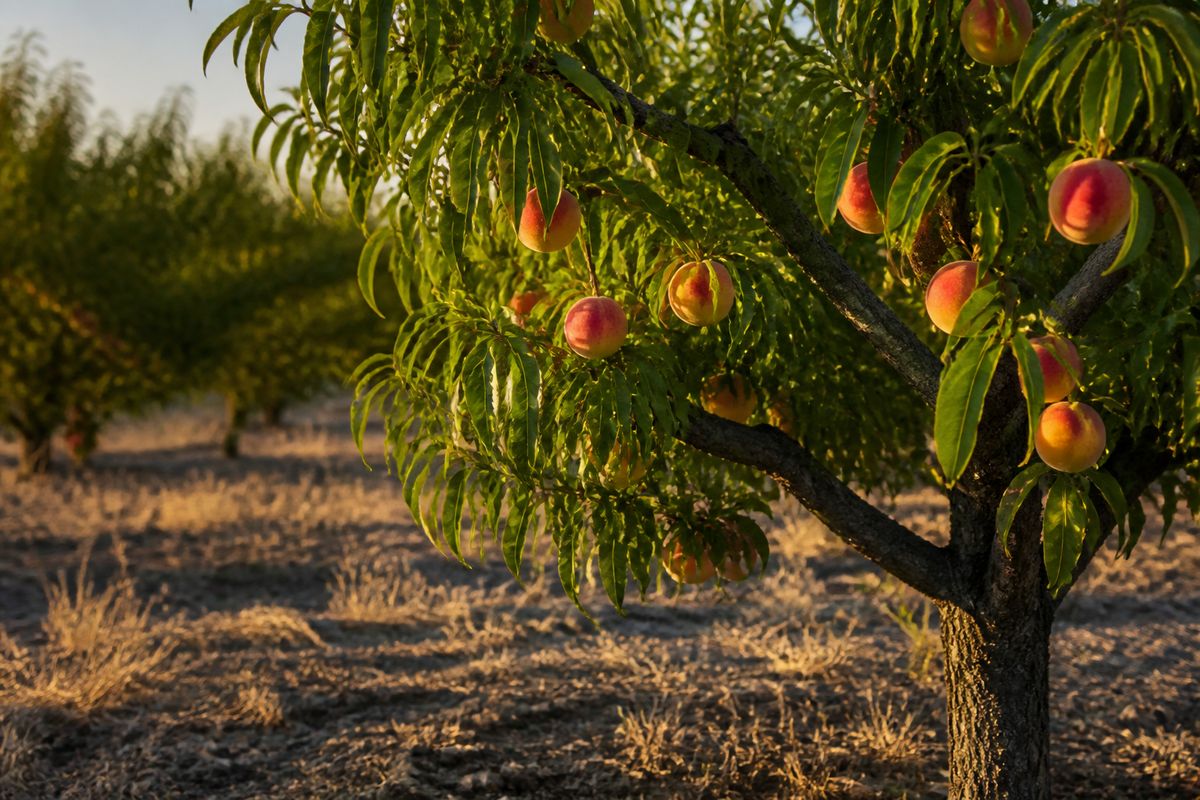
Tips for growing peaches in Texas start with one hard truth: your zip code decides which varieties will actually fruit. Texas spans USDA zones roughly 6b in the Panhandle to 9b along the coast, and peaches are ruled by winter chilling, not just heat tolerance, so a variety that loads up with fruit in Fredericksburg can sit bare in Brownsville.
Chill Hours Are the First Decision, Not an Afterthought
A chill hour is roughly an hour of winter temperature between 32°F and 45°F. Peach buds need a minimum number of these hours to break dormancy evenly and set fruit; skip that and you get a tree that leafs out patchy, drops blossoms, or produces small, deformed fruit even in an otherwise healthy year. Texas A&M AgriLife Extension has documented this exact failure mode across the state in years when winter chilling ran short, with orchards in the Hill Country projecting as little as 30% of a normal crop after a warm winter.
Chill hour needs vary by region because Texas winters do too. Travis County (Austin), for example, sits in roughly a 700-hour zone but ranges from 550 to 850 hours depending on local terrain, according to Texas A&M AgriLife's Travis County horticulture program. As a rough regional guide:
- Deep South Texas / Rio Grande Valley: often under 300 hours some winters. Only true low-chill varieties (roughly 150-350 hours) have a realistic shot.
- Coastal Bend and South-Central Texas: generally 300-500 hours. Low- to medium-chill varieties do best.
- Hill Country and North-Central Texas (Austin, Dallas-Fort Worth): commonly 500-850 hours, though this swings a lot winter to winter.
- Panhandle and far North Texas: can top 900-1,000+ hours in a normal winter, opening the door to higher-chill varieties, though late spring frosts are the bigger risk there.
Texas A&M's stone fruit breeding program has released varieties specifically to close the low- and medium-chill gap: low-chill lines need under 250 hours, and medium-chill releases (the Zest and Delight series) need roughly 350-650 hours, versus 800+ for traditional Northern peach varieties, per AgriLife's peach breeding program reporting. Don't guess your chill hours; local county AgriLife Extension offices track winter chill accumulation and can tell you what actually happened last winter, which matters more than any statewide average.
Varieties That Actually Fruit in Texas
Match the variety to your region's typical chill hours, not the prettiest description on a nursery tag. These are commonly grown, well-documented options by chill range (exact chill-hour ratings can vary somewhat by source and nursery, so confirm current figures with your county AgriLife Extension office before buying):
- Low-chill (roughly 150-350 hours) - South and Coastal Texas: Tropic Snow (white flesh, freestone, ripens early), Flordaking, Rio Grande, and Texstar are standard picks for growers who can't count on a cold winter.
- Medium-chill (roughly 350-650 hours) - Central Texas, Hill Country, San Antonio/Austin corridor: La Feliciana, Junegold, and Texroyal are long-standing Texas favorites; AgriLife's newer Zest and Delight series were bred for this exact band.
- Higher-chill (700+ hours) - North Texas and the Panhandle: traditional freestone varieties bred for colder climates can work here, but confirm your county's actual chill accumulation first since North Texas winters are inconsistent from year to year.
If you only remember one rule: when in doubt, plant a lower-chill variety than you think you need. A low-chill tree in a cold winter still fruits fine; a high-chill tree in a mild winter often won't fruit at all.
Site and Soil: Where Peaches Fail Before They're Even Planted
Peach trees need at least 6-8 hours of direct sun and, critically, soil that drains fast. Avoid low spots. Beyond the obvious risk of wet feet, low ground collects cold air and raises your odds of a spring frost killing the blossoms right when the tree is most vulnerable, a risk Texas A&M's fruit crop guidance flags directly for peach site selection. Peach rootstocks are not adapted to alkaline soils and need well-drained ground; a sandy loam over well-drained clay subsoil is the classic Texas peach site. If your soil stays soggy after rain or tests strongly alkaline, expect root problems, including cotton root rot and oak root rot, both of which are serious threats to peach trees in Texas soils.
Aim for soil pH in the 6.0-7.0 range. Have your soil tested before you plant rather than guessing; correcting pH and drainage after the tree is in the ground is much harder than fixing it in the hole.
Planting
- Plant dormant, bare-root trees in winter while they're still dormant, generally December through February in most of Texas, and get them in before bud break.
- Dig the hole at least twice as wide as the root spread, but no deeper than the root system needs, so the tree doesn't settle too low.
- Keep the graft union a couple of inches above the soil line after planting and settling.
- Backfill with the native soil you dug out, not a rich potting mix. Amending only the planting hole in heavy clay creates a bathtub effect that traps water around the roots.
- Water in thoroughly to remove air pockets, then don't fertilize at planting; a hungry new root system in fresh fertilizer can burn.
Watering and Feeding
Young trees need consistent moisture through their first two summers while roots are establishing, especially through a Texas July and August. A deep, infrequent soak that wets the whole root zone beats frequent shallow watering; shallow watering trains roots to stay near the surface, where they're more exposed to heat and drought stress. Mulch 2-3 inches deep around the base, keeping it off the trunk itself, to hold moisture and cut down on weed competition.
Get a soil test before you settle on a fertilizer program; peaches are easy to over-fertilize, and excess nitrogen late in the season pushes soft new growth that won't harden off before the first freeze. Without a soil test, a light, balanced application in early spring before bud break, with a smaller follow-up in early summer only if growth looks weak, is the standard conservative approach. Skip fertilizing after mid-summer.
Pruning: Open-Center, Not a Central Leader
Peaches fruit on one-year-old wood, so pruning isn't cosmetic, it directly sets next year's crop. Train young trees to an open-center (vase) shape: three or four main scaffold branches spread wide, with the middle of the tree left open to light and air. A closed, shaded canopy grows less fruiting wood and holds humidity that favors fungal disease.
Do the heavy structural pruning in late winter while the tree is still dormant: remove dead, damaged, or crossing wood, thin out crowded interior growth, and head back vigorous shoots to encourage new fruiting wood. A light summer pass to remove water sprouts and overly vigorous upright shoots keeps the canopy open through the growing season.
Thinning Fruit
Once fruit is set and about the size of a nickel, thin so remaining peaches sit roughly 6-8 inches apart along the branch. This feels wasteful the first time you do it, but an unthinned peach tree produces a heavy crop of small, poorly colored fruit and often breaks its own branches under the weight. Thinned trees produce fewer, larger, better-flavored peaches and put less strain on the wood.
Pests and Diseases to Expect
Texas' warm, humid pockets and hot, dry pockets each bring their own problems, but a few show up statewide:
- Brown rot: a fungal disease that blights blossoms and rots ripening fruit, especially in humid weather. Sanitation matters as much as spraying: pull and destroy mummified fruit and infected twigs so spores don't overwinter in the orchard.
- Peach twig borer: larvae tunnel into new shoots in spring and into fruit near harvest. Watch for wilted shoot tips in spring as the early warning sign.
- Bacterial spot: causes leaf spotting and fruit lesions, worse in wet seasons and on susceptible varieties; resistant varieties reduce the problem more reliably than spraying does.
- Cotton root rot and oak root rot: soil-borne fungal diseases that are difficult to treat once established, which is why avoiding poorly drained, alkaline sites matters more than any in-season treatment.
An open canopy from good pruning, clean orchard sanitation, and choosing resistant varieties where available will prevent more disease than reactive spraying. If you do need chemical control, follow current label rates and timing rather than a fixed home-remedy schedule, since products and restrictions change.
Harvest
Pick when the background skin color (not the red blush) has turned from green to yellow or cream, and the fruit gives slightly to gentle palm pressure. Twist gently rather than pull. Morning harvest, while the fruit is still cool, holds quality better than picking in the afternoon heat. Fresh peaches hold a few days at room temperature to finish ripening, or about a week refrigerated; for longer storage, can, freeze, or dehydrate the surplus.
Honest Difficulty Rating
Peaches are one of the more forgiving Texas fruits if you match variety to chill zone and get drainage right, but they're not low-maintenance. Expect to prune every year, thin fruit every year, and lose a partial crop in any winter that's unusually warm or any spring with a late freeze during bloom. Growers in South Texas fight a chill deficit some years; growers in North Texas fight spring frost on early bloomers. Neither problem fully goes away, it's just a different failure mode depending on where you live.
FAQ
Do I need two peach trees to get fruit?
No. Most peach varieties are self-fruitful and will set fruit alone. Planting a second variety mainly helps by extending your harvest window, not by improving pollination.
What happens if my area doesn't get enough chill hours this winter?
Expect delayed, uneven bud break, blossom drop, and a light or absent crop, even though the tree itself usually survives. This is a real, recurring risk in South and Central Texas in warm winters, not a sign you did something wrong.
Can I grow a high-chill Northern peach variety in South Texas?
Generally no. Without enough winter cold, high-chill varieties fail to break dormancy properly most years. Choose a variety rated for your region's typical chill hours instead of a variety you like from a catalog grown elsewhere.
How soon after planting will a peach tree fruit?
Most peach trees begin bearing a light crop in their second or third year, with full production by year four or five. Remove any fruit that sets in year one so the tree puts energy into roots and structure instead.
Sources
- Texas A&M AgriLife Today - "Chill hours produce mixed results for Texas peach producers"
- Texas A&M AgriLife Extension - Travis County Horticulture, Chill Hour Requirements for Austin
- Texas A&M AgriLife Today - "Peach breeding program adds varieties for growers and consumers"
- Aggie Horticulture (Texas A&M) - Peaches Crop Guide