Tips for Growing Blueberries in Texas
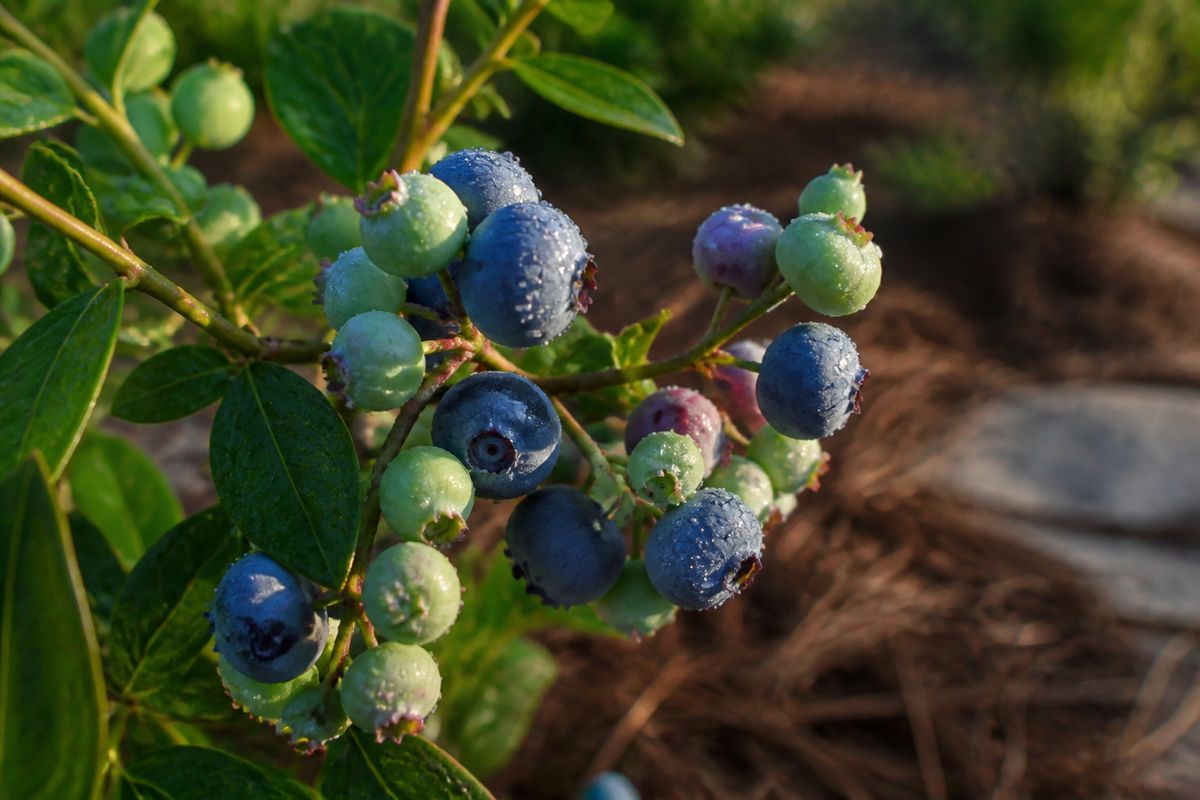
Growing blueberries in Texas works well in one part of the state and is a fight against your own soil almost everywhere else. The short version: rabbiteye blueberries (Vaccinium ashei) are the variety that actually performs here, East Texas is the only region with naturally acidic soil they like, and everywhere else you're building a raised bed or container to fake those conditions. Here's how to do it without wasting a growing season.
Why Rabbiteye, Not Northern Highbush
Skip the highbush varieties sold at big-box nurseries in spring, they're bred for the Northeast and Pacific Northwest and struggle with Texas summers. Texas A&M AgriLife Extension is direct about this: rabbiteye is "the best blueberry for Texas," and it's grown commercially in East Texas because the humid, naturally acidic woodland soils there match the plant's native habitat. A mature rabbiteye bush can produce around 15 pounds of berries a year, and well-managed commercial plantings run 5,000–9,000 pounds per acre.
Southern highbush varieties (bred by crossing highbush with native southern species) are the other realistic option, mainly for growers in containers or raised beds who want an earlier harvest. They need fewer chill hours than most rabbiteyes but are pickier about consistent moisture and are less forgiving of Texas heat swings.
Match Chill Hours to Your Actual Location
Blueberries need a minimum number of hours below 45°F each winter to break dormancy and bloom normally. Get this wrong and you'll get a bush that either blooms too early and gets frozen out, or never blooms enough to fruit. AgriLife's variety table gives chill-hour ratings for rabbiteye cultivars, and the rule of thumb is to pick a variety within 150 hours of your area's average annual chilling:
| Variety | Chill Hours | Harvest Window | Notes |
|---|---|---|---|
| Prince | 350 | Mid May–early June | Very early; high risk of frost damage |
| Brightwell | 400 | Early June–early July | Partially self-fertile; fruit splits in wet weather |
| Climax | 450 | Late May–early June | Concentrated ripening, small-medium fruit |
| Austin | 500 | June | Productive, medium-large berries |
| Premier | 550 | Late May–early June | Medium-large berries |
| Tifblue | 650 | Late June–July | Self-fertile, tart if picked early |
| Ochlockonee | 700 | July | Vigorous, medium-large fruit, best for higher-chill areas |
Most rabbiteye varieties need a second variety planted nearby as a pollenizer to fruit well, check that the two bloom in the same window (Tifblue is one of the few that's reasonably self-fertile on its own). Plant at least two varieties anyway; it extends your harvest and improves fruit set. Your county AgriLife extension office can tell you the average chill hours for your area if you don't already know it.
Fix the Soil Before You Plant, Not After
This is where most Texas blueberry attempts fail. Rabbiteyes need a soil pH between 4.0 and 5.5, and most Texas soil sits at 7.0–8.5. AgriLife's own guidance is blunt about this: growers who try to force alkaline soil into shape with acidic amendments often see the planting fail anyway, because of how soil chemistry re-buffers over time. If you're outside East Texas's naturally acidic sandy loam belt, plan on one of these approaches rather than fighting native soil in the ground:
- Raised beds or containers filled with a peat moss and pine bark mix, isolated from the surrounding alkaline soil and irrigation runoff.
- Get a real soil test first. Texas A&M's Soil, Water and Forage Testing Lab (through your county extension office) will tell you your actual starting pH and nutrient levels, guessing wastes a year.
- Elemental sulfur lowers pH gradually, applied 6–12 months ahead of planting, but it is not a one-time fix, expect to retest every couple of years and reapply.
- Watch your irrigation water. Water with dissolved calcium bicarbonate (common from Texas wells and municipal supplies) will push your soil back toward alkaline no matter how much sulfur you add. There's no cheap way to strip calcium out of irrigation water, so if your water tests hard, containers with rainwater or reverse-osmosis water are more reliable than in-ground beds.
- Mulch heavily. A 4- to 6-inch layer of pine bark, pine straw, or peat moss over the root zone helps hold acidity, conserve moisture, and keep roots cool. Skip barnyard manure, the salt content is hard on blueberries.
Planting and Spacing
- Kill grass and weeds in the planting row a few months ahead, and loosen compacted soil.
- Work in a generous amount of peat moss or pine bark at each planting hole before setting the bush.
- Space plants at least 6 feet apart, with rows at least 12 feet apart, rabbiteyes get big, eventually reaching roughly 10 feet wide.
- Set the plant at the same depth it sat in the nursery pot, then water it in immediately.
- Cut bare-root plants back by about half after planting to help the roots establish before top growth catches up; container stock needs only light pruning at this stage.
Watering and Fertilizing
Rabbiteye roots are shallow and don't tolerate standing water, but the plants also aren't drought-tolerant, so consistency matters more than volume. A young, first-year plant needs roughly half a gallon of water a day once it's growing well; increase that gradually as the plant ages, capping out around 5 gallons a day (about 35 gallons a week) for a mature bush in sandy soil, which dries out faster than clay.
Fertilize lightly and often rather than with one big dose, rabbiteyes are sensitive to over-fertilizing. Use a nitrogen source in the ammonium or urea form; skip nitrate-based fertilizers, which can actually slow growth in blueberries. Ammonium sulfate (21-0-0) is the standard choice in Texas because it also helps hold soil acidity, though it can over-acidify soil with years of repeated use, which is another reason to retest periodically. Hold off on fertilizing at all until a newly planted bush is established and visibly growing.
Pruning
Young bushes need little pruning beyond removing damaged wood. On established plants, thin out low limbs that let fruit touch the soil, and open up the center of the bush by removing a few of the most vigorous upright shoots. As a bush ages and develops thick gray wood, cut about a fifth of the oldest trunks back to the ground each winter, this keeps new, more productive shoots coming up from the crown instead of losing production to old wood.
Pests, Disease, and Birds
Rabbiteyes are relatively low-maintenance compared to other fruit, but a few problems show up reliably in Texas:
- Birds are usually the biggest threat to the actual harvest. Netting over the bushes as fruit starts to color is the most reliable fix; noisemakers alone tend to stop working once birds get used to them.
- Blueberry maggot larvae infest ripening fruit. Yellow sticky traps let you see when adult flies are active so you're not spraying on a blind schedule.
- Mummy berry shrivels developing fruit into hard, off-color "mummies." Clean up and destroy fallen fruit and mummified berries in late winter before bloom, sanitation matters more here than spraying.
- Botrytis blight and anthracnose (ripe rot) both show up worse in cool, wet spring weather. Harvest ripe fruit promptly and get it into the refrigerator quickly to slow rot.
Harvest
Across most of Texas, rabbiteye harvest runs from May into July depending on the variety mix you planted. Because berries in a single cluster don't ripen at the same time, expect to go over the bushes repeatedly for 4 to 6 weeks rather than picking once. Blueberries don't continue ripening after they're picked, so leave them on the bush until they're fully blue and have lost any tartness, picking early for color alone gets you sour fruit. Refrigerate promptly; for anything beyond a week or two, freezing holds quality far better than the fridge.
Frequently Asked Questions
Can I grow blueberries in Central or West Texas?
Yes, but not in native ground soil in most cases, the alkaline clay and caliche common across Central and West Texas will fight you the entire life of the plant. Containers or purpose-built raised beds with an acidic soil mix are the realistic path outside East Texas.
Do I need more than one blueberry variety?
For rabbiteye types, yes, in almost every case. Most varieties need a different rabbiteye variety blooming nearby to pollinate well; only a handful, like Tifblue, are reasonably self-fertile alone, and even those fruit better with a partner.
Why are my blueberry leaves turning yellow?
Yellowing between the leaf veins on new growth is the classic sign of iron chlorosis from soil that's too alkaline for the plant to take up iron. It's a soil pH problem, not a fertilizer problem, and adding more fertilizer will not fix it, get the pH down instead.